General articles are free for 24 hours after publish.
Philippines Fuel Prices Set for Major Hike on September 8 Amid Middle East Tensions and Peso Depreciation
Fuel prices in the Philippines are set to surge starting September 8, reversing recent rollbacks. Renewed Middle East tensions and a depreciating peso are cited as primary drivers for the significant price increases at the pump.
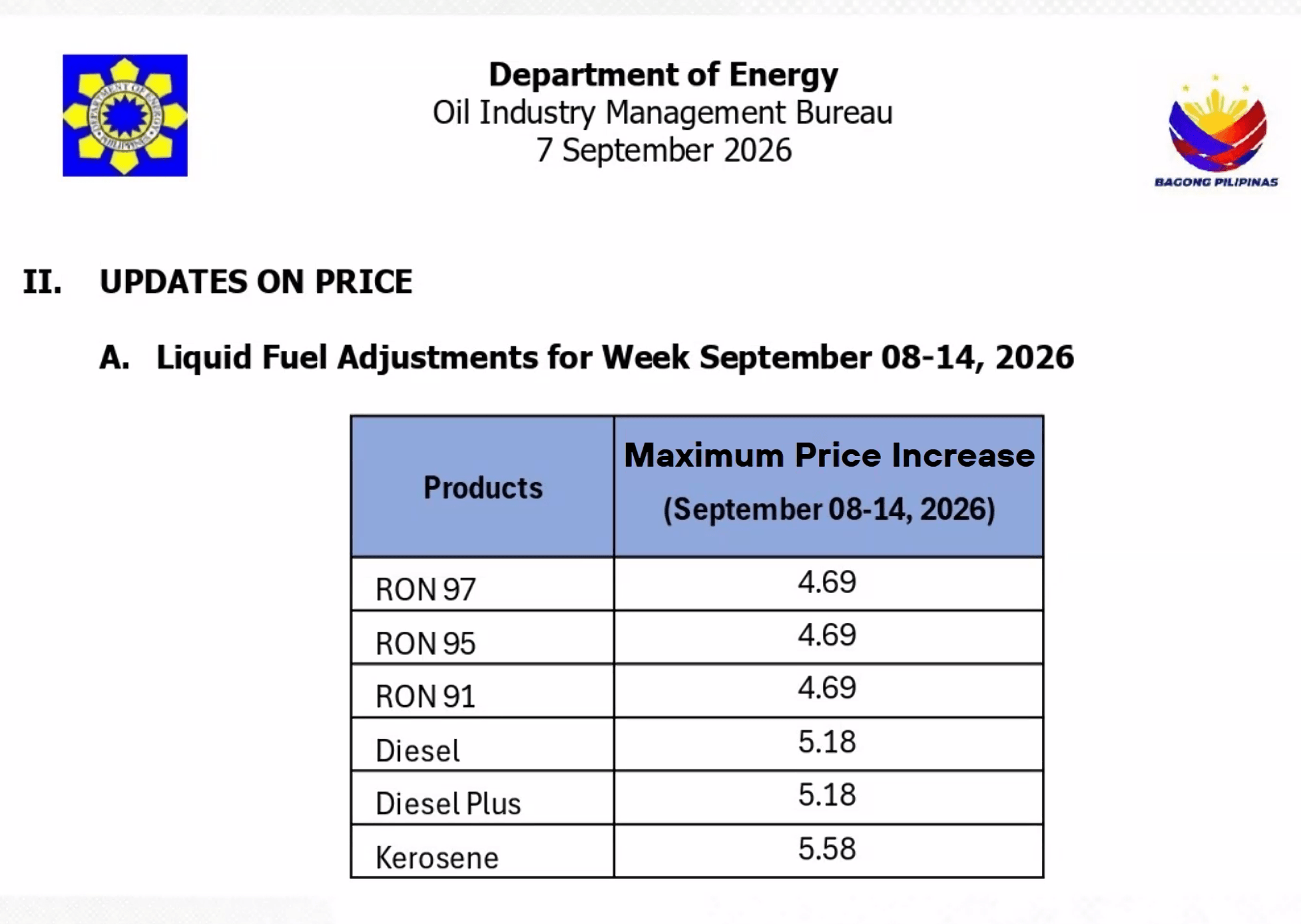
MANILA, Philippines – Fuel prices are set to rise again starting Tuesday, September 8, undoing last week’s rollback as global and regional fuel markets remain under pressure. In a press conference on Monday, September 7, the Department of Energy announced the following fuel price adjustments for the week of September 8 to 14: Gasoline – increase of P4.69 per liter Diesel – increase of P5.18 per liter Kerosene – increase of P5.58 per liter The adjustments will take effect on Tuesday, September 8. Energy Secretary Sharon Garin said that the fuel price hike comes “following renewed tensions, affecting energy flows through the Middle East.” The energy secretary also pointed to the depreciation of the Philippine peso against the US dollar, which she said has “also added pressure on domestic pump prices,” given that fuel in the Philippines is mainly imported and paid for in US dollars. The latest increase follows last week’s fuel price rollback, when gasoline prices went down by P0.32 per liter, diesel by P3.83 per liter, and kerosene by P3.84 per liter. That rollback offered motorists a brief break from two straight weeks of fuel price hikes. On August 25, pump prices rose by P1.08 per liter for gasoline, P2.31 per liter for diesel, and P0.95 per liter for kerosene. The latest pressure comes from renewed tensions in the Middle East, where developments involving Iran, Israel, and the United States have again raised concerns over oil and fuel supply. Traffic along the Strait of Hormuz has dropped to its lowest point since May following strikes on tankers by the United States and Iran. The DOE specifically pointed to renewed geopolitical risk after no confirmed peace deal emerged from US and Iran talks, coupled with the US Treasury’s sanctions under Operation Economic Outcast, which targeted financial channels allegedly used by Iran to move oil revenues and evade sanctions. The Strait of Hormuz, the narrow waterway between Iran and Oman, remains one of the world’s most important oil shipping routes, and any disruption to tanker traffic can quickly affect global crude and refined product prices. Fuel markets in Asia have also remained tight due to constraints on Middle Eastern fuel exports, disruptions in Russian refinery operations, and limited supply from other global suppliers. A weaker peso against the US dollar can add further pressure on local pump prices because imported crude and refined fuel products are priced internationally in dollars. For these reasons, local pump prices remain far above levels seen before fighting involving Iran and US-Israeli forces broke out on February 28. In the last full week before the conflict, DOE data showed common retail prices in Metro Manila at P56 per liter for gasoline RON95, P54.70 per liter for gasoline RON91, P55 per liter for diesel, and P83.47 per liter for kerosene. The Philippines is a net importer of petroleum products, making local pump prices vulnerable to global oil price swings, foreign exchange movements, regional refined fuel prices, and disruptions in international supply routes. – Rappler.com
Original source
Rappler Business