Rights groups reject Cayetano’s ‘political prisoner’ label for detained senators
Security
2026年7月22日
5
Inquirer NewsInfo

General articles are free for 24 hours after publish.

Rights groups reject Cayetano’s ‘political prisoner’ label for detained senators

Share
AI Summary

Human rights group Kapatid and former political prisoner Amanda Echanis have strongly objected to Senator Alan Peter Cayetano's labeling of detained senators as "political prisoners." They assert that these politicians, facing charges of corruption and embezzlement, should be subjected to legal accountability rather than be considered victims of political persecution.

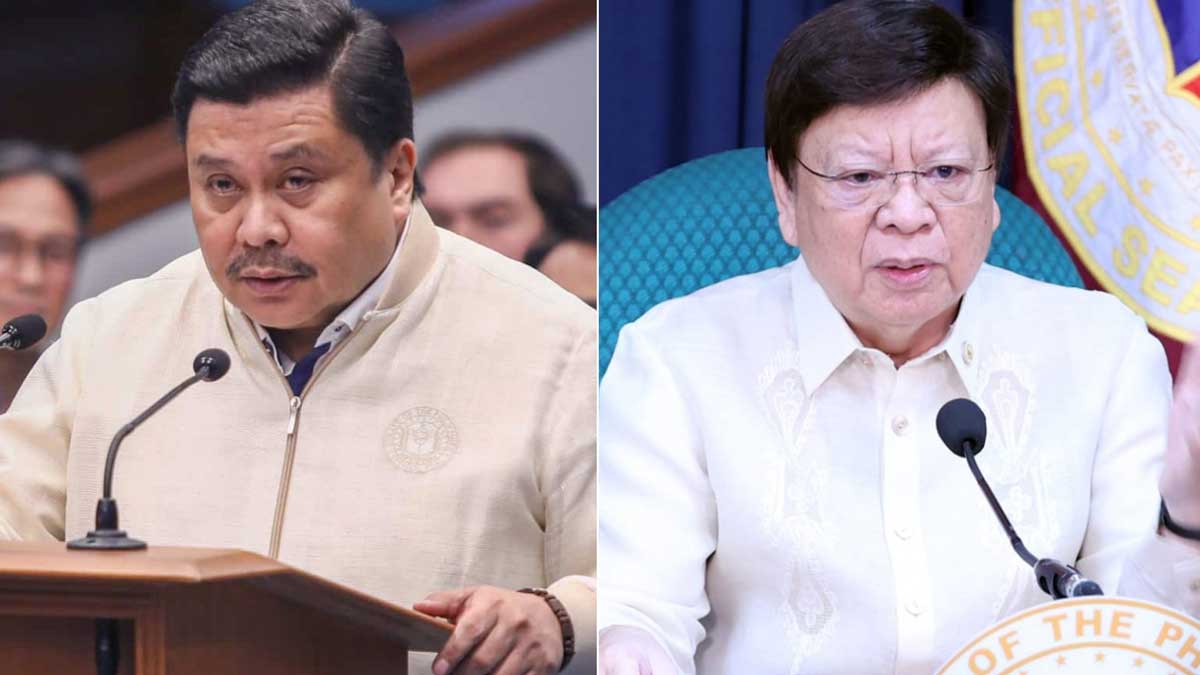
MANILA, Philippines — A rights group and a former political prisoner have objected to Sen. Alan Peter Cayetano referring to detained Senators Rodante Marcoleta and Jinggoy Estrada and former Quezon City Rep. Mike Defensor as “political prisoners.” “We know what political persecution looks like, and the cases of these politicians and their den of thieves do not fit the definition,” Kapatid, a support group for political prisoners, said in a statement on Tuesday. “Their detention arises from stealing millions of public and campaign funds for personal gain—serious offenses involving the abuse of public office and the betrayal of public trust,” it added. READ: Graft court orders transfer of Marcoleta to city jail Cayetano referred to the three politicians as political prisoners during a Facebook livestream on Friday and when he took the floor on Monday at the impeachment trial of Vice President Sara Duterte. Marcoleta is being held on a plunder charge for failing to disclose campaign donations for his senatorial bid last year. One of the donors is Defensor, who allegedly gave P30 million. READ: Senate enforces suspension order against Jinggoy Estrada On the other hand, Estrada is facing plunder and graft cases over accusations that he received P573 million in kickbacks from budget allocations for flood control projects. According to Kapatid, many of the country’s estimated 675 political prisoners come from marginalized communities and have faced Red-tagging, fabricated charges, planted evidence and prolonged detention. It said the term political prisoner should be reserved for those deprived of liberty for asserting their fundamental rights and advocating for social justice. These individuals chose “a path defined not by self-interest but by selflessness, sacrifice, and a commitment to the collective good,” the group added. “Words can easily be weaponized by false prophets. To describe those charged with corruption as ‘political prisoners’ distorts both law and history,” Kapatid said. It cited the Parliamentary Assembly of the Council of Europe Resolution 1900 (2012) which defines a political prisoner as an individual whose detention stems from politically driven state actions or from exercising fundamental freedoms, including expression, assembly and association. “The defining characteristic of political imprisonment is political persecution. In these cases, the state routinely fabricates or manipulates criminal charges against dissidents and activists to hide the purely political nature of their arrest,” Kapatid said. In a statement by human rights group Karapatan, former political prisoner Amanda Echanis called Cayetano’s words a “grave insult to the 560 political prisoners and scores of former political prisoners.” “Excuse me, Senator Cayetano, but plunderers cannot be considered as such because they are simply crooks in authority and mercenaries of their political patrons,” said Echanis who is also the spokesperson for LAYA, a campaign to free all political prisoners. “They steal from public funds, live in luxury at the behest of the people’s poverty, and when made accountable for their crimes, they use their political capital to affirm the double standard of justice in the country,” she added. Recalling her own experience, Echanis said she was arrested during the Duterte administration while working as a peasant organizer and caring for her infant child. She stressed that the charges against her were fabricated and accused state forces of killing her father, former political prisoner and peace consultant Randall Echanis. /cb

0

Original source

Inquirer NewsInfo

原文を読む