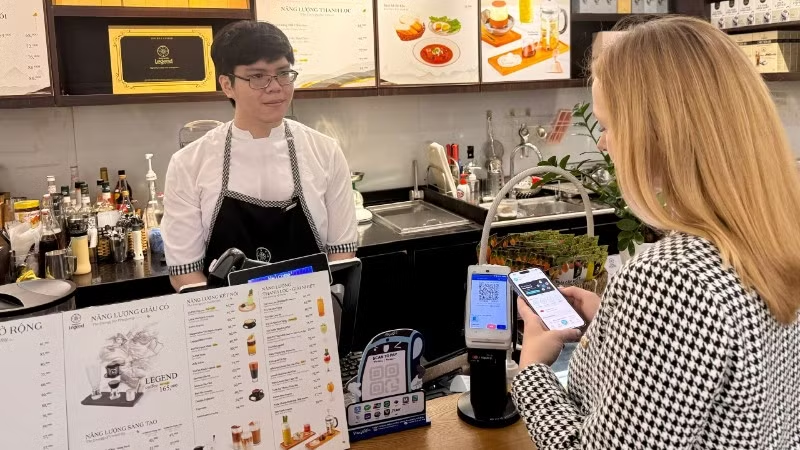
Vietnam and Singapore Launch Cross-Border QR Payment Service
Vietnam and Singapore have officially launched a cross-border QR code payment service, marking a new development in retail payment infrastructure connectivity between the two nations and fostering a comprehensive digital finance ecosystem.
Vietnam and Singapore have officially launched a cross-border QR code payment service, marking a new stage in the connectivity of retail payment infrastructure between the two countries and promoting the comprehensive development of the digital finance ecosystem. This service has been realized through the collaboration between Napas, Vietnam's domestic payment system, and Singapore's PayNow. This will enable consumers and businesses in both countries to conduct cross-border remittances and payments for goods and services more quickly, securely, and at a lower cost using smartphone applications. In particular, convenience is expected to significantly improve for tourists and business professionals traveling between the two nations. Vietnam has been focusing on promoting its digital economy in recent years, with the widespread adoption of cashless payments being one of the government's key policies. This collaboration with Singapore is seen as part of Vietnam's strategy to expand the digital payment network within the ASEAN region. In the past, Vietnam has already launched similar cross-border QR payment services with Japan, Hong Kong, South Korea, and China, actively advancing international payment integration. This move is analyzed as part of Vietnam's economic growth strategy pursued under its one-party system, aiming to attract foreign investment and stimulate economic activity by developing international financial infrastructure. Furthermore, for Vietnam, which has strong economic ties with China, strengthening payment integration within the ASEAN region is considered important for enhancing economic autonomy.
多角的分析
ベトナムとシンガポール間のQRコード決済連携は、両国間の貿易・観光における取引コストを削減し、経済活動を円滑化する。これは、ベトナムのデジタル経済戦略の一環であり、ASEAN地域における決済インフラの標準化と相互運用性の向上に寄与する。NapasとPayNowの連携は、小口決済の迅速化と低コスト化を実現し、特に中小企業や個人間の送金において恩恵をもたらす。過去の日本、韓国、中国との連携実績は、ベトナムが国際的な決済ネットワーク構築において着実に進展していることを示しており、これによりグローバルサプライチェーンにおけるベトナムの役割強化が期待される。
この越境QR決済サービスの開始は、ベトナムのフィンテック分野への投資機会を示唆している。両国間の決済が容易になることで、越境eコマースの拡大や、両国に跨るビジネスの効率化が進み、結果として関連するテクノロジー企業や金融サービスプロバイダーへの投資妙味が増す可能性がある。特に、ベトナム国内のキャッシュレス化推進政策と連動して、デジタルウォレットや決済プラットフォームを提供する企業への関心が高まるだろう。ただし、法規制の変更やサイバーセキュリティリスクは、投資判断における継続的な監視事項となる。
ベトナムとシンガポール間のQRコード決済サービスは、両国間の人的交流を促進し、特に観光客や海外で働くベトナム人労働者、および両国でビジネスを展開する人々にとって、送金や支払いの利便性を向上させる。ハノイやホーチミン市のような都市部では、既にQRコード決済が普及しており、このサービスはさらにその利用範囲を広げる。一方で、地方部や高齢者層におけるデジタルデバイド(情報格差)への対応は引き続き課題となる。また、個人情報の保護や取引の透明性確保は、利用者の信頼を得る上で不可欠である。
ベトナム市民、特にシンガポールへの渡航者やシンガポールとの取引がある人々にとって、この越境QR決済サービスは、送金や支払いにかかる時間と手数料を大幅に削減する。例えば、シンガポールで学ぶベトナム人学生は、親からの仕送りをより迅速かつ安価に受け取れるようになる。また、シンガポールからの観光客は、ベトナム国内での支払いをよりスムーズに行えるようになる。これにより、日常生活やビジネスにおける両国間の経済的結びつきが強化される。
背景・歴史的文脈
ベトナムは1986年のドイモイ政策以降、市場経済化を進め、特に近年はデジタル経済の発展に注力している。キャッシュレス決済の普及は、政府の「2025年までに現金比率を10%以下にする」という目標達成に向けた重要な施策である。2019年のASEAN首脳会議では、ASEAN決済連携(ACH)の推進が合意され、ベトナムはこれに積極的に参加している。シンガポールはASEANにおける金融ハブであり、PayNowのような国内決済システムを整備している。ベトナムがシンガポールと越境QR決済で連携したことは、ASEAN域内での決済インフラの相互運用性を高め、経済統合を深化させるための戦略的な一歩と言える。
原文ソース
Nhan Dan