General articles are free for 24 hours after publish.
Cambodia Reaffirms International Support for Peaceful Border Dispute Resolution with Thailand
The Centrist Democrat International (CDI-IDC) has reaffirmed its support for Cambodia's efforts to peacefully resolve its border dispute with Thailand through diplomacy and international law. A Cambodian delegation highlighted the conflict's humanitarian and regional security implications at the organization's General Assembly.
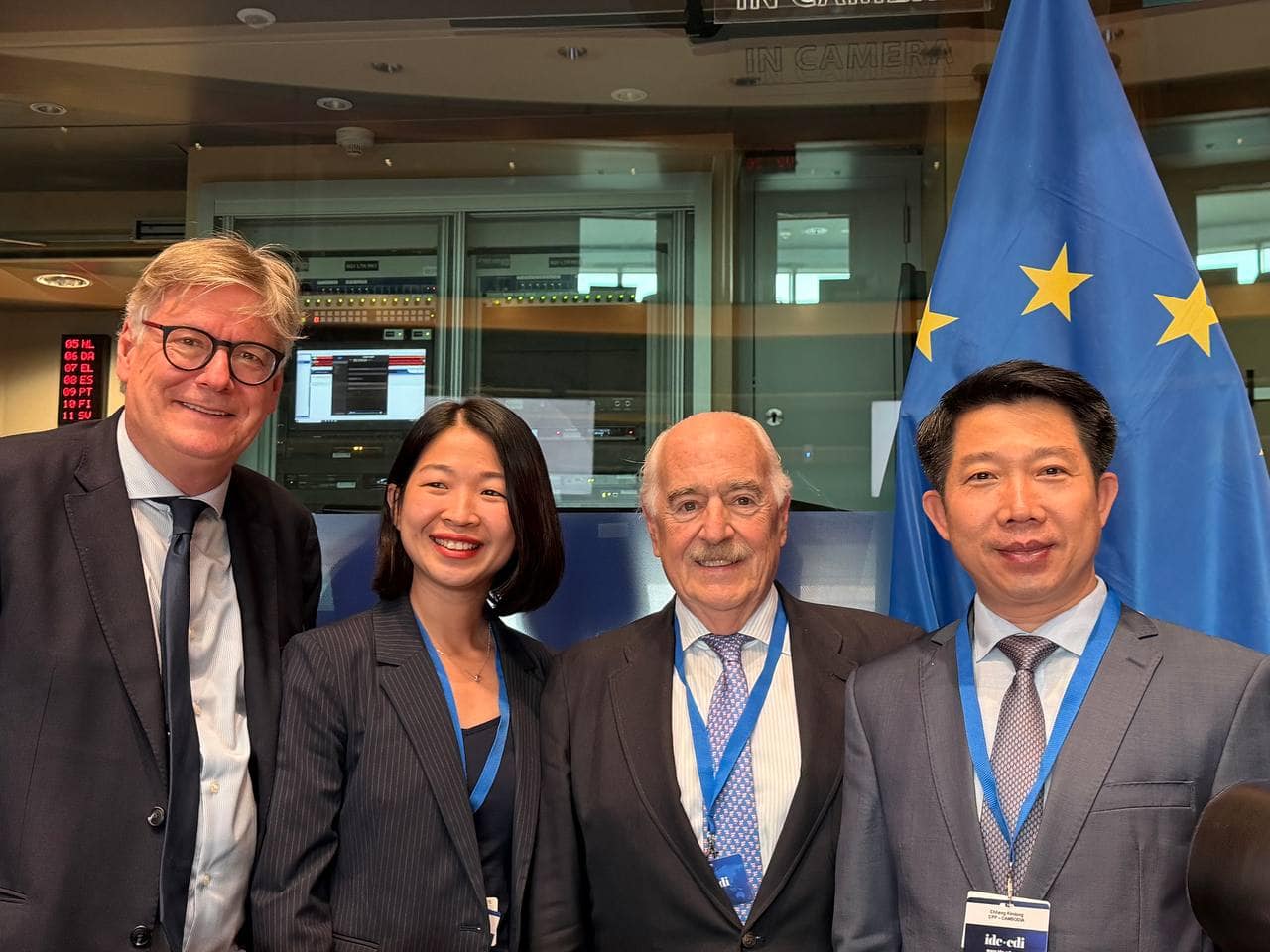
The Centrist Democrat International (CDI-IDC) has reaffirmed its support for Cambodian efforts to resolve its border dispute with Thailand through diplomacy and respect for international law, following a briefing by a Cambodian delegation on the humanitarian and regional security consequences of the conflict at the organization’s General Assembly, held in Brussels on July 13. The CDI-IDC is the world’s largest political network of centre and centre-right political parties, bringing together over 100 member parties worldwide dedicated to promoting democracy, human rights, and the rule of law. According to a July 16 press release from the ruling Cambodian People’s Party (CPP), the CDI-IDC General Assembly discussed a range of major global issues, including digital transformation and the future of democracy, the post-war situation in Ukraine, the crisis in the Middle East, and challenges facing democracy in different regions. Representing the CPP in its capacity as a CDI-IDC vice-president, a Cambodian delegation briefed the assembly on the Cambodia-Thailand border dispute, which Phnom Penh stated has affected regional peace and security and created a serious humanitarian crisis. The delegation informed the assembly that the conflict has displaced approximately 650,000 people, with more than 20,000 displaced Cambodian civilians remaining unable to return to their homes and communities due to occupation by Thai troops. Concerns were also raised regarding what was described as the deliberate destruction of civilian infrastructure and cultural heritage by the Thai military, particularly damage to the Preah Vihear Temple, a UNESCO World Heritage Site. "Cambodia remains committed to resolving the dispute peacefully in accordance with international law and the UN Charter," the delegation stated. The Cambodian delegation was led by Cheng Kimlong, deputy chairman of the CPP’s Commission for External Relations. Kimlong thanked the CDI-IDC for adopting a resolution at its November 2025 General Assembly in Brazil that supported the settlement of the Cambodia-Thailand border dispute through dialogue and respect for international law. Cambodia also welcomed the organization’s continued support for restoring trust and normal relations between the two neighboring Kingdoms, its call for the immediate withdrawal of troops from border areas, and its encouragement of reconciliation. According to the press release, the CDI-IDC also supported humanitarian assistance for displaced people and the clearance of explosive remnants of war to protect social and economic well-being and human dignity. Ahead of the General Assembly, the CDI-IDC Executive Committee reiterated its support for Track II diplomacy as an important complement to official diplomatic channels, a mechanism intended to rebuild trust between Cambodia and Thailand, encourage constructive dialogue, and create conditions conducive to a peaceful settlement of the dispute. CDI-IDC president Andrés Pastrana also voiced support for Cambodia’s approach to the conflict. The CPP press release quoted him as saying, "The CDI-IDC supports Cambodia’s efforts to seek peace based on the principles of resolving disputes through diplomacy and respect for international law." Pastrana and other CDI-IDC leaders also pledged to continue cooperating with the Cambodian government and the CPP in promoting peace, stability, and international cooperation. The assembly was organized in cooperation with the European People’s Party and attended by members of the European Parliament, representatives of CDI-IDC member parties, and research institutions from Asia, Europe, Africa, and Latin America.
Original source
Phnom Penh Post