ADB Maintains Vietnam's Growth Forecast, Highest in Southeast Asia
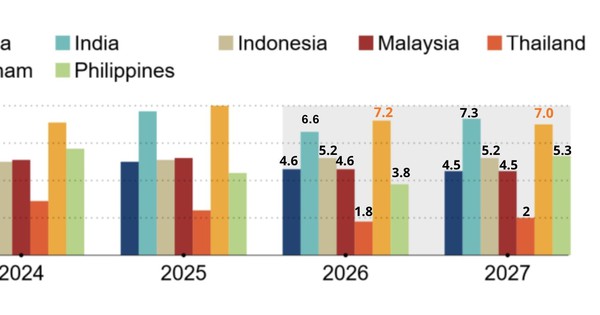
The Asian Development Bank (ADB) has maintained its economic growth forecast for Vietnam, projecting the country will continue to be the fastest-growing economy in Southeast Asia in 2026 and 2027, driven by sustained manufacturing growth, resilient exports, and steady domestic demand.
The Asian Development Bank (ADB) has maintained its economic growth forecast for Vietnam. The bank projects that Vietnam will achieve GDP growth of 7.2 percent in 2026 and 7.0 percent in 2027, continuing to be the fastest-growing economy in Southeast Asia, according to the latest Asian Development Outlook (ADO) July 2026 report. This optimistic outlook is underpinned by sustained growth in the manufacturing sector, resilient exports and investment, and steady domestic demand. Vietnam's growth projections stand out within the broader Asia and Pacific region, where economic growth is forecast at 4.9 percent in 2026. The ADB warned of significant downside risks to the regional growth outlook, including a renewed escalation of geopolitical conflicts, prolonged uncertainty in energy markets, tighter global financial conditions, a re-pricing of AI-related stocks, and a deeper property market downturn in China. Regional inflation is projected to accelerate to 4.6 percent in 2026, compared with the ADB's 3.6 percent forecast in April, though lower than the 5.2 percent projection in the late-April update. Inflation is expected to ease to 3.4 percent in 2027. Under its one-party communist system, Vietnam has actively sought foreign direct investment (FDI) and pursued an export-oriented economic growth model centered on manufacturing. Its attractiveness as a production hub has been particularly enhanced amidst geopolitical tensions with China and shifts in global supply chains. However, addressing external risks such as tightening global financial conditions and a downturn in China's property market will be crucial for sustaining future growth.
多角的分析
ベトナム経済の持続的な成長は、製造業への大規模な外国直接投資(FDI)と、輸出市場の拡大に大きく依存している。ADBの予測は、こうした構造的な強みを反映しているが、グローバルなサプライチェーンの混乱や地政学リスク、特に中国経済の動向は、ベトナムの輸出と製造業に直接的な影響を与える可能性がある。また、インフレ率の上昇予測は、国内の購買力や企業コストに影響を及ぼし、成長の持続性を試す要因となりうる。
ベトナムは、東南アジアにおける主要な製造拠点としての地位を確立しており、ADBの予測は、投資家にとって引き続き魅力的な市場であることを示唆している。しかし、世界経済の不確実性、特にエネルギー市場の不安定化や中国の不動産市場の低迷は、投資リスクを高める要因となる。AI関連株の再評価といった新たなリスクも、グローバルな資金の流れに影響を与える可能性があるため、投資家は慎重なリスク管理が求められる。
ベトナムの経済成長は、国民の生活水準向上に貢献する一方で、都市部への人口集中やインフラへの負荷増大といった社会的な課題も生じさせている。製造業の拡大は雇用機会を創出するが、賃金格差や労働条件の改善、環境問題への対応も、持続可能な社会発展のためには不可欠である。特に、地方から都市部への若者の流動は、社会構造の変化を加速させている。
ベトナム市民にとって、経済成長は雇用機会の増加や所得向上につながる一方で、物価上昇や生活コストの増加という形で実感される可能性がある。ADBのインフレ率予測の上昇は、国民の購買力に影響を与える懸念がある。特に、都市部では不動産価格や家賃の高騰が、若年層や低所得者層の生活を圧迫する要因となりうる。経済成長の恩恵が、社会全体に公平に分配されるかが問われている。
背景・歴史的文脈
ベトナムは、1986年のドイモイ(刷新)政策以降、計画経済から市場経済への移行を進め、外国からの直接投資(FDI)を積極的に誘致してきた。特に、中国との経済的な結びつきが強い一方で、地政学的なリスクやサプライチェーンの多様化の必要性から、製造業の移転先として注目されている。共産党による一党体制は、政策決定の迅速さと安定性をもたらす一方で、政治的自由の制約という側面も持つ。ADBの予測は、こうしたベトナムの経済構造と、国際情勢の変化が複合的に影響した結果と言える。
原文ソース
Bao Chinh Phu