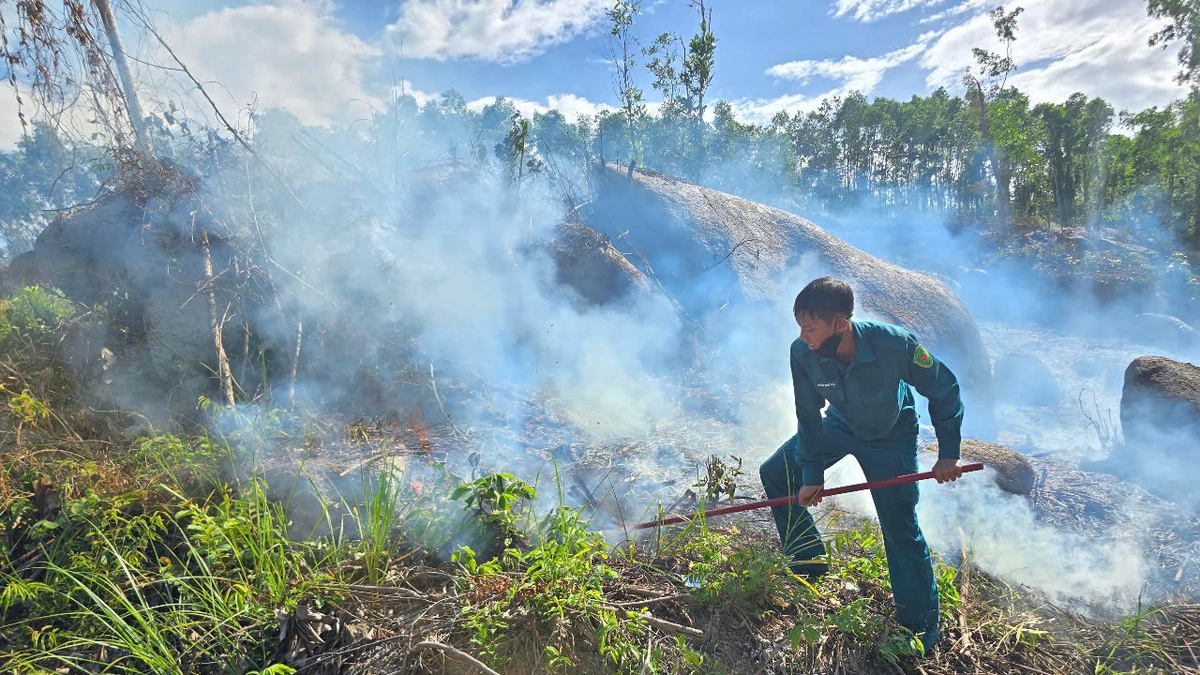
Elderly Man Dies After Setting Field Burning Leads to Forest Fire in Central Vietnam
A 70-year-old man has died in central Vietnam's Quang Nam province after a field-burning incident escalated into a forest fire. Authorities preliminarily believe the victim succumbed to smoke inhalation while attempting to control the blaze. Investigations are ongoing.
In Que Son commune, Que Son district, central Vietnam's Quang Nam province, a 70-year-old man died after a field-burning operation he initiated on his farm on the morning of June 30 spread to a nearby forest of eucalyptus and tea trees, causing a large-scale forest fire. The blaze was brought under control around 2 PM the same day. Local authorities mobilized dozens of militiamen, security forces, and commune police officers to extinguish the fire. The operation took place under hot, sunny weather conditions, with significant efforts made to prevent the fire from spreading further. After the fire was contained, authorities inspecting the scene discovered the elderly man's body. Initial investigations suggest the victim may have died from smoke inhalation while attempting to control the flames. Authorities are continuing to investigate the full circumstances of the incident. This incident highlights the risks associated with agricultural practices in Vietnam and their potential to trigger devastating forest fires, particularly in dry weather conditions.
多角的分析
ベトナムでは、農業生産の効率化や土地利用のために焼畑が伝統的に行われてきた。しかし、近年の気候変動による乾燥化や、森林保護への意識の高まりから、焼畑の是非や管理方法が常に議論の的となっている。今回の事件は、焼畑による直接的な経済的損失(森林資源の破壊)に加え、人命という計り知れない損失をもたらした。経済成長を続けるベトナムにおいて、持続可能な土地利用と環境保全の両立は、喫緊の課題である。
今回の火災は、直接的な投資リスクではないものの、ベトナムの環境規制や土地利用政策の動向に関心を持つ投資家にとって、間接的な示唆を与える可能性がある。森林資源の保護や、環境負荷の高い農業慣行への規制強化が進む可能性があり、関連産業への影響を注視する必要がある。特に、農業関連企業や、森林資源に依存する産業は、将来的な事業リスクとして考慮すべきだろう。
クアンナム省クエソン xã(村)の住民にとって、焼畑作業は生活の一部であり、食料生産や土地の維持に不可欠な慣行であった。しかし、今回の悲劇は、その慣行がもたらしうる深刻な危険性を、住民自身に痛感させる出来事となった。特に、高齢者が火災に巻き込まれた事実は、地域社会における安全管理体制の脆弱性や、伝統的な生活様式と現代的なリスク管理との間のギャップを浮き彫りにしている。今後、地域住民の安全確保と、より安全な農業技術への移行支援が求められる。
ベトナム中部では、特に乾燥した季節に森林火災のリスクが高まる。今回の事件は、焼畑作業を行う個人だけでなく、地域住民全体に火災の脅威を再認識させるものとなった。火災による森林の焼失は、地域経済(木材、農産物、観光など)にも影響を与える可能性がある。また、消火活動に動員された人々への負担も懸念される。政府は、国民の生命と財産を守るために、火災予防策の強化や、より安全な農業慣行の普及に努める必要がある。
背景・歴史的文脈
ベトナムでは、特に北部山岳地帯や中部の沿岸地域において、焼畑農業が伝統的に行われてきた。これは、耕作地の確保や土壌の肥沃化を目的とした手法である。しかし、近年、気候変動による乾燥化や森林破壊への懸念から、政府は焼畑の制限や禁止を試みてきた。2022年には、ベトナム共産党中央委員会が、森林保護と持続可能な開発に関する決議を採択し、焼畑慣行の見直しを促している。今回の事件は、こうした政策的な努力にもかかわらず、依然として地方部では伝統的な慣行が残り、それに伴うリスクが存在することを示している。
原文ソース
VnExpress