Hanoi Aims for 500km of Metro Lines to Reshape Urban Landscape
Infrastructure
2026年8月4日
5
Bao Chinh Phu
Relations
🇻🇳Vietnam🇨🇳China

General articles are free for 24 hours after publish.

Hanoi Aims for 500km of Metro Lines to Reshape Urban Landscape

Share
AI Summary

Vietnam's President To Lam has set an ambitious goal for Hanoi to complete approximately 500 km of urban railway lines in the coming years. This initiative is part of a major infrastructure investment aimed at alleviating urban congestion and fostering sustainable development.

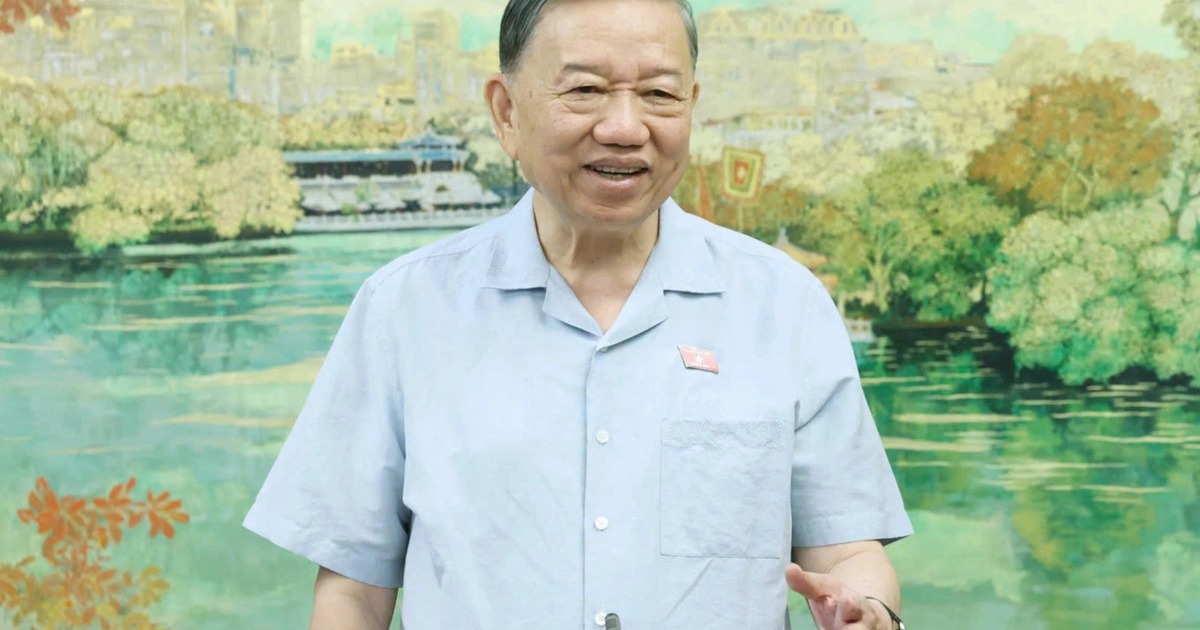
Party General Secretary and State President To Lam has unveiled an ambitious goal for Hanoi to complete approximately 500 km of urban railway lines in the coming years. This initiative is part of a broader effort to implement the Capital Master Plan with a 100-year vision and achieve significant progress in urban development. Speaking at a National Assembly group discussion on August 4, the top Vietnamese leader noted that Hanoi has made encouraging progress, particularly in translating the master plan into detailed zoning schemes with clear development orientations for each sector and area. Alongside surface development, the city has also begun paying greater attention to underground space to create new room for urban growth. To Lam stressed the importance of simultaneously renovating the historic inner city, developing satellite urban areas, and promoting population redistribution. "Without population redistribution, it will be impossible to reorganize and properly plan the city for sustainable development," he stated. He emphasized that convenient transportation is key to encouraging people to relocate from the city center. The goal is to reduce travel time from new residential areas to Hoan Kiem Lake to around 10–15 minutes. "When transportation is convenient and new urban areas offer better living conditions, residents will voluntarily move there, creating conditions for the State to renovate and preserve the historic urban core," he added. Hanoi is developing an integrated transport system comprising roads, underground infrastructure, expressways, and urban railways to strengthen connectivity between the city center and surrounding urban areas. Construction of around 300 km of metro lines has been launched and is being accelerated for early operation. The city is also developing five ring roads, some sections of which are expected to be opened later this year. To Lam also revealed that Russia has expressed its willingness to support Hanoi's metro development as a symbol of friendship between the two countries. "If Hanoi can complete around 500 km of urban railway in the coming years, the capital's landscape and people's daily travel will be transformed," he said. Under Hanoi's Capital Master Plan with a 100-year vision, the city's urban railway network is planned to comprise 18 lines with a total length of 979 km. During the 2026–2035 period, Hanoi plans to invest in building around 500 km of metro lines to establish the backbone of a high-capacity public transport system and promote transit-oriented development (TOD). Currently, Hanoi operates 21.5 km of metro lines, including the 13-km Cat Linh–Ha Dong Line and the 8.5-km elevated section of Nhon–Ha Noi Station Metro Line. In addition to Metro Line 5 (Van Cao–Hoa Lac), which broke ground in late 2025, the city commenced construction of five more metro lines totaling approximately 303.5 km in June 2026. These projects are expected to be substantially completed by 2030.

0

Original source

Bao Chinh Phu

原文を読む