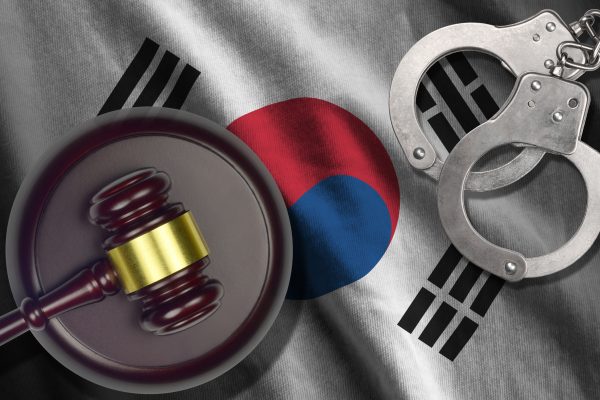
South Korea's Prosecutors Face Power Reduction Amidst Judicial Reform Efforts
Politics
2026年7月15日
10
The Diplomat Indonesia

South Korea's Prosecutors Face Power Reduction Amidst Judicial Reform Efforts

AI サマリー

South Korea is pursuing judicial reforms aimed at curtailing the investigative and prosecutorial powers of prosecutors. The prosecution, which has historically enjoyed immense authority, is resisting these changes, making the outcome of the reforms a focal point of attention.

Read The Diplomat, Know The Asia-Pacific Controversy is raging over how – and how much – to shave the prosecutors’ inordinate powers. France’s legal reform in 1808 laid down the cornerstone of modern prosecution. It effected separation of powers for its criminal justice system, compartmentalizing investigation, prosecution, and trial to be handled by different parties. Putting any of the two elements within one hand had almost inevitably led to judicial prejudice and abuse of power. Most of Europe soon followed the French model. And today, developed liberal democracies hew to this legal sanctity and practice. South Korea, however, is an exception. Its prosecution is highly centralized with a monopoly on investigation and prosecution – a model more commonly found in autocracies. The prosecutors also exercise coercive powers reserved for the police in other countries. They have used their distended legal capabilities to pull strings behind South Korean politics. For people they no longer wish to see in public, they dig up dirt first with the assumption they must be guilty of something, however trivial. For the actually guilty ones they want to keep indebted to them, they withhold indictment. (This “discretionary indictment” is even their statutory right.) Not surprisingly, the prosecutor’s office has been synonymous with corruption, where investigations can be swept under the rug or unleashed upon political nemeses. The Prosecution’s Checkered History South Korean history, checkered with colonial occupation and dictatorship, explains how the prosecutor’s office has become so formidable. In 1912, two years after Japan’s official annexation of Korea, the Japanese Government-General of Korea declared colonial criminal law. It gave colonial prosecutors unbridled rights to conduct compulsory investigation, i.e. search and seizure, arrest, detention and interrogation. In the metropole, the Japanese prosecutors could not exercise this much power, but in Korea it was ideal for controlling the restive colonial populace. A popular criticism circulating in the 1920s was that colonial prosecutors would “round up a hundred just to catch seven suspects.” They did it because they could, and this practice instilled fear and mutual suspicion. The colonial prosecutors saw their status skyrocket in 1941. The Japanese Empire had become far-flung; it needed to mobilize and devote all its resources to pacifying the colonial populations and churning out ever more war materiel for further territorial expansion. In March of that year, eight months before Japan’s surprise strike of Pearl Harbor in December, the Government-General decreed the National Security Act and amended the 1925 Peace Preservation Law. The police now had to operate under the prosecutors’ direct order for cases engaging these statutes. In the wake of Korea’s liberation from Japan in 1945, discourse was rife on how to build a new Korean criminal justice system free of colonial vestiges, particularly the prosecutors’ unlimited investigative powers. During the United States’ military government of South Korea, from 1945 until 1948, Washington tried to maintain a criminal justice system where the prosecution and the police shared investigative duties. However, the police were thoroughly uncooperative, intent on skirting the prosecution at all costs. Police brutality on the streets was the norm, as was torture in the name of ferreting out communist elements. The prosecutors waged a successful PR campaign, painting themselves as more appropriate for protecting the public from both the police’s abuse of power and communism. For this, they insisted on the right to conduct direct criminal investigations and command the police in investigations. The prosecutor’s office was established simultaneously with the birth of the Republic of Korea in 1948. The Prosecution Service Act 1949 conferred on the prosecutors what they had been clamoring for. A few years later, the Criminal Procedure Act 1954 solidified the prosecution’s supremacy over the police – and the rest, for that matter – by, for instance, stationing police forces within the prosecutor’s office at the prosecutors’ beck and call and empowering the prosecutors to control the application by the police for arrest warrants. This framework persists to this day. When military dictatorship began in 1961, the prosecutors took a back seat as the government relied on the intelligence service and military security. Still, beefing up the prosecution service provided the strongmen with a veneer of legality. With the central investigation unit and the Supreme Prosecutor’s Office, the government rendered investigation a top-down action. The government administered the bar exams and trained the prosecutors itself, effectively making them strictly legal bureaucrats, as opposed to neutral legal professionals. By 1987 when South Korea’s democracy started, it was expedient to leave the prosecutors alone for two major reasons. First, many prosecutors had become politicians, and they switched over to important government jobs. As their background as a prosecutor acted as a political shield, there was no need to weaken the prosecutor’s office. Second, somebody had to fill the power vacuum left by the military and intelligence service. As dictatorship lifted and South Korea maintained a centralized strong presidency, the prosecution service became an ideal institutional arm of statecraft and governance. The Long Path Toward Reform The prosecutors became even more untouchable throughout the 21st century. In 2004, for instance, former President Roh Moo-hyun tried to abolish the central investigation unit within the Supreme Prosecutor’s Office. “I would rather cut my throat,” the head prosecutor at the time infamously scoffed. For another instance in 2005, as the justice ministry clashed with the prosecutor’s office, the prosecutors huddled around the head prosecutor calling him “our father.” The prosecutors’ collective ire was enough to squash any attempt at reform. Once Roh’s presidential term ended, they grilled him and his family with hours and days of degrading interrogation, leading to his suicide in 2009. In the 2010s, they overlooked allegations implicating conservative presidents. It was their schtick, earning the president’s favors to preserve their powers. But when former President Park Geun-hye was impeached in 2017 for corruption and Moon Jae-in was elected president, the prosecution service needed to reverse course to stay in the new president’s good graces. The prosecutors thrashed Park and her predecessor, charging them with decades-long prison sentences. No prosecutorial reform could be broached when their thorough investigations were uncovering truths on a daily basis. From 2019 to 2021, however, the Moon administration succeeded in reforming the prosecution, albeit to a limited degree. The Corruption Investigation Office was legislated into existence to investigate and

多角的分析

経済的影響

韓国の検察権限縮小は、法執行の透明性と公平性を高めることで、国内のビジネス環境における不確実性を低減させる可能性がある。特に、起訴便宜主義の悪用による政治的圧力や不当な捜査リスクが軽減されれば、国内外からの投資意欲を刺激し、経済活動の活性化に寄与すると考えられる。しかし、改革の過程で生じる混乱や、新たな権力構造の出現が一時的な経済的停滞を招くリスクも否定できない。

投資家心理

検察の権限縮小は、投資家にとって朗報となり得る。これまで検察の恣意的な捜査や起訴のリスクに晒されてきた企業活動において、予測可能性と安定性が増すことが期待される。特に、韓国の主要産業であるテクノロジーや製造業は、グローバルなサプライチェーンの中で政治的リスクに敏感であるため、司法の独立性と中立性が強化されることは、韓国市場への投資を後押しする要因となるだろう。ただし、改革が急進的すぎたり、法的な空白を生じさせたりする場合は、短期的な投資リスクとなる可能性もある。

社会的影響

検察の強大な権限は、市民の権利保護という観点から長年問題視されてきた。捜査の非透明性や、権力者への便宜供与といった疑惑は、国民の司法への信頼を損なってきた。今回の改革は、捜査権限の警察への移譲などを通じて、より多くの市民が司法プロセスにおいて公平な扱いを受けられるようになる可能性を示唆している。しかし、改革によって新たな権力闘争や、市民生活に影響を与える予期せぬ事態が発生する可能性もあり、その動向を注視する必要がある。例えば、捜査権限の移行に伴う警察の能力や倫理観の変容、あるいは市民が新たな司法システムにどのように適応していくかが問われる。

市民の声

今回の検察改革は、韓国市民の日常生活に直接的な影響を与える可能性がある。これまで検察の捜査対象となることへの恐れや、不当な捜査を受けるリスクは、一部の市民にとって常に存在した。改革が進み、捜査の透明性と公平性が増すことで、市民はより安心して生活できるようになることが期待される。特に、過去に検察によって不当な扱いを受けたと感じた人々にとっては、司法への信頼回復の機会となるだろう。一方で、改革の過程で生じる混乱が、例えば犯罪捜査の遅延や、新たな形の不正の発生といった形で市民生活に影響を与える可能性も考慮する必要がある。また、検察官の権限縮小が、市民の安全や治安維持にどのような変化をもたらすかも、市民にとって重要な関心事となる。

背景・歴史的文脈

韓国の検察権限の強大さは、日本の植民地時代に遡る。1912年の植民地刑法で検察官に広範な捜査権限が与えられ、これが朝鮮総督府による統治の道具となった。解放後、1948年の大韓民国建国時に、検察は捜査・起訴権限を独占する形で制度化された。これは、警察の権力乱用や共産主義勢力への懸念から、検察が「国民保護」の役割を担うべきだという主張が背景にあった。その後、1954年の刑事訴訟法改正でその優位性が確立され、軍事独裁政権下でも権力維持の手段として利用された。民主化後も、検察官の政治家への転身や、権力真空を埋める存在として、その強大な権限は維持されてきた。

原文ソース

The Diplomat Indonesia

原文を読む