General articles are free for 24 hours after publish.
Party Central Committee Discusses Marine Economy, Climate Resilience
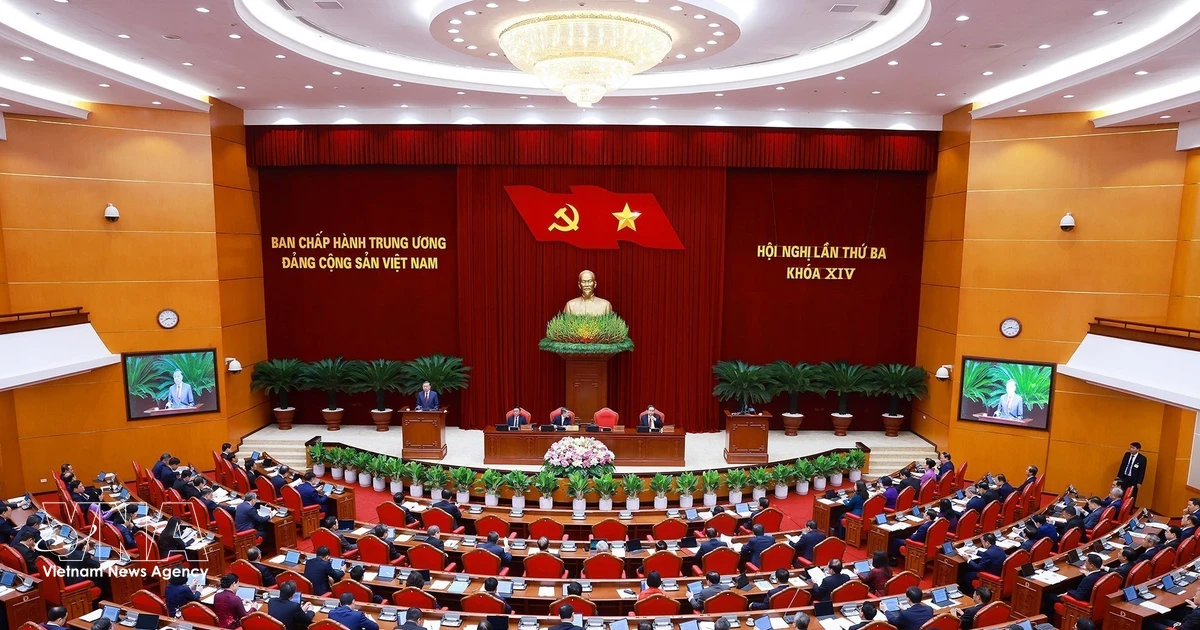
The Communist Party of Vietnam's Central Committee convened to discuss strategies for developing the marine economy and enhancing climate resilience. The agenda also covered strengthening Party discipline and national development in a new era, highlighting Vietnam's proactive role in ASEAN and its commitment to deepening its strategic partnership with Japan.
The Communist Party of Vietnam's Central Committee convened to discuss key issues concerning the development of the marine economy and enhancing resilience to climate change. Chaired by Party General Secretary and State President To Lam, the session focused on strategies for promoting the marine economy and adapting to climate change. Discussions also encompassed revising regulations for Party members and advancing Party building, the political system, and national development in a new era, marking a significant step towards implementing the Resolution of the 14th Party Congress. In foreign affairs, Minister of Foreign Affairs Le Hoai Trung held separate meetings with his Canadian and New Zealand counterparts on the sidelines of the 59th ASEAN Foreign Ministers' Meeting (AMM-59) and related meetings in Manila, the Philippines. Trung proposed that ASEAN and the US promote trade and investment in an open, transparent, and mutually beneficial manner, while expanding joint work in areas such as the digital economy, artificial intelligence (AI), semiconductors, science and technology, innovation, energy transition, and regional energy connectivity. Regarding relations with India, Trung explored the establishment of an ASEAN–India maritime dialogue mechanism and requested India's continued support for ASEAN's principled stance on the East Sea issue. An Indonesia-based expert noted that Vietnam, as an active, proactive, and responsible member of ASEAN, has demonstrated its ability to forge consensus, spur cooperation, and maintain balance amidst an increasingly complex regional geopolitical landscape. In its relationship with Japan, Vietnam regards Japan as a key strategic partner and is committed to deepening the Comprehensive Strategic Partnership for Peace and Prosperity in Asia and the World. Both countries agreed to bolster economic connectivity and security, enhance sci-tech collaboration, and push concrete joint projects in digital transformation, green transition, innovation, semiconductors, and artificial intelligence. Domestically, Nguyen Tien Hai, Secretary of the An Giang provincial Party Committee, was assigned as Acting Minister of Home Affairs, while Nguyen Hoai Anh, Chairman of the Thanh Hoa People’s Committee, was appointed Permanent Deputy Minister of Ethnic and Religious Affairs. National Assembly Chairman Tran Thanh Man praised Ho Chi Minh City's preparations for the draft Law on Urban Development, describing it as a landmark legislation signaling a shift from urban administration to modern urban governance focused on enabling development. Prime Minister Le Minh Hung stated that Vietnam always regards Canada as an important partner in its foreign policy and welcomed the positive and comprehensive progress in bilateral relations over nearly a decade since the establishment of the Comprehensive Partnership. Furthermore, Vietnam aims to strengthen cooperation with Pakistani partners in science, technology, human resource development, and explore opportunities in information technology, innovation, digital transformation, and high-tech agriculture, with Can Tho city actively pursuing such collaborations. Vietnam has expressed its readiness to share expertise in crop varieties, cultivation techniques, irrigation, agricultural mechanization, post-harvest preservation, and the development of agricultural value chains, reflecting its commitment to international cooperation. Source: VietnamPlus English
Original source
VietnamPlus English