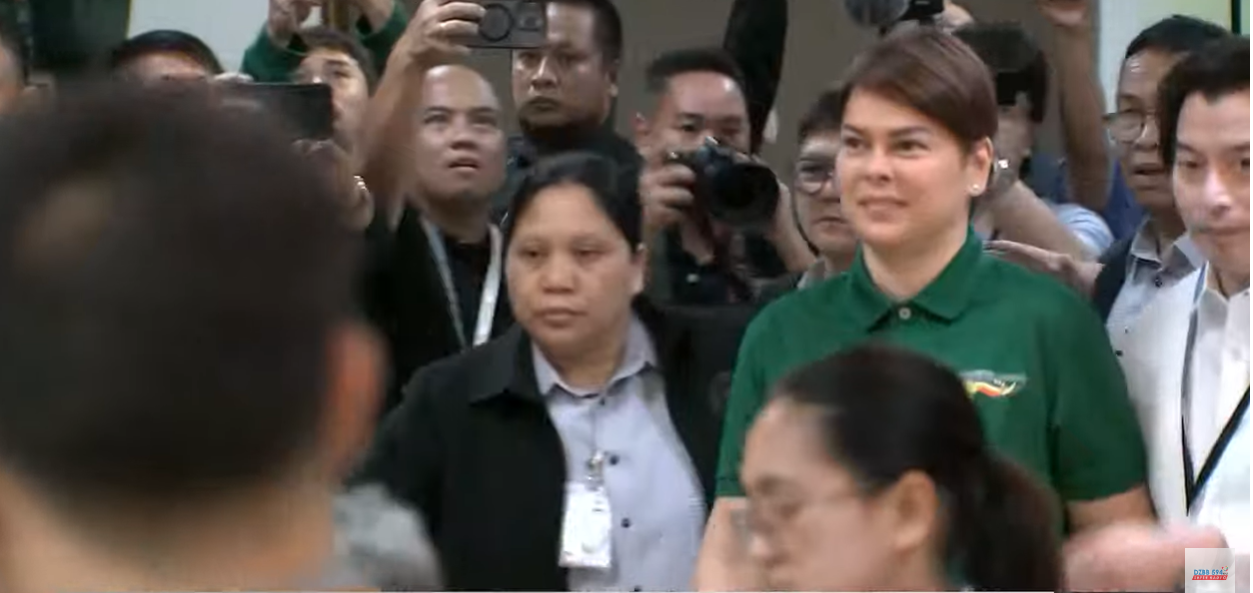
Lawyers Challenge Escudero's Authority in VP Duterte Impeachment Trial
Several lawyers are questioning Senator Francis Escudero's authority to preside over the impeachment trial of Vice President Sara Duterte. A petition has been filed with the Supreme Court seeking a status quo ante order, casting doubt on the legitimacy of the proceedings.
Several lawyers have questioned Senator Francis "Chiz" Escudero's authority to preside over the impeachment trial of Vice President Sara Duterte. In a very urgent manifestation with motion filed on Monday, the group led by lawyer Israelito Torreon asked the Supreme Court (SC) to issue a status quo ante order barring the impeachment court and its officers from proceeding with the trial until the question over Escudero's authority to preside has been resolved. The petitioners also asked the SC to issue orders ensuring that the trial proceeds only under Rules of Procedure on Impeachment Trials that were validly adopted and under a presiding officer whose authority is free from any unresolved constitutional challenge. "Petitioners, respectfully, submit that these developments warrant the consolidated or, at the very least, coordinated resolution by this Honorable Court," it read. "Pending such resolution, petitioners further respectfully pray for appropriate interim relief to preserve the constitutional integrity of the impeachment proceedings and to prevent the trial from proceeding under a presiding officer whose authority remains under serious and unresolved constitutional challenge," it added. The manifestation was filed in connection with the consolidated petitions filed by Torreon and Duterte challenging the impeachment proceedings. On Monday, Escudero was formally elected as presiding officer of the trial. Senators Kiko Pangilinan and former Senate President Tito Sotto have said that there is no explicit constitutional provision that the Senate President should be the presiding officer of the impeachment trial. However, Senator Alan Peter Cayetano argued that the amendment allowing a non-Senate President to preside is void. "Institutional integrity, jurisdictional regularity, and due process all require that impeachment proceedings be conducted only under a presiding officer whose authority to preside is beyond serious constitutional question, since a litigant is entitled to have the case heard by the decision maker designated by law, and proceedings before an officer who lacks such authority are invalid regardless of the fairness with which they are conducted," the petitioners said. Meanwhile, the petitioners said that the validity of the June 3 Senate session—which vacated all leadership posts and installed Senator Sherwin Gatchalian as Senate President Pro Tempore—has become a "prejudicial and antecedent constitutional issue" in the impeachment trial. They also argued that the amendment to Rule 2 of the Rules of Procedure on Impeachment Trials—which allows another senator to be elected as presiding officer—is void. The petitioners claimed that no quorum was present during the June 3 session, that the amendment violated the Senate's one-day notice rule, and that it was adopted by the wrong body. They said the impeachment trial had "already commenced under disputed leadership." "The longer this uncertainty is allowed to persist and the further the proceedings advance, the greater the risk that the entire impeachment trial may later be declared void for lack of a validly constituted and validly presided tribunal—with all the attendant waste of public resources, delay, public confusion, institutional injury, and prejudice to all parties concerned, petitioner Vice President foremost among them," they said. On March 27, lawyers Torreon, Vic Rodriguez, Rescie Angelli Rizada-Nolasco, Martin Delgra III, Wendel Avisado, James Patrick Bondoc, Raul Lambino, Luna Maria Acosta-Manlitoc, Jesus Hinlo Jr., and Dr. Richard Mata asked the SC to issue a TRO against the impeachment proceedings. Duterte filed a separate petition on March 30. A total of four petitions have been filed with the SC in connection with the impeachment proceedings. The first two were consolidated by the High Court, while the remaining petitions were filed after the consolidation. — VDV/VBL, GMA News
多角的分析
弾劾裁判の長期化や無効化のリスクは、フィリピンの政治的安定性に対する懸念を高め、外国からの投資意欲を減退させる可能性がある。特に、副大統領の立場は政府の政策遂行能力に影響を与えうるため、経済政策の不確実性が増し、市場のボラティリティを高める要因となりうる。過去にも、主要な政治的混乱はフィリピンペソの減価や株式市場の低迷を招いた事例がある。
投資家にとって、この状況は「待機」モードを意味する。憲法上の正当性が争われている裁判は、投資判断における大きなリスク要因となる。特に、副大統領の地位は経済政策の方向性に影響を与える可能性があるため、その不確実性は、インフラ投資やBPOセクターへの新規投資を躊躇させるだろう。過去の政治的混乱期には、投資家がリスク回避のために資金を引き揚げる傾向が見られた。
弾劾裁判のプロセスは、国民の政治への信頼を揺るがす可能性がある。特に、裁判の正当性や手続きの公平性に対する疑念は、市民の政治参加意欲を低下させ、社会的な分断を深める恐れがある。また、裁判の長期化は、国民が直面する経済的課題(物価上昇、雇用不安など)への政府の対応を遅らせる可能性があり、市民生活に直接的な影響を与えかねない。
市民にとっては、日々の生活に直接的な影響があるわけではないが、政治の混乱は将来への不安を増幅させる。特に、物価高や雇用問題に直面する中で、政府が安定した運営を行えるのかという懸念が生じる。もし裁判が長期化し、政治が停滞すれば、経済対策や社会福祉の遅れにつながる可能性があり、これは低所得層や若年層にとってより深刻な問題となるだろう。
背景・歴史的文脈
フィリピンでは、弾劾手続きは政治的対立の手段として用いられることがある。過去には、最高裁判事や大統領経験者などが弾劾の対象となった例があり、その過程で手続きの正当性や議長権限が争点となるケースも少なくない。今回の件は、上院議長が弾劾裁判の議長を務めるのが慣例であったが、それを変更する可能性が生じたこと、そして副大統領という要職にある人物が対象となっていることから、政治的な緊張が高まっている。上院の指導部交代に関する問題も、この弾劾手続きの正当性をさらに複雑化させている。
原文ソース
GMA News Philippines