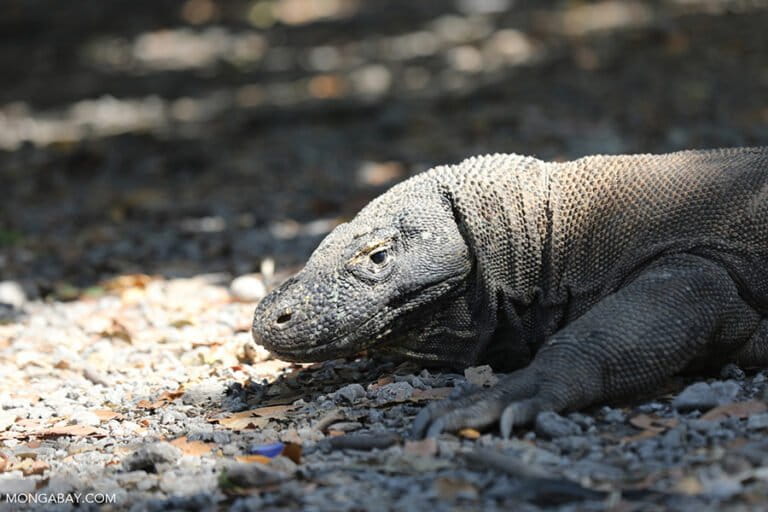
Komodo Dragon Bites: Misconceptions and Accidental Encounters
Society
2026年7月11日
3
Mongabay Indonesia

Komodo Dragon Bites: Misconceptions and Accidental Encounters

AI サマリー

Research indicates Komodo dragons attack humans not out of aggression, but as a defensive response when startled or having their territory encroached upon. Humans are not their natural prey.

Every time news emerges of a resident or tourist being bitten by a Komodo dragon, the same question always arises: why does this ancient creature attack humans? Many people consider the Komodo dragon (Varanus komodoensis) an aggressive predator. However, researchers state that this perception is not entirely accurate. Most cases occur because humans and Komodo dragons encounter each other in situations that trigger the animal's natural response. The Komodo dragon is an apex predator that has lived for millions of years on the Komodo Islands, Rinca Island, Gili Motang Island, Gili Dasami Island, and parts of Flores. Its natural prey includes deer, wild boars, monkeys, and even water buffalo. Humans are not part of its main diet nor a hunting target. So, why can bites to humans occur? According to researchers, Komodo dragons generally attack when they feel disturbed, startled, or when access to their food source is blocked. As predators, they do not expend energy chasing something without reason. The biting response often appears as part of their instinct for self-defense or to protect resources they deem important. Several past incidents show similar patterns. There was a case where a resident was bitten while looking for honey in a forest area on Rinca Island, a region relatively rarely traversed by humans. Komodo dragons in such locations tend to be wilder than individuals accustomed to seeing tourists. Another case involved a person sitting on a rock that turned out to be covering a deer carcass. Unknowingly, the person blocked the Komodo dragon's path to its food. In a different event, a Komodo dragon chasing a goat ended up biting a human who was closest after its prey escaped. These series of events indicate that Komodo dragons do not actively hunt humans. Instead, most incidents are triggered by interactions between humans and Komodo dragons.

多角的分析

経済的影響

コモドドラゴンが生息する地域、特にコモド国立公園周辺の観光収入は、インドネシア経済にとって重要な位置を占める。観光客の安全への懸念は、直接的に観光客数の減少、ひいては地域経済への打撃につながる可能性がある。観光インフラへの投資や、観光客と野生動物の安全な共存のための管理策は、経済的持続可能性の観点から重要である。

投資家心理

コモドドラゴン関連の観光事業や国立公園管理に関わる投資家にとって、観光客の安全確保は最優先事項である。事故の頻発は、投資リスクを高め、新たな投資を躊躇させる要因となり得る。安全管理体制の強化や、事故発生時の迅速な対応策の整備が、投資環境の安定化に不可欠となる。

社会的影響

コモドドラゴンとの遭遇事故は、地元住民の生活様式にも影響を与える。特に、国立公園周辺で生活する人々は、食料調達や移動の際に野生動物との接触リスクに直面する。事故の頻発は、住民の不安を増大させ、伝統的な生活活動を制限する可能性もある。住民と野生動物の安全な共存のための地域社会との連携が求められる。

市民の声

コモドドラゴンが生息する地域、特にコモド国立公園周辺の住民にとって、野生動物との遭遇は日常の一部である。しかし、今回の報道のように事故が発生すると、不安は増大する。地元住民は、コモドドラゴンが本来人間を襲う生き物ではないという知識を持ちつつも、予期せぬ事故への警戒を強めることになる。彼らの生活圏と野生動物の生息域が重なる中で、安全な共存策の実施が喫緊の課題となる。

背景・歴史的文脈

コモドドラゴンは、インドネシアのコモド諸島および周辺地域に固有の大型爬虫類である。その生態は、数百万年にわたる進化の過程で、この地域の限られた環境に適応してきた。人間との接触は、主に国立公園の整備や観光開発が進むにつれて増加した。過去の事故例は、人間がコモドドラゴンの生息域に侵入したり、彼らの行動を妨げたりする状況で発生していることが多く、コモドドラゴンが人間を積極的に捕食対象としているわけではないという研究者の見解を裏付けている。しかし、観光客の増加に伴い、予期せぬ遭遇のリスクも高まっている。

原文ソース

Mongabay Indonesia

原文を読む