General articles are free for 24 hours after publish.
Quang Tri Province Completes Biological Sample Collection for Martyr Remains Identification
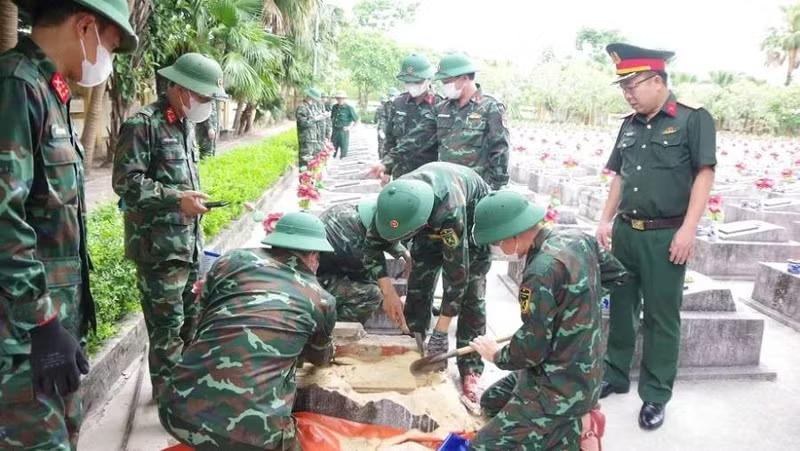
Quang Tri Province in central Vietnam has completed the collection of biological samples for DNA identification of martyr remains. This milestone was achieved after a 190-day "500-day and night campaign," with samples taken from 130 cemeteries and related areas, expected to facilitate the identification of numerous unidentified remains.
Quang Tri Province in central Vietnam has announced the completion of biological sample collection for the DNA identification of martyr remains. This initiative was part of the "500-day and night campaign: Accelerating the search, collection, and identification of martyr remains." The provincial military command reported that biological samples necessary for DNA identification of martyr remains have been collected from 130 cemeteries and related areas. The campaign aims to clarify the identities of numerous unidentified remains and bring solace to the families. As a major battlefield during the Vietnam War, Quang Tri Province has many unidentified martyr remains buried. The completion of sample collection marks a significant step forward in accelerating the identification of these remains. Previous reports include the collection of samples from over 1,000 remains in Cam Lo district within Quang Tri Province, as well as the discovery and collection of remains in Bai Dinh village, Quang Tri city, and the Cau Nhi area. Furthermore, a send-off ceremony was held for the collection of remains of martyrs who sacrificed their lives in Laos, indicating progress in cross-border remains recovery efforts. This campaign is part of a national effort by the Government of the Socialist Republic of Vietnam to show gratitude and respect to martyrs, serving as a symbol of national unity. In Vietnam's one-party system, national issues often see rapid and large-scale government-led campaigns, and this case is an example. While Vietnam continues its economic growth, such initiatives to heal the scars of past wars and provide spiritual support to the people are considered to contribute to social stability. In its relations with China, Vietnam pursues a pragmatic foreign policy emphasizing economic ties while acknowledging historical context; strengthening domestic social cohesion can also bolster its diplomatic foundations.
Original source
Nhan Dan