General articles are free for 24 hours after publish.
Women's Empowerment Key to Cambodia's Sustainable Development: Oxfam Director
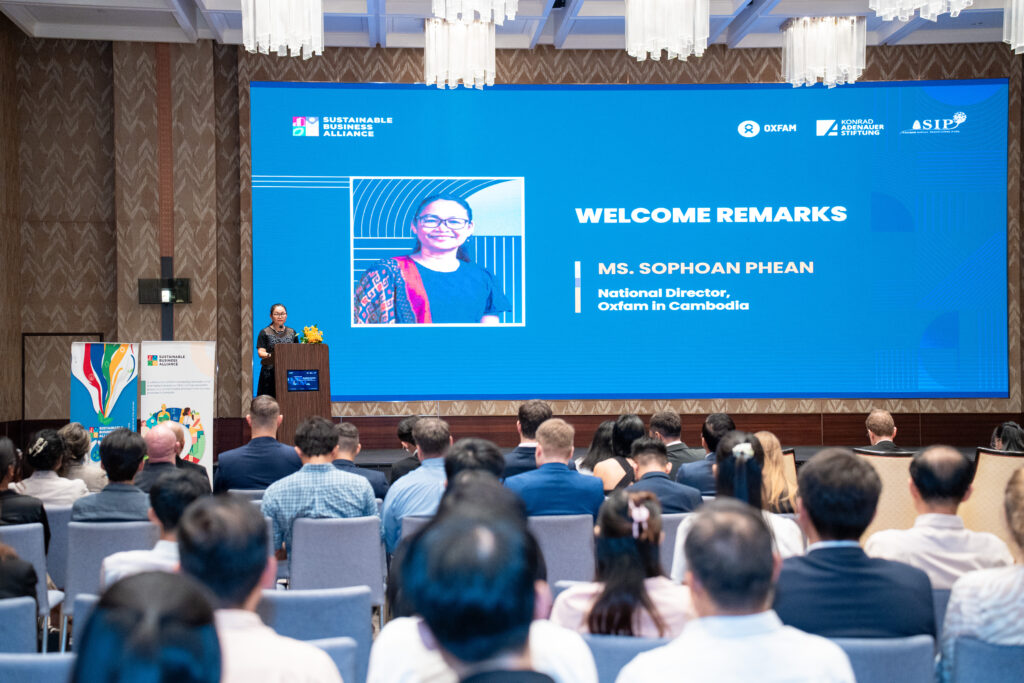
Sophoan Phean, National Director of Oxfam Cambodia, emphasizes that women's empowerment is crucial for Cambodia's economic and social development. She highlights the need to strengthen support for women in the informal economy and create inclusive opportunities amid economic transformation.
Sophoan Phean, National Director of Oxfam Cambodia, stated that women's empowerment is not only a moral imperative but also a strategic necessity for Cambodia's long-term social and economic development. While Cambodia has achieved significant economic growth and poverty reduction over the past two decades, critical questions remain about who benefits from this progress. Phean highlighted that across all areas of Oxfam's work, including economic justice, gender equality, climate resilience, and governance, empowering women leads to the transformation of entire communities and systems for the better. Women constitute a substantial share of the labor force, particularly in agriculture, the garment sector, and informal businesses, yet their contributions are often undervalued and constrained by structural inequalities. Oxfam views empowerment as multi-dimensional, encompassing not only increased income but also strengthened agency, voice, and rights. When women gain access to resources such as land, finance, skills, and decent work, they tend to reinvest in their families and communities. She further emphasized that addressing deep-rooted norms and inequalities that limit women's participation in decision-making, both at the household and public levels, requires deliberate efforts to transform systems and attitudes, not just individual opportunities. A large proportion of Cambodian women work in the informal economy as smallholder farmers, street vendors, home-based workers, or micro-entrepreneurs. While this sector provides essential livelihoods, it is characterized by precarity, low income, and limited protections. Phean identified the lack of social protection as one of the biggest challenges, with informal workers often lacking access to health insurance, paid leave, or safety nets during economic shocks. "Time poverty" due to the disproportionate burden of unpaid care work (childcare, eldercare, household management) also restricts women's full engagement in economic activities or pursuit of leadership roles. To address these challenges, she called for coordinated action, including investment in skills development and market linkages, as well as community services, childcare infrastructure, and policy reforms that promote shared care responsibilities. Furthermore, supporting women's collective action through cooperatives and associations can enhance bargaining power, amplify their voices, and drive lasting change. As Cambodia's economy modernizes through industrial diversification, digitalization, and integration into global markets, development organizations, businesses, and policymakers must collaborate to ensure women are not left behind in this transformation. Development organizations like Oxfam play a catalytic role by piloting innovative approaches, supporting community-based solutions, and advocating for inclusive policies. The private sector also holds both responsibility and opportunity as drivers of economic transformation, by ensuring fair wages and safe working conditions, and supporting women's entrepreneurship and leadership. Source: Cambodia Investment Review
Original source
Cambodia Investment Review