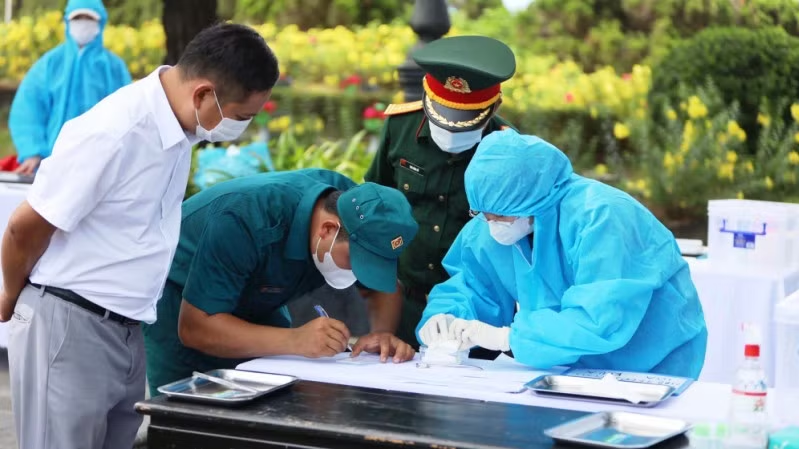
Tràm Dù Battle Martyrs' Remains Identified Through DNA Testing
Vietnam's Nhan Dan newspaper reports progress in identifying the remains of hundreds of martyrs from the Tràm Dù battle through DNA testing. Information from veterans and families of martyrs is aiding this effort.
Following its June 21, 2026 article titled "New Clues Regarding Hundreds of Martyrs Who Died at Tràm Dù," Vietnam's Nhan Dan newspaper has reported progress in identifying the remains of hundreds of soldiers who perished in the fierce battle at Tràm Dù through DNA testing. According to the newspaper's report, after the article was published, the editorial office received a significant amount of information and documentation from former soldiers, families of martyrs, and individuals who have researched the battle for many years. This material is crucial for the identification of unidentified remains. Specifically, the process of identifying remains through DNA testing has been challenging. However, with the recent adoption of "Resolution 26," difficulties in DNA testing and the identification of martyrs' remains are expected to be alleviated. This resolution outlines a four-step process for the DNA identification and determination of the identity of unidentified remains. The battle at Tràm Dù is known as one of the fiercest engagements during the Vietnam War, where many soldiers sacrificed their lives for the country. However, due to the passage of time, many of them remain buried as unidentified. This initiative to identify remains through DNA testing represents a significant step towards reclaiming the names of soldiers who died for their homeland and bringing peace to their families.
多角的分析
DNA鑑定技術の向上と関連法制度の整備は、ベトナムにおける「遺骨身元特定」という社会課題解決に貢献する。これは、戦争犠牲者への敬意を示すだけでなく、長年不明瞭だった身元を明らかにし、公的支援や追悼の対象を明確化する上で経済的・社会的な安定をもたらす可能性がある。また、関連技術やサービスへの投資も期待できる。
このニュース自体が直接的な投資機会を示すものではないが、ベトナム政府が戦争犠牲者の身元特定に力を入れている姿勢は、国内の社会インフラや福祉分野への関心を示す。将来的に、DNA鑑定関連技術や、遺骨管理・追悼施設などへの投資機会に繋がる可能性も否定できない。ただし、現時点では投機的な要素が強い。
トラムドゥ戦没者の身元特定は、遺族にとって長年の悲願であり、精神的な救済に繋がる。DNA鑑定技術の進展は、過去の戦争の傷跡を癒し、社会全体の和解と団結を促進する一助となるだろう。また、これにより、個々の兵士の功績が再認識され、国民的英雄として称えられる機会が増えると考えられる。
身元不明の遺骨を持つ遺族にとって、DNA鑑定による身元特定は、長年の不安と悲しみに終止符を打つ希望となる。これにより、故人を正しく追悼し、家族としての絆を再確認できる。また、国民全体としても、過去の戦争で犠牲となった兵士たちの功績を改めて認識し、国家への貢献を称える機会となる。
背景・歴史的文脈
ベトナム戦争(1955年~1975年)では、数百万人が犠牲となり、多くの兵士の遺骨が身元不明のまま埋葬された。戦後、ベトナム政府はこれらの遺骨の身元特定と遺族への引き渡しに努めてきたが、技術的・資金的な制約から困難を極めていた。近年、DNA鑑定技術の進歩と、政府による関連法規の整備(例:「決議26」)が進み、身元不明遺骨の特定作業が加速している。これは、国民統合、戦争犠牲者への追悼、そして歴史の正確な記録という国家的な課題の一環として位置づけられている。
原文ソース
Nhan Dan