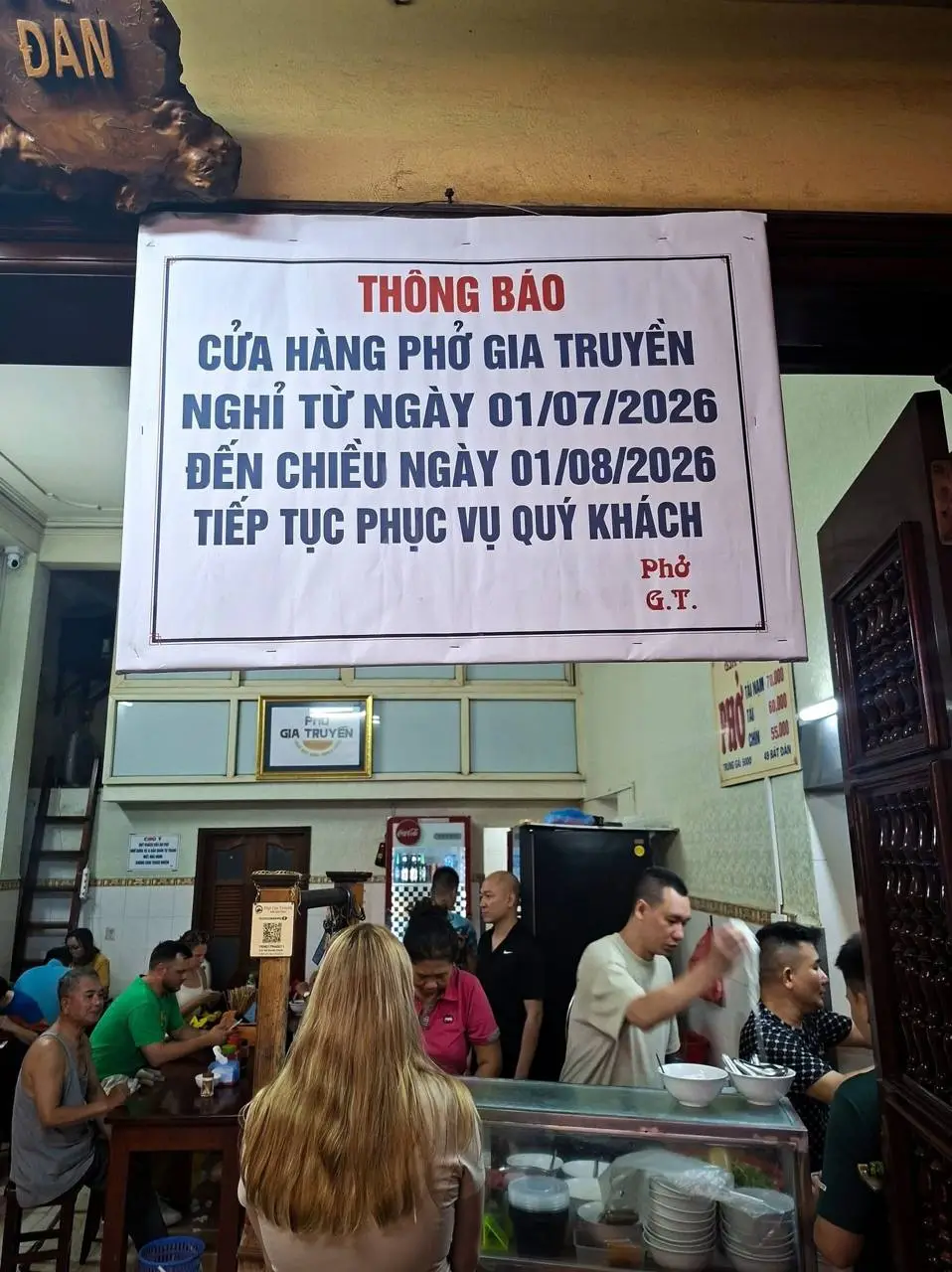
Hanoi's Legendary Pho Stall: Annual Two-Month Closure is 'Completely Normal' to Loyal Patrons
Bat Dan Pho, a legendary pho stall in Hanoi operating for over 70 years, has sparked discussion with its annual two-month closure—one month for Tet and another in the summer. Loyal customers, however, consider this a 'completely normal' tradition, supporting the shop's unique flavors and business model.
When locals speak of timeless culinary institutions in Hanoi, Bat Dan Pho instantly comes to mind. It stands as one of the oldest and most revered pho brands in the capital. While its exact opening date has faded from memory, the stall has thrived for over seven decades, welcoming millions of domestic diners and international travelers alike into its warm, aromatic embrace. Global media outlets have long recognized Bat Dan Pho’s legendary status. CNN once spotlighted this humble eatery as an essential culinary experience for anyone visiting Hanoi. South Korea’s EBS travel network even dedicated an entire special feature to capture the timeless rhythm of its kitchen. Bat Dan Pho—one of the oldest and most legendary culinary institutions to ever define the Capital. Through seven decades of change, the owners have occasionally adjusted their prices to match the times. However, the core identity of Bat Dan Pho remains untouched, drawing relentless crowds from dawn until dark. Photo: Collected Beyond its legendary flavors, Bat Dan Pho harbors a few quirky traditions that fascinate its patrons. Recently, a loyal regular shared a photograph of a new sign posted at the shop. The notice announced a total suspension of operations for one full month, running from July 1st through August 1st, 2026. A sign hung at Bat Dan Pho announces the shop’s month-long summer closure. Photo: Mitoshi Kaito Accompanying the viral image, the customer wrote with fond humor: “This is the ultimate ‘high-roller’ pho shop in Hanoi. They shut down for two months every year just to travel: one month for Tet, and one month for summer. Their monthly revenue must easily clear 2 billion VND! They open no branches and accept no apprentices. Some staff members have worked here for over 30 years. The shop has earned Michelin recognition for four consecutive years. Every single bowl is sliced fresh on command—only the owners wield the knife, while staff assist. They pile on more meat than any other famous shop in Hanoi. Critics can say what they want; this place is my absolute sanctuary.” The detail about the shop regularly closing for a month in the dead of summer captured the most attention online. A wave of loyal customers immediately stepped forward to confirm that this blackout period is a long-standing tradition. To them, it is a beautiful reminder of a simpler time—many patrons jokingly refer to the eatery as the only “corporation” that grants its team an extended summer break to rest, recharge, and rediscover their inspiration. Regulars love to joke that it’s the only “company” around that shuts its doors for weeks just to relax, unwind, and “recharge their batteries.” Photo: Collected Nestled at No. 49 Bat Dan Street—a vibrant artery of the historic central district—the shop retains its rustic, unassuming facade. The dining space offers no lavish frills. Simple wooden tables, low benches, and plastic stools perfectly preserve the nostalgic atmosphere of old Hanoi. Historical records show the legacy began with a roaming shoulder-pole noodle stall managed by Mr. Co Nhu Chieu. The family has carefully guarded this heritage across three generations. Today, Mrs. Co Thi Thanh Xuân and her descendants continue to craft the secret family recipe that defined the capital’s palate for decades. To truly understand why generations of locals are willing to wait in line, one must experience the creation of a single bowl. The journey begins with the broth—the very soul of the dish—simmered continuously from beef bones for seven long hours to extract a natural, profound sweetness. As it bubbles, the kitchen introduces a delicate, proprietary blend of smoky charred ginger and sharp fresh ginger, sending a rich, comforting aroma into the morning air. A broth simmered from beef bones for seven hours forms the true soul of this legendary bowl. Photo: Google Review Then comes the execution. Premium beef is never pre-cut; instead, it is sliced directly over each specific bowl only upon a diner’s command to preserve its peak freshness and moisture. (Photo: Collected) Finally, it rests on a bed of soft, remarkably thin rice noodles, tailored specifically to absorb the rich, savory notes of the traditional broth. The sheer volume of meat in each serving is a constant talking point among diners. Regulars often joke that the noodles vanish long before the beef runs out. While the remarkably soft, thin noodles enchant many regulars, some traditionalists admit they still prefer a firmer, more resilient bite. Beyond its flavors, Bat Dan Pho is famous for its unique, self-service ritual. Diners must line up, pay in advance, and carry their own steaming bowls back to their tables. This custom has endured for generations, becoming a signature trademark of the house. For unsuspecting first-timers, this total lack of table service can cause brief confusion. Newcomers often sit waiting for staff to take their orders, completely unaware of the queue at the counter. However, once guided, most travelers gladly blend into the rhythm, waiting patiently for an authentic taste of Hanoi. The inner sanctum of Bat Dan Pho. Photo: Google Review To maintain the traditional flavor profile, the shop fundamentally refuses to serve limes, offering only house-made garlic vinegar instead. They prepare fresh green and ripe red chilis daily, alongside a signature homemade chili sauce designed to complement the rich, savory broth. The menu remains deceptively simple, offering straightforward choices like rare beef, cooked beef, or a combination of rare and flank beef, paired with deep-fried dough sticks or poached eggs. Yet, this absolute minimalism forms the very essence that makes diners proclaim, “this is all that is required.” Furthermore, Bat Dan Pho was one of the historical pillars participating in the project to “Promote and Develop the Culinary Heritage of Hoan Kiem District for Tourism,” orchestrated by the Hoan Kiem People’s Committee and the Center for Cultural Heritage Research and Promotion. Today, after more than 70 years of operation, Bat Dan Pho remains a bustling cultural monument. From early dawn until the final bowls sell out around 21:00, the shop unites multi-generational Hanoians, domestic tourists, and international explorers. For its thousands of regulars, this is no mere noodle shop—it is a living, breathing piece of Hanoi’s soul. Subscribe to get the latest posts sent to your email. Type your email… Subscribe
多角的分析
バットダン・フォーの年2回の長期休業は、ベトナム経済の急速な成長と、伝統的なビジネスモデルが共存する様相を示唆している。一般的に、経済成長期には企業は収益機会を最大化しようとするが、同店は明確な収益目標よりも、伝統の維持と従業員の福利厚生を優先している。これは、ベトナム経済が単なるGDP成長だけでなく、文化遺産や生活の質といった非経済的価値も重視する方向へ成熟している可能性を示唆する。また、従業員が30年以上勤務しているという事実は、安定した雇用と良好な労働環境が、高い生産性と顧客満足度に繋がるという、ベトナムにおける新たな労働市場のトレンドを示しているかもしれない。
バットダン・フォーの事例は、伝統的な飲食業への投資において、成長性や規模拡大といった一般的な投資指標だけでは測れない側面があることを示唆している。同店は、支店展開や弟子育成といった拡大戦略を意図的に避けている。これは、投資家がベトナムで伝統的なビジネスに投資する際、その「希少性」や「ブランド価値」を維持するための経営方針を理解し、短期的な利益追求よりも、長期的なブランド価値の保全を重視する戦略が求められることを意味する。ミシュランの星獲得やメディア露出は、そのブランド価値を裏付ける強力な証拠であり、限定的ながらも安定した収益を生み出すモデルとして、ニッチな投資対象となり得る。
バットダン・フォーの年2回の長期休業は、ベトナム社会における「働く」ことと「生きる」ことのバランスに対する独特の価値観を映し出している。特に、従業員が30年以上も勤続しているという事実は、単なる労働関係を超えた、家族のような絆や、仕事への誇りが存在することを示唆している。ハノイの住民にとって、この休業期間は、単なる飲食店の不在ではなく、古き良き時代の「ゆったりとした時間」や「人間らしい生活」を象徴するものとして捉えられている。これは、急速な経済発展の陰で失われつつある伝統的な生活様式への郷愁や、現代社会におけるワークライフバランスのあり方について、静かに問いかけていると言える。
ハノイ市民にとって、バットダン・フォーの長期休業は、もはや驚くべきことではなく、むしろ「いつものこと」として受け入れられている。これは、ベトナム社会、特に都市部における消費文化が、単に新しいものや効率性を追い求めるだけでなく、長年培われてきた伝統や、店主・従業員の人間的な営みに対しても深い敬意を払っていることを示している。地元客は、この休業を「従業員への配慮」や「店のこだわり」と捉え、そのユニークな経営スタイルを支持することで、自分たちが大切にする価値観を再確認しているかのようである。これは、ベトナムの消費者が、単なるサービス提供者としてではなく、文化や伝統の担い手としての店を評価している証拠と言える。
背景・歴史的文脈
ベトナムにおける伝統的な飲食店の存続と発展は、同国経済の変遷と深く結びついている。1986年のドイモイ(刷新)政策以降、ベトナムは市場経済化を進め、急速な経済成長を遂げた。この過程で、多くの伝統的な小規模事業者は、競争の激化や後継者不足に直面する一方、バットダン・フォーのように、独自の価値観と品質を守り抜くことで、時代を超えて愛される存在となった。特に、ハノイのような歴史的な都市では、飲食文化は単なる消費行為に留まらず、地域のアイデンティティや歴史を体現する要素として重視される傾向がある。同店が「ホーアンキエム区の食文化遺産を観光振興のために促進・発展させるプロジェクト」に参加したことは、こうした伝統文化の保護と活用が、ベトナムの国家戦略の一部としても位置づけられていることを示唆している。
原文ソース
Vietnam Insider