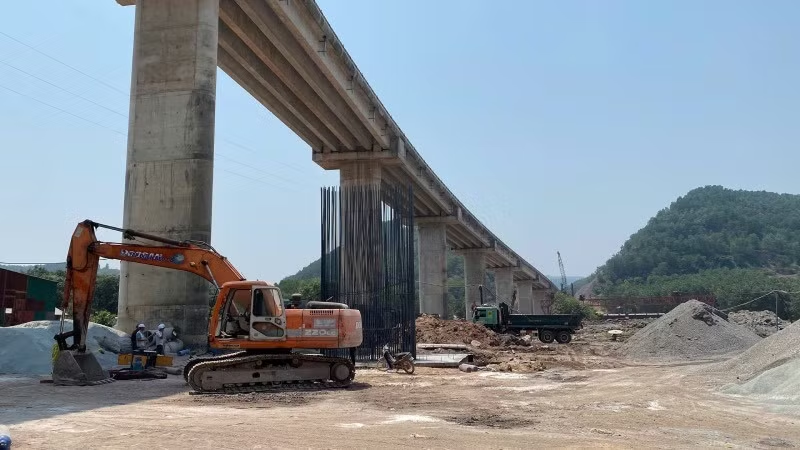
Cam Lo-La Son Expressway to Suspend Nighttime Operations for Enhanced Safety
The Cam Lo-La Son Expressway in central Vietnam will temporarily suspend nighttime operations from 5 PM to 5 AM daily, starting July 10th. This measure, aimed at improving safety following recent serious accidents, excludes construction vehicles.
The Ho Chi Minh Project Management Board has announced a temporary suspension of operations on the entire Cam Lo-La Son Expressway. Effective from 5 PM on July 10, 2026, and continuing until further notice, the expressway will be closed to all vehicles between 5 PM and 5 AM daily. This measure is intended to enhance safety and applies to all traffic except for construction vehicles. The decision follows a series of recent accidents, including a severe crash that claimed two lives. In Vietnam's one-party system, infrastructure development is a cornerstone of national progress, with expressway expansion crucial for economic growth. However, maintaining safety standards during rapid development remains a significant concern. The Cam Lo-La Son Expressway is a critical transport corridor. Previously, speed limits have been adjusted, and during expansion phases, a 50 km/h limit was imposed, highlighting ongoing safety management efforts. This nighttime closure is expected to mitigate risks associated with driver fatigue and reduced visibility. The Vietnamese government's focus on infrastructure quality, alongside economic advancement, underscores a commitment to safety. Potential impacts on logistics and nighttime travelers will require further consideration.
多角的分析
今回の夜間通行止めは、物流の運行スケジュールに影響を与える可能性がある。特に、夜間に長距離輸送を行う事業者は、代替ルートの検討や運行時間の調整を迫られる。これは、輸送コストの増加やリードタイムの遅延につながり、サプライチェーン全体に波及するリスクがある。ベトナム経済が輸出主導で成長する中で、物流インフラの寸断は経済活動のボトルネックとなり得るため、政府は代替輸送手段の確保や、夜間通行止めの期間短縮に向けた対策を講じる必要があるだろう。
カオルン・ラソン高速道路の夜間通行止めは、短期的な投資家にとって、物流関連企業や、同高速道路を利用する製造業・小売業の業績に一時的な影響を与える要因となり得る。しかし、長期的には、安全性の向上はインフラ資産の価値維持に寄与すると考えられる。ベトナムのインフラ投資は今後も続くと予想されるが、投資家は、個別のプロジェクトにおける安全性や環境への配慮といった、質的な側面も評価基準に加える必要が出てくるだろう。
カオルン・ラソン高速道路の夜間通行止めは、夜間に長距離移動を必要とする一般市民や、ドライバーの生活に直接的な影響を与える。特に、長距離トラックの運転手などは、運行ルートの変更や、休憩時間の増加により、労働環境や収入に影響が出る可能性がある。また、地域住民にとっては、夜間の静穏さが保たれる一方で、日中の交通量増加や、迂回路の利用による生活道路への影響も懸念される。
今回の夜間通行止めは、ドライバーの疲労や視界不良といった、事故の直接的な原因となりうる要因を排除しようとする意図が見られる。しかし、夜行性のドライバーや、夜間にしか移動できない人々にとっては、移動手段の制限となる。特に、地方から都市部への移動や、緊急時の搬送など、時間的制約のある移動に影響が出る可能性がある。政府は、代替交通手段の提供や、情報提供を強化する必要がある。
背景・歴史的文脈
ベトナムにおける高速道路建設は、1990年代後半以降、経済発展の加速とともに本格化した。特に2010年代以降は、政府による大規模なインフラ投資計画が推進され、主要都市間を結ぶ高速道路網の整備が進められてきた。カオルン・ラソン高速道路も、ベトナム中部における東西経済回廊の重要な一部として、2020年末に開通した。しかし、急速なインフラ整備の過程で、安全性に関する懸念も指摘されており、過去には速度制限の変更や、一部区間の通行止め措置が取られた事例もある。今回の夜間通行止めは、これらの背景を踏まえ、安全性を最優先する政府の姿勢を示すものと考えられる。
原文ソース
Nhan Dan