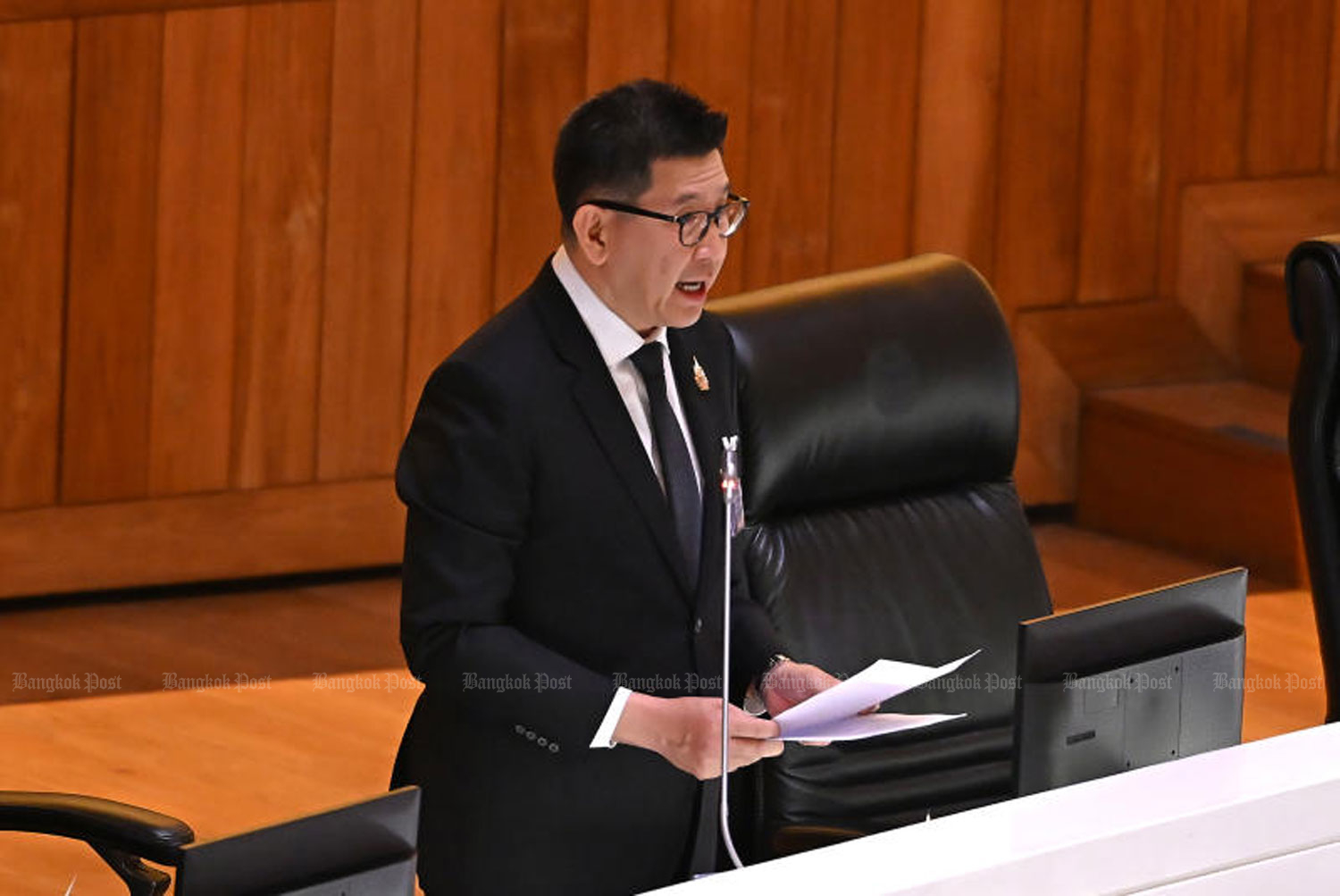
House OKs 2027 budget bill in first reading
Economy
2026年7月3日
4
Bangkok Post

House OKs 2027 budget bill in first reading

AI サマリー

The Thai House of Representatives has passed the government's 3.788-trillion-baht budget bill for the 2027 fiscal year in its first reading. Despite opposition concerns over spending priorities and fiscal discipline, the government defended its strategy to boost competitiveness and support citizens, explaining emergency borrowing measures.

The House of Representatives has voted to pass the government's 3.788-trillion-baht national budget bill for the 2027 fiscal year in its first reading. The bill will now be sent to a 72-member special committee for further scrutiny after three days of debate, during which it received 288 votes in favour, 119 against, and 86 abstentions. The special committee includes 18 cabinet ministers and MPs from both coalition and opposition parties. Throughout the debate, the government defended its fiscal strategy against opposition questions regarding spending priorities and fiscal discipline. In his closing statement, Deputy Prime Minister and Finance Minister Ekniti Nitithanprapas reiterated the government's commitment to boosting Thailand's competitiveness, raising incomes, and supporting households facing economic hardship, despite limited fiscal room. He defended the government's 400-billion-baht emergency borrowing decree, stating that swift action was necessary to prevent economic difficulties from escalating into a broader crisis affecting small businesses and employment. Mr Ekniti explained that the borrowing would support struggling households and finance Thailand's green energy transition, highlighting the nation's vulnerability to rising global energy prices due to its heavy reliance on imported oil and natural gas. He noted that higher oil prices over the past two months had contributed to a current account deficit exceeding 500 billion baht, making programs like "Thais Help Thais Plus" and investments in the energy transition essential. Rejecting criticism over fiscal discipline, Mr Ekniti stated that the government acknowledges the country's fiscal challenges and has adopted a medium-term framework to reduce the budget deficit from 4.4% of GDP last year to 3% by 2029. The target for the coming fiscal year is 3.9%. He also emphasized the need to shift public spending towards investment. While direct investment spending in the budget remains limited, the government plans to supplement it with 270 billion baht from state enterprise investments and public-private partnership projects in infrastructure, clean energy, and water management. Mr Ekniti assured that the budget bill complies with all legal requirements and that suggestions raised during the debate would be forwarded to the special committee for detailed consideration.

多角的分析

経済的影響

2027年度予算案の可決は、タイ経済の安定と成長に向けた政府の財政運営能力を示す重要な一歩です。しかし、4000億バーツもの緊急借入は、財政赤字の拡大懸念を招きます。政府が掲げるGDP比3%への財政赤字削減目標(2029年)達成には、歳出抑制と歳入確保の両面で抜本的な対策が求められます。特に、エネルギー価格高騰による経常赤字の拡大は、輸入依存度の高さという構造的な課題を浮き彫りにしており、グリーンエネルギーへの移行は喫緊の課題です。この移行には多額の投資が必要であり、国営企業やPPPを通じた追加投資(2700億バーツ)は、財政負担を分散させる一策ですが、その実行性と効率性が問われます。

投資家心理

今回の予算案可決は、タイ政府の財政運営に対する一定の安心感を与える可能性があります。特に、インフラやグリーンエネルギー分野への投資拡大計画は、長期的な成長ポテンシャルを持つセクターへの資金流入を期待させます。しかし、4000億バーツの緊急借入は、政府債務の増加懸念を招き、金利上昇リスクにつながる可能性も否定できません。投資家は、特別委員会での詳細な審査内容、特に歳出の優先順位や財政規律の具体的な実行計画を注視する必要があります。また、エネルギー価格の変動リスクが経常収支に与える影響も、引き続き重要な監視項目となるでしょう。

社会的影響

予算案審議における野党からの歳出優先順位への疑問は、国民生活に直結する課題への配分が十分かという懸念を反映しています。政府は「家計の経済的困難への支援」を強調していますが、具体的にどのような層に、どの程度の支援が行き渡るのかは、予算の詳細な内訳によって変わってきます。4000億バーツの緊急借入が、物価高に苦しむ低所得者層や中小企業にどれだけ効果的に届くかが、社会的な安定に影響を与えるでしょう。また、グリーンエネルギーへの移行は、新たな雇用創興の機会をもたらす一方で、既存の産業構造からの転換を伴うため、労働市場への影響も考慮が必要です。

市民の声

今回の予算案可決は、国民生活への直接的な影響が不透明なままであるという不安を抱かせます。政府は「国民生活の支援」を掲げますが、4000億バーツという巨額の緊急借入が、物価高騰に苦しむ一般市民の家計を具体的にどのように助けるのか、その道筋はまだ見えにくい状況です。特に、エネルギー価格の上昇は、日々の生活費に直接響くため、政府の対策が迅速かつ実効性のあるものであることが強く求められます。また、インフラ投資やグリーンエネルギーへの転換といった長期的な計画が、将来的な雇用機会の創出や生活環境の改善に繋がるのか、市民は注視していくでしょう。

背景・歴史的文脈

タイの国家予算編成プロセスは、通常、会計年度開始前に議会で審議され、可決される必要があります。2027年度予算案は、タイ経済が世界的なインフレ圧力やエネルギー価格高騰の影響を受ける中で提出されました。政府は、経済競争力強化と国民生活支援を掲げ、財政赤字の拡大を抑えつつ、必要な投資を行うという難しい舵取りを迫られています。特に、4000億バーツの緊急借入は、過去の経済危機対応や、近年のパンデミック下での財政出動の経験を踏まえた措置と考えられます。財政赤字をGDP比3%まで削減するという目標は、過去数年間の財政状況を鑑みると、野心的であり、その達成には継続的な努力が必要です。

原文ソース

Bangkok Post

原文を読む
House OKs 2027 budget bill in first reading | NEWS-BRAIN