General articles are free for 24 hours after publish.
Ho Chi Minh City Plans Regulations for Underground Space Development
Ho Chi Minh City is advancing regulatory frameworks for the management, development, and utilization of underground space as a new frontier for urban development. This move is driven by the recognition that leveraging underground areas is essential to address growing population density and infrastructure demands, overcoming the limitations of finite surface space.
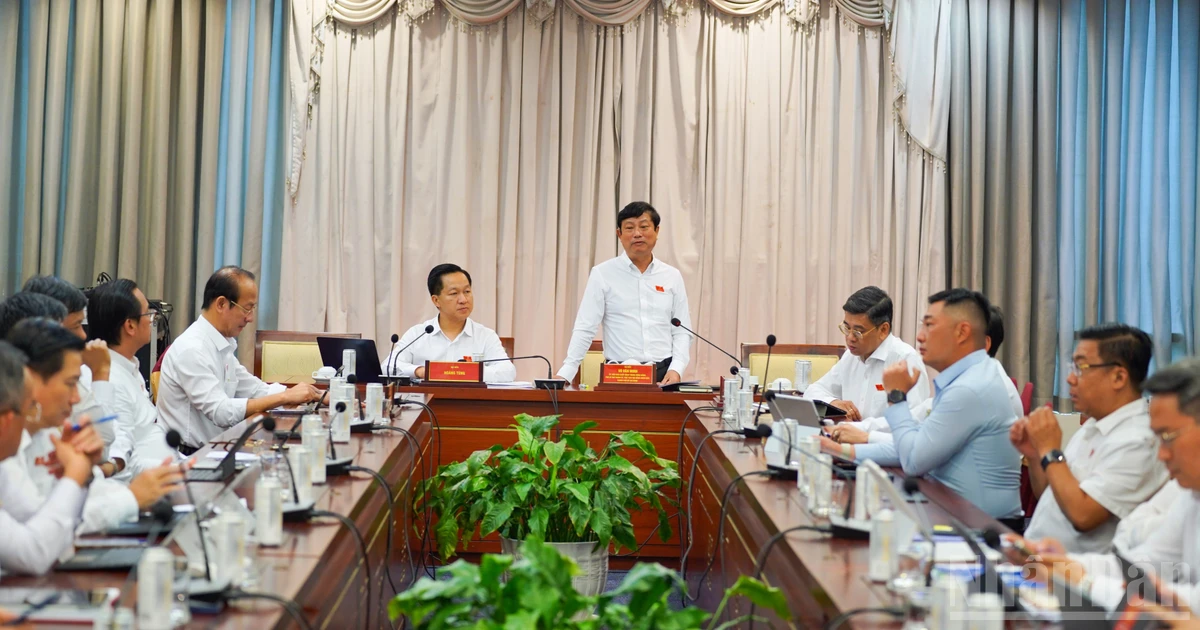
Ho Chi Minh City is accelerating the development of regulations for the management, development, and utilization of underground space as a new frontier for urban development. The City People's Committee has submitted two draft resolutions to the City People's Council: one on certain policies for managing, developing, and utilizing underground space, and another on the planning, appraisal, approval, and adjustment of underground space plans within the city. This initiative aims to concretize the policy of developing Ho Chi Minh City into a "civilized, modern, and sustainable city," focusing on infrastructure development, efficient spatial utilization, and mobilization of social resources. With its extremely high population density, building structures, and economic activities, the city faces ever-increasing demand for urban railways, parking lots, technical infrastructure, flood control systems, logistics centers, commercial facilities, and transportation hubs. In areas where expanding surface space is challenging, the rational development of underground space is seen as an essential solution to supplement development areas, mitigate land use conflicts, enhance infrastructure capacity, and improve connectivity with public transportation. Currently, many buildings in the city have basements, and underground transportation networks, infrastructure, and commercial/service spaces exist. However, these facilities are managed as individual projects, with unstandardized data on location and elevation, and a lack of a unified mechanism for specific objects, areas, or depths. Under the Urban Development Law, the City People's Council is empowered to stipulate special provisions for underground space. Therefore, the issuance of these resolutions is deemed necessary to specify the scope of underground space use, financial obligations, and investment attraction policies, thereby establishing a unified implementation basis for the entire city. The draft regulations submitted by the City People's Committee outline seven principles for underground space planning, appraisal, approval, and adjustment. These include: three-dimensional planning in depth, formulation on a city-wide scope, concretization of underground space orientation within the overall city plan, ensuring seamless connectivity in urban railway station areas, TOD areas, and new urban centers, compatibility with complex geological and hydrogeological conditions, identification of priority, restricted, and prohibited construction areas, consideration for environment, groundwater, fire prevention, national defense, security, and heritage, ensuring inheritance and non-overlap with approved plans, and encouraging investment attraction. Delegates at the City People's Council expressed agreement with these proposals, recognizing the necessity of resolutions for managing, developing, and utilizing underground space. However, some delegates pointed out the need for thorough geological surveys and assessments in the planning process, considering the city's specific geological characteristics, as underground areas may contain historical or archaeological relics, not just soil and rock. The integration of underground space development with railway networks and the need for unified planning that links underground and above-ground spaces were also emphasized. The Chairman of the City People's Committee stated that the Urban Development Law offers Ho Chi Minh City an "opportunity for acceleration," and that resolving long-standing issues related to underground space planning and parking, which have persisted for over 20 years, is a key priority. The city plans to develop underground spaces in central areas such as Quach Thi Trang roundabout, Le Loi, Nguyen Hue, and Ham Nghi streets, not only for parking but also for developing service centers and commercial facilities. The combination of multiple functions is expected to generate revenue, address investment recovery, and attract socialized investment for underground space development. The city intends to first issue core policy frameworks and then adjust and supplement them as new issues arise in practice. Source: Nhan Dan
Original source
Nhan Dan