General articles are free for 24 hours after publish.
Cambodia Rejects Thai 'Fact-Checking' on Border, Citing Territorial Sovereignty Over Online Scams
Cambodia's Minister of Information, Net Pheaktra, strongly refuted Thailand's plan to visit border areas under the pretext of investigating online scams, stating that Thailand must first answer fundamental questions about its military's occupation of Cambodian territory. The minister emphasized that online scam countermeasures and territorial sovereignty are separate issues.
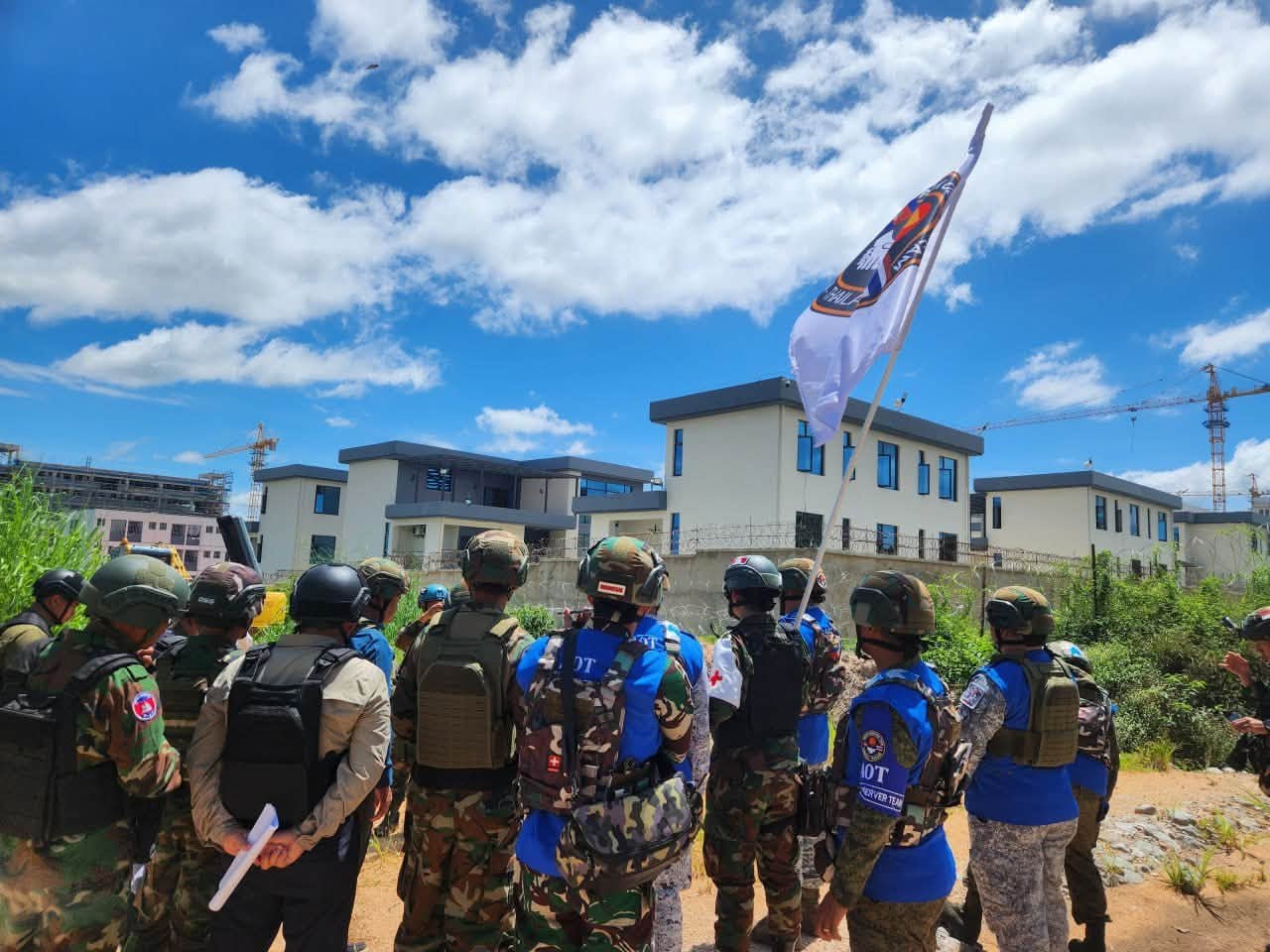
Cambodian Minister of Information, Net Pheaktra, has strongly responded to Thailand's planned visit to border areas under the pretext of investigating online scams, demanding that Thailand first answer fundamental questions. The minister pointed out that before discussing "fact-checking" on online scams, Thailand must explain the fact of its military's occupation of Cambodian territory and the circumstances surrounding it. Thailand had planned to invite ASEAN observers, as well as Thai and international journalists, to the O'Smach-Chok Jam border area, stating that this would allow them to witness the situation firsthand and conduct "independent fact-checking." Thailand used terms such as "transparency," "verification," "truth," and "dialogue" to describe the visit. However, Minister Pheaktra argued that before discussing what is inside buildings, documents, computers, or other materials that Thailand claims are related to online scams, a fundamental fact must be verified first: "Whose territory do these buildings belong to?" The minister asserted that the fact that Thai forces can enter a location, control it, or bring third parties to view it does not make that location Thai territory. The presence of the military, the hoisting of a national flag, and actual control do not replace maps, treaties, border documents, and the legal basis that defines a state's territory. He emphasized that if Thailand truly wants journalists to "comprehensively check the facts," the check should not begin only with what is inside the buildings. It must start with the geographical location, coordinates, maps, treaties, border documents, the situation before any conflict, and the legal basis for the presence of Thai forces there. Minister Pheaktra unequivocally stated that "Online scams cannot convert the invasion of another state's territory into a legal activity." He explained that Cambodia does not defend online scams and is actively cracking down on them in cooperation with international partners and relevant countries. However, he stressed that the fight against crime and the issue of state sovereignty are two separate matters. If an offense occurs within a country, it should be resolved through the enforcement of laws, police cooperation, intelligence sharing, mutual legal assistance, arrests, extradition of suspects, and existing international cooperation mechanisms. Suspecting a crime in a state's territory does not grant the forces of another state the right to enter, occupy, or exercise authority over that territory unilaterally. The Minister added that reliable fact-checking requires examining not only what Thailand is presenting today but also what happened before and what happened after. The crucial question is: Did the presence of Thai military forces in these locations result from law enforcement operations against online scams, or are online scams being used afterward to explain and legitimize the presence of illegal military forces on Cambodian territory that has already occurred? He further stated that "fact-checking" cannot selectively choose only the facts that one party wishes to present. Professional and credible fact-checking cannot mean that journalists are taken to see only the locations, materials, or information that one party has prepared for them to see and then conclude their findings. Journalists must also verify where they are standing, who brought them there, and what legal basis the presence of the party controlling the location has. Historically, on February 2, 2026, Cambodia strongly protested the escort of foreign military attachés and law enforcement officials to two hotels in O'Smach. The Cambodian Ministry of Foreign Affairs clarified that these locations were 397 meters from the O'Smach International Checkpoint, adjacent to border marker 15, and that the area was occupied by Thai forces during the fighting in December 2025. Subsequently, Cambodia protested the use of containers to block roads, road construction, barbed wire installation, earth dam digging, and the creation of other infrastructure in the O'Smach area. Cambodia also protested the hoisting of the Thai flag and the bringing of Thai and foreign journalists to locations in the O'Smach area, which is Cambodian territory, without Cambodia's permission. On June 30, the Cambodian Ministry of Information officially stated that bringing foreign journalists to O'Smach by the Thai side cannot grant the Thai side authority or sovereignty over that location. Before verifying what is inside a building, it must first be verified whose territory the building is on, because taking journalists to see a location cannot create sovereignty. Control by force cannot draw new border lines, and online scams cannot become a post-event excuse to legitimize the illegal occupation of territory by force. Source: AKP Khmer
Original source
AKP Khmer