General articles are free for 24 hours after publish.
China's State Airlines Post Heavy Losses Despite Passenger Increases
China's major state-owned airlines reported a combined net loss of 8.16 billion yuan (approximately $1.1 billion USD) in the first half of 2023, despite increased passenger numbers and revenue. Soaring fuel costs and a weak yuan are significantly impacting their financial performance.
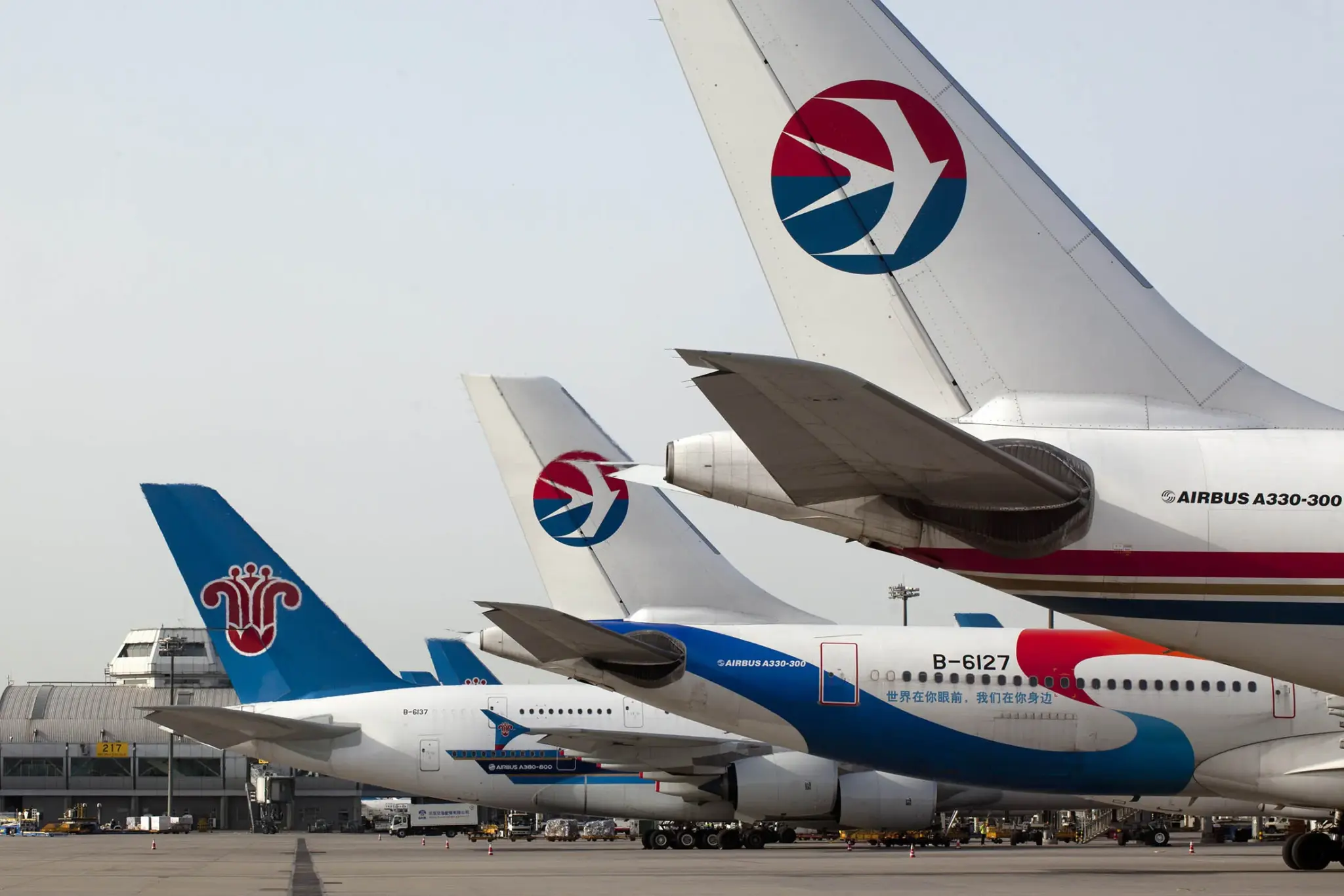
China's major state-owned airlines are facing severe financial difficulties despite increased passenger numbers and revenue. In the first half of 2023, the 'Big Three' carriers—China Southern Airlines, China Eastern Airlines, and Air China—collectively reported a staggering net loss of 8.16 billion yuan (approximately $1.1 billion USD). China Southern Airlines, the largest airline in Asia by fleet size, saw its passenger revenue increase by 9.7% year-on-year to 94.7 billion yuan. However, its net loss surged to 3.7 billion yuan. This is attributed to immense fixed costs, including aircraft leases, maintenance, and airport fees, compounded by fierce price competition in the domestic market. Aggressive ticket discounting to fill seats has severely eroded profitability. Experts note that managing a massive fleet comes with incredibly high fixed costs. The airline has to pay for airplane leases, regular maintenance, and expensive airport fees. These costs do not vanish just because passenger revenue is steadily growing. In fact, flying more planes often means spending even more cash. The airline has tried to optimize its routes to save money this year. Unfortunately, the domestic market is currently flooded with cheap discounted tickets. Airlines are slashing prices aggressively just to fill empty seats. This brutal price war has heavily damaged profit margins for China Southern. Shanghai-based China Eastern Airlines is grappling with a similar predicament. Based in Shanghai, the carrier is heavily reliant on business travel and international routes. Their revenue actually grew at a faster pace than China Southern this year. They reported about 74 billion yuan in revenue, marking a solid 11 percent increase. This double-digit growth looks fantastic on a standard financial spreadsheet. The planes are definitely full, and people are clearly eager to travel again. But just like its main rival, China Eastern could not turn those sales into actual profit. The airline ended the first half of the year with a net loss of 2.18 billion yuan. While their total loss is smaller than China Southern’s, it is still a massive blow. Shanghai’s travel market is highly competitive, and operating costs remain stubbornly high. Every time a plane takes off, the airline is battling rising daily expenses. The profit margins are so razor-thin that they are essentially non-existent. Industry watchers, as reported by major financial news outlets, point out that international travel remains very sluggish. China Eastern usually relies on long-haul flights to North America and Europe to make profits. With those flights operating below normal levels, the airline is struggling to balance its books. When you add up the total financial damage, the numbers are truly eye-watering. The three centrally owned airlines suffered a combined net loss of 8.16 billion yuan. Since we know the losses for China Southern and China Eastern, we can see the missing piece. Air China, the nation’s flag carrier, also took a significant financial hit during this period. Together, these three companies represent the absolute backbone of Chinese commercial aviation. They carry millions of people and millions of tons of cargo every single month. When all three are bleeding money, it signals a deeper problem in the travel economy. This combined deficit of 8.16 billion yuan cannot be ignored by market regulators. Running a state-owned airline means you cannot just cancel unprofitable domestic routes quickly. These airlines have a strict duty to connect remote regions and support the local economy. Because of this public service requirement, they are often forced to swallow heavy operating losses. Private airlines might simply stop flying out of quiet airports, but the Big Three cannot do that. This structural burden makes it incredibly difficult for them to bounce back to profitability quickly. They are carrying the weight of the entire country’s travel needs on their shoulders. Until consumer spending truly bounces back, these massive financial deficits will likely remain normal. So, why exactly are these airlines losing money while making significantly more revenue? The answer lies mostly in global economic factors that they simply cannot control. First and foremost, the price of jet fuel has remained painfully high this entire year. Fuel is typically the single biggest expense for any commercial passenger airline. Even a tiny increase in global oil prices wipes out millions in potential profit. Second, currency exchange rates have hit Chinese airlines exceptionally hard lately. Airlines buy their airplanes, spare parts, and fuel using US dollars. However, they earn the vast majority of their money in Chinese yuan. Because the yuan has been weak against the dollar, their costs have quietly exploded. Furthermore, the highly profitable international flight sector has not fully recovered yet. Before recent global events, flights to London, New York, and Paris were massive money-makers. Today, those specific routes are far less frequent and much more expensive to operate. Without these reliable cash cows, the airlines are relying purely on cheap domestic flights. Domestic travelers are currently very cautious about how they spend their extra money. They are waiting for major seasonal discounts before booking their family vacations. This forces airlines to keep ticket prices low just to stay somewhat competitive. It creates a toxic cycle of sky-high operating costs and low passenger revenues. Looking ahead, the road to financial recovery looks incredibly long and bumpy. The major airlines are doing everything they can to trim the fat and reduce waste. They are trying to negotiate better fuel contracts and delay taking on expensive new debt. However, these moves are just temporary band-aids on a much larger financial wound. The Chinese government may eventually need to step in with more direct support. These airlines are simply too big and too important to the economy to fail. They keep business moving, families connected, and supply chains flowing smoothly across Asia. But for now, airline executives are being forced to make incredibly difficult daily choices. Passengers will likely see some noticeable changes in the coming months. Airlines might start charging more Information source: Chiang Rai Times
Original source
Chiang Rai Times