General articles are free for 24 hours after publish.
Reservoir Fish Cages Empower Mountain Households in Thanh Hoa to Escape Poverty
In Thanh Hoa province, Vietnam, residents around the Trung Son Hydropower Reservoir are transitioning from wild fishing to cage aquaculture, stabilizing incomes and escaping poverty. The cultivation of high-value fish species is proving successful, contributing to the revitalization of the local economy.
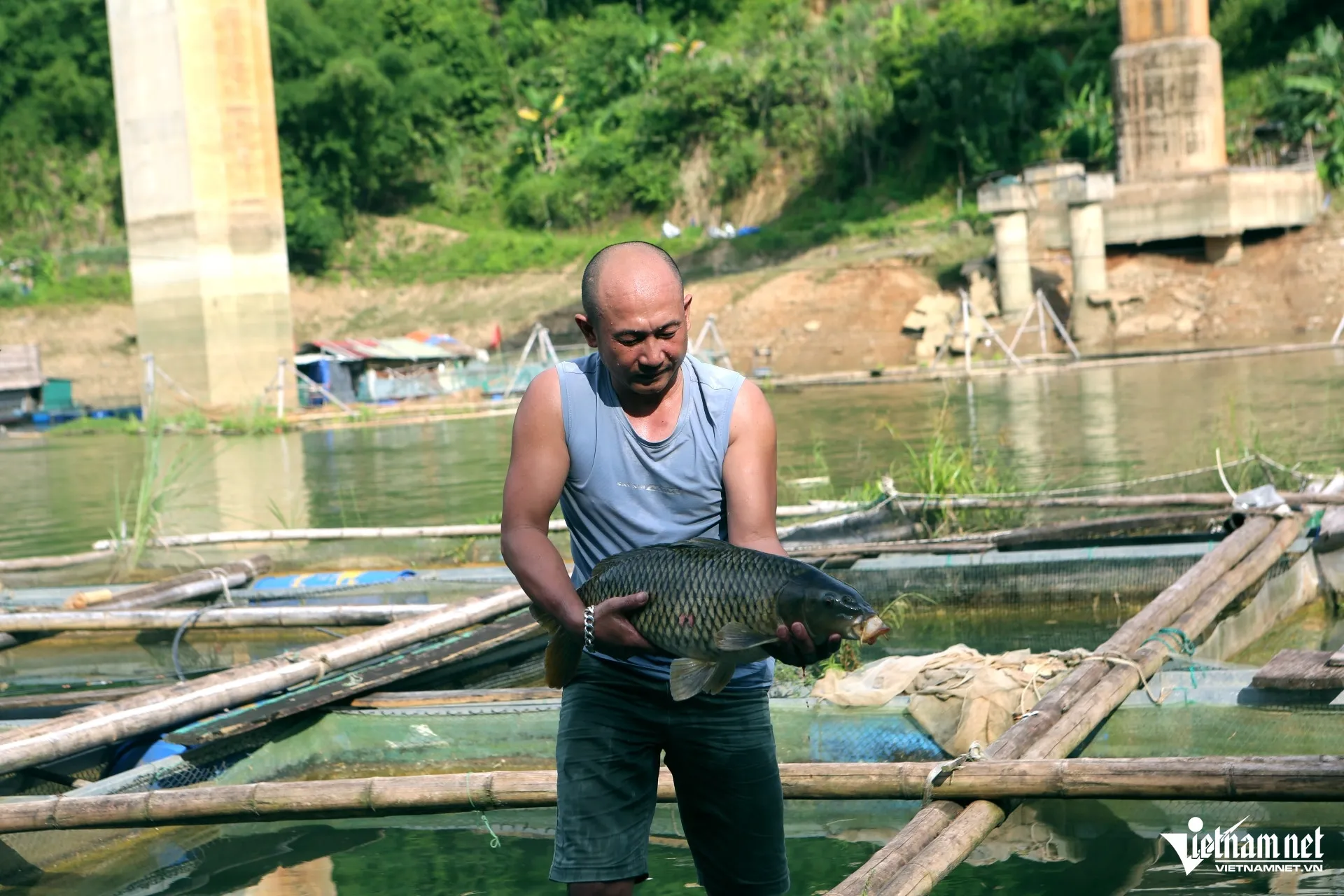
The calm waters of the Trung Son Hydropower Reservoir in Thanh Hoa province, Vietnam, are now lined with fish cages, reflecting a successful livelihood shift for many mountainous households. Residents have moved from wild fishing to cage aquaculture, significantly boosting their incomes and escaping poverty. Mr. Ngo Van Chien, a 37-year-old resident of Ta Ban village, is a pioneer in this transformation. Previously, his family relied on slash-and-burn farming and natural fishing along the Ma River, which offered unstable income. Recognizing the potential of the vast reservoir, he invested in fish cages. Today, his family manages 12 cages, primarily raising high-value species like red-tail catfish, grass carp, tilapia, and common carp. The reservoir's clean water ensures fast, healthy fish growth, and their firm, flavorful meat consistently attracts buyers. Chien's family now earns an annual net income of 120-150 million VND, improving their living standards and funding their children's education. Another trailblazer is Mr. Dinh Cong Chuc from Ta Ban village, who transitioned early from natural fishing to cage aquaculture. He now operates 6 cages, raising both specialty and common fish species. His family's fish farming brings in around 100 million VND annually, and he actively encourages fellow villagers to adopt the practice. The Trung Son Reservoir offers ideal natural conditions for aquaculture, with clear, well-circulated water year-round and minimal pollution. This allows fish to grow rapidly and maintain high quality. Cage farming efficiently utilizes local resources, creates new jobs, and raises income for mountain residents without disrupting land agriculture. Each year, these cages supply 35 to 40 tons of seafood to the market, generating a net profit of 14 to 16 million VND per cage. Mr. Ngo Si Tam, Deputy Secretary of the Party Committee of Trung Son Commune, stated that local authorities prioritized cage farming as a key strategy for livelihood diversification after the hydropower plant's completion. The commune government partnered with technical experts to conduct training workshops on seed selection, feeding, disease control, and market distribution. As a result, many households have achieved clear economic success, escaping poverty and securing substantial annual incomes. The commune aims to expand the operation, targeting 190-200 cages across 65-70 households by 2030, with an annual yield of 45-47 tons and revenues nearing 10 billion VND. Future plans include enhancing safe production standards and quality control to build the "Trung Son Reservoir Fish" brand and increase product value. Ultimately, cage fish farming on the Trung Son Reservoir is not just about maximizing water usage; it provides sustainable livelihoods, reduces poverty, and drives economic development in Thanh Hoa's mountainous region, enabling many families to build prosperous lives in their homeland.
Original source
Vietnam Insider