General articles are free for 24 hours after publish.
Indonesia Updates Social-Economic Data for 74.1 Million Families, Strengthening DTSEN for Policy Precision
Indonesia is updating family data for 74.1 million households to enhance the National Social and Economic Single Data (DTSEN). This initiative aims to accurately capture socio-economic conditions, leading to more precise government policymaking.
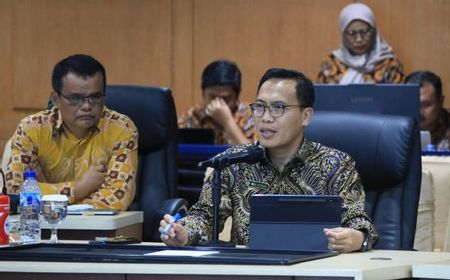
The Ministry of Population and Family Development (BKKBN) in Indonesia is intensifying the update of national family data for 74.1 million households to enhance the accuracy of the National Social and Economic Single Data (DTSEN). This initiative aims to ensure DTSEN more precisely reflects the socio-economic conditions of the community. The updated data is expected to serve as a foundation for government policymaking, ensuring that aid reaches those in need more effectively. Budi Setiyono, Secretary of the Ministry of Population and Family Development, emphasized the importance of data integration, stating, "We want to ensure that the government never abandons the people. The Ministry of Finance/BKKBN is committed to continuing to support the improvement of DTSEN." The 2025 Family Registration (PK) results now encompass 74.1 million families and 239.8 million individuals. This data includes crucial variables ranging from population and family planning to family development. Data updates are conducted continuously through mutation recording, data improvement, and the collection of data on new families, ensuring its relevance. Budi Setiawan, Director of People's Welfare Statistics at the Central Statistics Agency (BPS), praised the quality of BKKBN's family data collection, noting its utility in refining DTSEN. DTSEN is built by integrating three main databases: the Social and Economic Registration (Regsosek), the Integrated Social Welfare Data (DTKS), and the Targeting for the Acceleration of the Elimination of Extreme Poverty (P3KE). It is also periodically synchronized with population data from the Directorate General of Population and Civil Registration (Dukcapil) and coordinated with various ministries and local governments. The updated DTSEN will categorize families into 10 welfare levels, or desils, based on their socio-economic characteristics. As welfare conditions can change, a family's position within the desils is dynamic. These periodic updates enable the government to maintain a current picture of community conditions, thereby improving the accuracy of development programs and social security distribution. Source: VOI English
Original source
VOI English