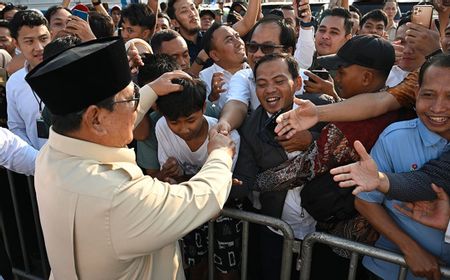
Prabowo Defends Indonesian People's Diligence, Rejects 'Lazy' Label
Politics
2026年7月17日
4
VOI English
Relations
🇮🇩Indonesia🇹🇭Thailand

Prabowo Defends Indonesian People's Diligence, Rejects 'Lazy' Label

AI サマリー

President Prabowo has refuted the notion that Indonesians are lazy and prone to relaxation, emphasizing the reality of millions working diligently from before dawn. Speaking at the groundbreaking of the Masela LNG project, he highlighted how the nation's hospitality is often misunderstood and warned against underestimation by foreign entities.

President Prabowo Subianto has strongly rejected the notion that the Indonesian people are lazy and prone to relaxation. He stated that such a view ignores the reality of millions of people working hard before sunrise. Prabowo made the statement on Thursday, July 16, during the online inauguration of the construction commencement of the Masela LNG Project from Jakarta. "There are parties who always look down on the Indonesian nation, who always take the Indonesian nation for granted," he said. According to the President, the hospitality of the Indonesian people is often misunderstood as weakness, and the habit of avoiding the heat is also considered a sign of laziness. "We are said to be a relaxed nation. We are said to be a lazy nation. That the Indonesian people, the people, their hobby is to sleep," Prabowo stated. However, he argued that this assumption does not align with the daily lives of the people. Fishermen go to sea in the dark and risk their lives to find fish, while farmers and residents in the interior also start working from early morning. "Our people are fighting hard day by day to find a decent life," he said. Prabowo explained that many people go to the rice fields, fields, look for water, wood, hunt, or sail when it is still dark, and some only return after the sun goes down. He added that the habit of resting in the hot sun is a way for people to adapt to the hot climate, not proof that they are reluctant to work. The statement came as Prabowo was discussing Indonesia's relations with foreign partners and investors in the Masela LNG Project. He emphasized that while Indonesia is open to mutually beneficial cooperation, a friendly attitude should not lead other parties to believe that the Indonesian nation can be easily suppressed or underestimated. "Indonesia is now an adult. Indonesian leaders are not stupid leaders, not naive leaders, not cowardly leaders," Prabowo asserted. The Masela project involves INPEX from Japan, Petronas from Malaysia, and Indonesia's Pertamina. Prabowo called for the project to provide tangible benefits for the people, not just for investors. Source: VOI English

多角的分析

経済的影響

プラボウォ大統領の発言は、国民の勤勉さを強調することで、国内外の投資家に対してインドネシアの労働力に対する懸念を払拭し、経済活動への信頼感を醸成しようとする意図がうかがえる。マスラLNGプロジェクトのような大規模開発は、多数の雇用創ちを生み出し、地域経済の活性化に貢献することが期待されており、大統領のこの発言は、プロジェクトの成功とそれに伴う経済効果への期待感を高めるための政治的メッセージとも解釈できる。国民の労働意欲を肯定することは、生産性向上への期待につながり、経済成長の潜在力をアピールする効果がある。

投資家心理

プラボウォ大統領の発言は、外国投資家に対してインドネシア国民の労働倫理に対する固定観念を否定し、安心感を与えることを目的としていると考えられる。特に、マスラLNGプロジェクトのような大規模かつ長期的な投資案件においては、労働力の質と安定性は重要な検討事項である。大統領は、国民のホスピタリティが弱さと誤解されやすいという点を指摘しつつも、それは本質的な勤勉さや生活のために奮闘する現実とは異なることを強調することで、投資家が抱く可能性のあるリスク認識を低減させようとしている。これは、インドネシアが成熟した国家であり、指導者も賢明であるというメッセージを通じて、投資環境の安定性をアピールする試みと言える。

社会的影響

プラボウォ大統領による「怠惰」というレッテル貼りの否定は、インドネシア国民の自尊心とアイデンティティに関わる重要な社会的問題提起である。国民の多くが、特に地方や農村部で、過酷な労働条件の下で生計を立てているにもかかわらず、しばしば国際社会や一部の国内エリートから「怠惰」と見なされることへの不満や反発が存在する。大統領は、漁師や農民の具体的な労働の様子を例に挙げることで、こうした国民の努力と犠牲を可視化し、彼らの尊厳を守ろうとしている。これは、国民統合と社会的な連帯感を高めるための象徴的な行為とも言える。

市民の声

プラボウォ大統領の発言は、ジャカルタのような都市部だけでなく、地方に住む多くの国民にとって、自分たちの日々の生活と労働が正当に評価されていないという感覚に対する共感を呼ぶだろう。特に、早朝から農作業に従事する農家や、悪天候でも漁に出る漁師たちは、自分たちの努力が「怠惰」と誤解されることに不満を感じているはずだ。大統領が彼らの生活を具体的に例示し、その勤勉さを擁護したことは、彼らのプライドを肯定し、政府が国民の生活実態を理解しているというメッセージとして受け止められる可能性がある。これは、国民の政府に対する信頼感を高める一因となりうる。

背景・歴史的文脈

インドネシアでは、歴史的に植民地時代からの労働観や、熱帯気候における生活様式が、一部で「怠惰」というステレオタイプに結びつけられてきた背景がある。特に、国民の多くが農業や漁業といった第一次産業に従事しており、その労働形態は日照時間や天候に左右されやすく、長時間労働が必ずしも高収入に直結しない場合もある。プラボウォ大統領の発言は、こうした国民の生活実態と、それに対する外部からの誤解や偏見に対して、国民の誇りを守り、勤勉さを再評価しようとする試みである。これは、国民統合を強化し、国内の多様な労働力に対する敬意を醸成する文脈で理解される。

原文ソース

VOI English

原文を読む