General articles are free for 24 hours after publish.
Cambodia Pushes ASEAN Power Grid Vision to Become Electricity Exporter
Cambodia's Energy Minister has renewed calls for an ASEAN power grid, citing the Kingdom's high renewable energy share as a basis for future clean electricity exports to neighbors.
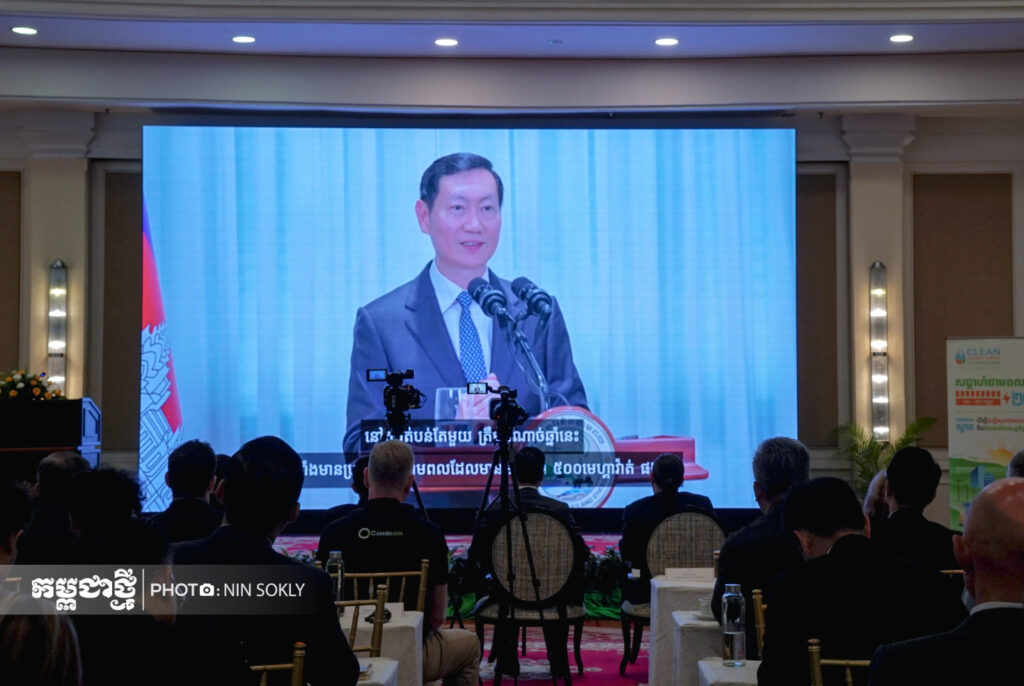
PHNOM PENH, Sept 15, 2026 (KPT) — Cambodia’s energy minister Keo Rottanak has renewed calls for a regional power grid linking Southeast Asian nations, saying the Kingdom could eventually supply clean electricity to its neighbours rather than rely solely on domestic generation. Speaking at the opening of Clean Energy Week in Phnom Penh, Mines and Energy Minister Keo Rottanak described himself as “a strong advocate” of the ASEAN power grid, an initiative to interconnect electricity networks across member states. “A country with a high and rising share of renewable power can, in turn, supply clean electricity to its neighbours as well as draw on theirs,” Rottanak said. “That is the promise of the ASEAN grid.” He said interconnection would allow countries to share clean electricity across borders to meet demand where supply is disrupted, adding that recent instability in global energy markets sharpened the case for building such links. Rottanak noted that renewable sources, led by hydropower and solar, already account for more than 63 percent of Cambodia’s installed capacity, with a target of 70 percent by 2030. He cited projects including a solar cluster exceeding 1,100 megawatts paired with 500 megawatts of battery storage, a separate 250‑megawatt battery system financed by the Asian Development Bank, and a 1,000‑megawatt pumped‑storage hydropower project under construction. Australian Ambassador Derek Yip told the summit that this year’s regional energy disruptions underscored the importance of security and interconnection. He pointed to shortages linked to conflict in Indonesia that left LPG queues in Phnom Penh and rising gas prices for vendors. “The events of this year have been a stark reminder of how easily livelihoods can be impacted by climate change and energy insecurity,” Yip said. He said Australia was supporting Cambodia’s transition through initiatives including solar‑powered irrigation systems, technical assistance to integrate more renewables into the grid, and the Cambodia Climate Financing Facility, which aims to mobilise several times its $100 million in initial capital for green investment. Yip added that Cambodia’s renewable capacity was already among the highest in the world relative to its size, and its battery storage capacity the largest in the region. Beyond generation, Rottanak said Cambodia was developing a renewable energy certificate framework to help exporters demonstrate the carbon intensity of their supply chains. He added that the Kingdom’s manufacturing base in electronics and vehicle components positioned it to supply clean energy systems elsewhere in the region. Plans for a fully interconnected ASEAN grid have long been discussed but remain slow, constrained by differing regulations, financing gaps and technical challenges. Rottanak’s remarks came as Cambodia’s fuel import bill surged nearly 39 percent in the first half of 2026 to $3.39 billion, underscoring continued exposure to global price volatility even as the country pursues a longer‑term shift toward renewables and regional electricity trade.
Original source
Kampuchea Thmey English