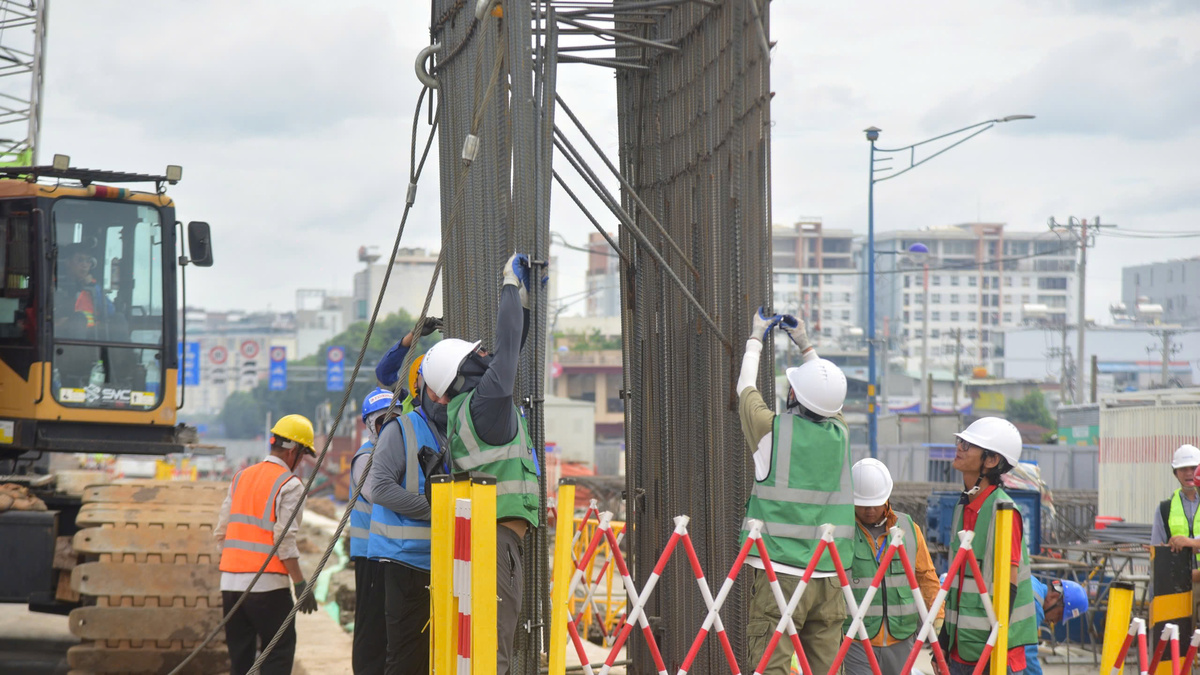
Ho Chi Minh City Metro Line 2 Begins Key Underground Construction Phase
Infrastructure
2026年7月2日
5
VnExpress
Relations
🇻🇳Vietnam🇹🇭Thailand

Ho Chi Minh City Metro Line 2 Begins Key Underground Construction Phase

AI サマリー

Construction of the underground diaphragm wall for Pham Van Bach station, part of Ho Chi Minh City's Metro Line 2 (Ben Thanh - Tham Luong), has commenced at a depth of 41 meters. This marks a transition to the project's main construction phase, aiming for completion by 2030.

Ho Chi Minh City's Metro Line 2 (Ben Thanh - Tham Luong) has entered a critical phase with the commencement of diaphragm wall construction for Pham Van Bach station. The contractor began lowering steel cages into the 41-meter deep excavation on July 2, signaling the project's transition from preparation to active construction. The diaphragm wall, a 1.2-meter thick structure, is essential for maintaining the stability of the deep excavation, preventing soil and water ingress. Upon completion of the station, this wall will serve as an integral part of its load-bearing structure. Pham Van Bach station, strategically located near the entrance to Tan Son Nhat International Airport, is the final underground station before Metro Line 2 transitions to an elevated track at Tan Binh station. The station design includes two underground levels for ticketing, functional areas, and passenger pick-up/drop-off zones. The Ho Chi Minh City Urban Railway Management Board (MAUR) stated that the diaphragm wall at Pham Van Bach station will span approximately 534 meters and is projected to take six months to complete. The construction demands high technical precision and rigorous quality control of materials, alongside strict adherence to labor safety standards. MAUR is implementing traffic management measures, including barricades and diversions, to minimize disruption to residents and traffic flow, as the construction site is situated on a busy thoroughfare. Pham Van Bach and Le Thi Rieng stations are designated locations for the installation of Tunnel Boring Machines (TBMs) for Line 2. These stations are prioritized for completion by the third quarter of 2027 to facilitate the TBM operations. MAUR anticipates that widespread construction activities may affect public mobility, especially along the busy Cach Mang Thang Tam street. The board will collaborate with relevant authorities to orchestrate traffic flow adjustments throughout the project's various construction stages. Metro Line 2, with an estimated cost exceeding VND 55 trillion (over USD 2.2 billion), commenced construction in mid-January. The nearly 11.3 km line will comprise over 9 km of underground track, featuring 10 underground stations, one elevated station, and a depot. The project is targeted for completion in 2030, aiming to create a significant mass transit corridor connecting the heart of Ho Chi Minh City with its northwestern districts.

多角的分析

経済的影響

地下鉄2号線の建設は、ホーチミン市の都市インフラへの大規模な投資であり、長期的な経済成長の基盤強化に寄与する。特に、交通渋滞の緩和は物流コストの削減や生産性向上につながり、経済活動の活性化を促進する。また、建設期間中の雇用創出効果も期待される。しかし、総工費55兆ドン(約3,000億円)という巨額の投資は、財政への負担となり得るため、資金調達と管理の健全性が重要となる。ベトナム経済の成長鈍化リスクやインフレ圧力が高まった場合、プロジェクトの遅延やコスト増のリスクも無視できない。

投資家心理

地下鉄2号線の建設は、ホーチミン市の都市開発と経済成長への期待を示すものであり、不動産開発や関連サービス産業への投資機会をもたらす可能性がある。駅周辺の再開発や商業施設の整備が進むことで、新たなビジネスチャンスが生まれるだろう。しかし、プロジェクトの遅延リスクや、将来的な乗客数予測の不確実性は投資家にとってのリスク要因となる。また、ベトナムのインフラプロジェクトは、しばしば政治的・行政的な複雑さを伴うため、投資家は慎重なデューデリジェンスが必要とされる。

社会的影響

地下鉄2号線の建設は、ホーチミン市民の日常生活に大きな影響を与える。特に、工事期間中の交通渋滞の悪化は、通勤時間の増加や生活の利便性の低下を招く可能性がある。ファムバンバック駅周辺やカックマンタンタム通り沿いの住民は、騒音や振動、粉塵などの影響も受けるだろう。MAURは交通規制や情報提供に努めているが、市民生活への影響を最小限に抑えるための継続的な努力と、住民との丁寧なコミュニケーションが不可欠である。完成後は、公共交通機関の利便性向上により、多くの市民の移動手段が改善されることが期待される。

市民の声

地下鉄2号線の建設は、ホーチミン市民の日常生活に直接的な影響を与える。特に、工事現場周辺の住民は、騒音、粉塵、そして交通渋滞の悪化といった問題に直面している。MAURは交通規制や情報提供を行っているが、工事の進捗に伴う影響は避けられない。完成すれば、通勤時間の短縮や移動の利便性向上といった恩恵が期待されるが、それまでの間、市民は不便を強いられることになる。特に、カックマンタンタム通り沿いの住民は、日常的な移動への影響が大きいと考えられる。

背景・歴史的文脈

ベトナムにおける都市鉄道網の整備は、急速な都市化と経済成長に対応するための国家的な優先課題である。ホーチミン市、特に同市は、人口増加と経済活動の集中により、深刻な交通渋滞に悩まされている。地下鉄2号線(ベンタイン~タムルオン間)は、この問題に対処するため、2010年頃から計画が始まり、2025年1月に着工した。総工費55兆ドン(約3,000億円)という巨額の投資は、多くが国際的な融資に依存しており、プロジェクトの遅延は財政的な負担増につながる。ベトナムの一党体制下では、国家主導の大規模インフラプロジェクトは推進しやすい側面があるが、計画段階での綿密な検討と、建設・運営段階での効率的な管理が成功の鍵となる。

原文ソース

VnExpress

原文を読む