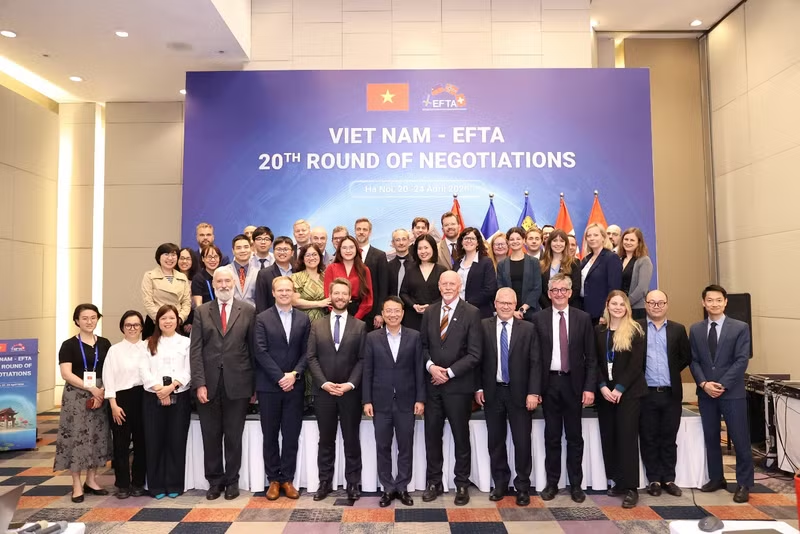
Vietnam-EFTA FTA Expected to Unlock New Growth Opportunities in Trade, Investment
Vietnam and the European Free Trade Association (EFTA) countries have successfully concluded negotiations on a Free Trade Agreement (FTA) after more than a decade. This agreement signals a commitment to an open international trading system and is expected to bring new growth opportunities through expanded trade and investment.
Vietnam and the European Free Trade Association (EFTA) countries have successfully concluded negotiations on a Free Trade Agreement (FTA) after more than a decade. This agreement demonstrates the strong commitment of both Vietnam and EFTA countries to an open, transparent, and rules-based international trading system. The FTA is expected to create new growth opportunities for trade and investment between the two regions. Specifically, it is anticipated to include tariff reductions and eliminations, removal of non-tariff barriers, liberalization of trade in services, and improvement of the investment environment. This is expected to lead to increased exports from Vietnam, such as agricultural products, seafood, and textiles, and increased imports from EFTA countries, including machinery, pharmaceuticals, and chemical products. Vietnam, under its one-party system, has been advancing market economy reforms and deepening its integration with the global economy. As a member of the Association of Southeast Asian Nations (ASEAN), it promotes regional economic integration while actively signing bilateral and multilateral agreements with countries like the US, Europe, and Japan to diversify its export markets. The conclusion of the FTA with EFTA is part of this strategy, and it is believed to also aim at relatively reducing economic dependence on China. EFTA countries (Switzerland, Norway, Iceland, and Liechtenstein) possess high-value-added products, advanced technological capabilities, and stable economic foundations. For these countries, the FTA with Vietnam is an opportunity to strengthen access to the rapidly growing Southeast Asian market and seize new business opportunities. This agreement sends a clear message that dialogue, cooperation, and economic connectivity remain the most effective means of promoting growth, creating jobs, and generating prosperity. The Vietnamese government intends to fully leverage this FTA to further accelerate economic growth and improve the living standards of its citizens. Information Source: VietnamPlus English
多角的分析
ベトナム・EFTA FTAは、ベトナム経済の多角化と高度化に寄与すると考えられます。EFTA諸国は、高度な技術力と高品質な製品を有しており、ベトナムへの投資は、製造業のサプライチェーン強化や技術移転を促進する可能性があります。特に、機械、医薬品、精密機器などの分野での協力拡大が期待されます。これは、ベトナムが単なる低コストの生産拠点から、より付加価値の高い産業へと移行するための重要なステップとなり得ます。過去、ベトナムは多くのFTAを締結してきましたが、EFTAとの合意は、欧州市場へのアクセスをさらに広げ、中国への過度な依存を緩和する上で戦略的な意味合いを持ちます。
このFTAは、ベトナム市場への投資を検討している国際的な投資家にとって、魅力的な機会を提供します。関税の引き下げや非関税障壁の撤廃は、輸入コストの削減につながり、ベトナム国内での生産活動の収益性を向上させます。また、投資環境の改善は、より安定した事業運営を可能にします。特に、EFTA諸国の企業がベトナムに投資する際には、その技術力やブランド力を活かした事業展開が期待できます。これは、ベトナムの製造業、特にハイテク分野やサービス分野への直接投資を促進するでしょう。
FTAの締結は、ベトナム国民の生活水準向上に間接的に貢献すると考えられます。貿易・投資の拡大は、新たな雇用の創出につながり、所得の増加をもたらす可能性があります。また、EFTA諸国からの高品質な製品やサービスの流入は、国内消費者の選択肢を広げ、生活の質を高めることにも寄与するでしょう。しかし、経済成長の恩恵が国内全体に均等に行き渡るか、あるいは都市部と地方、特定の産業間での格差が拡大しないかといった点は、今後の注視が必要です。特に、地方の農産物生産者や小規模事業者が、国際競争の激化にどう対応していくかが課題となります。
ベトナムとEFTA諸国のFTAは、国民生活に新たな機会と変化をもたらす可能性があります。例えば、ベトナムから輸出される農産物や水産物が、EFTA諸国でより安価に流通するようになれば、農家にとっては新たな販路が開けるかもしれません。一方で、EFTA諸国から輸入される高品質な機械や医薬品は、国内産業の近代化や医療サービスの向上に貢献する可能性があります。しかし、FTAによって恩恵を受ける産業とそうでない産業との間で、雇用や所得の格差が生じる可能性も否定できません。特に、国内の小規模事業者や、競争力の低い産業に携わる人々は、変化への適応を迫られることになるでしょう。
背景・歴史的文脈
ベトナムは、1986年のドイモイ政策(刷新)以降、計画経済から市場経済へと移行し、国際社会との関係を積極的に構築してきました。その一環として、ASEAN自由貿易圏(AFTA)への参加や、世界貿易機関(WTO)への加盟(2007年)を果たしています。近年では、環太平洋パートナーシップ協定(TPP)や、欧州連合(EU)との自由貿易協定(EVFTA)など、多数の二国間・多国間FTAを締結し、輸出市場の多角化と外国からの投資誘致に注力しています。今回のEFTAとのFTAは、これらの動きと連動しており、特に欧州市場におけるベトナムの競争力を高め、経済成長の新たなエンジンとすることを目指しています。中国との経済関係が深いベトナムにとって、欧州との連携強化は、経済的なリスク分散の観点からも重要視されています。
原文ソース
VietnamPlus English