General articles are free for 24 hours after publish.
Hanoi Floods in Parts of Long Biên Amid Heavy Rainfall; Drainage System Upgrades Underway
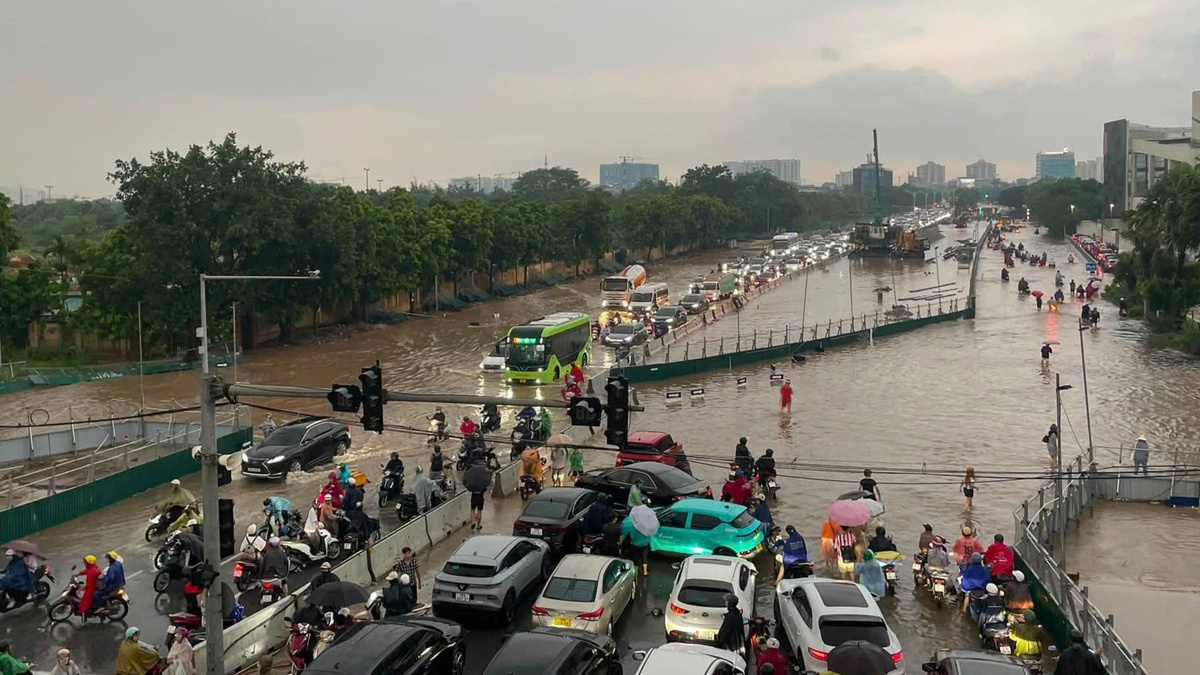
Heavy rainfall on July 31 caused temporary flooding in parts of Hanoi, notably Long Biên district, disrupting traffic. City authorities cited overwhelmed drainage systems as the cause and are working on 10 emergency flood control projects, slated for completion by 2026, to improve the situation.
Heavy rainfall on July 31 caused temporary flooding in parts of Hanoi, notably Long Biên district, disrupting traffic. According to the Department of Construction, the cause was the existing drainage system being overwhelmed by a short period of intense rainfall measuring 115 mm. From 5:30 PM to 7:00 PM, widespread heavy rain was recorded, with Long Biên ward measuring over 115 mm. Hanoi Drainage Company reported three flooded points in the area: Nguyen Gia Bong street, Dam Quang Trung street, and the Co Linh intersection. The flooding occurred during the weekend evening rush hour, causing traffic jams on several adjacent roads, including a multi-hour standstill on Vinh Tuy bridge, inconveniencing residents. In a statement on August 1, the Department of Construction explained that the heavy rainfall in a short duration overloaded the current drainage system. Solutions are in place for immediate response to ensure drainage in the 2026 rainy season plan, allowing for timely water discharge and rapid recession. Specifically, the flooding began around 6:30 PM and by 7:30 PM, the water had almost completely receded, with full recession by 8:00 PM. Compared to similar intensity rainfall in previous years, these areas previously took 8-12 hours for water to fully drain. The department also noted that areas within the scope of emergency projects, such as Thang Long Avenue, the area in front of My Dinh National Stadium, and urban areas like Ngoai Giao Doan, Tay Ho Tay, Ressco, Eco Home, and Ciputra, as well as Vo Chi Cong street, did not experience flooding. Ten emergency anti-flooding projects are being implemented with the goal of operational readiness before the 2026 rainy season. These projects aim to gradually complete the drainage system according to the master plan, enhance connectivity with existing systems, and improve drainage capacity, thereby reducing the number of flooded points, the flooded area, depth, and duration compared to previous similar rainfall events. In previous years, rainfall intensity of 70-100 mm/h would result in 71 localized flooded points, with 40 on main roads severely impacting traffic. However, recent heavy rains have seen significant reduction or rapid drainage in areas covered by these emergency projects. Despite these improvements, some areas, such as Nguyen Gia Bong street (Bo De ward) and the intersection of Ba Trieu, Nguyen Du, and Ho Xuan Huong streets (Hai Ba Trung ward), experienced flooding after the morning rain on July 25. This was attributed to rainfall exceeding the system's capacity (30-60 mm in 30 minutes). Additionally, on July 27, flooding occurred along La Pho slope - Thuy Khue street (Tay Ho ward) and in alleys off Giang Van Minh street (Giang Vo ward), linked to the construction of the Thuy Khue and Ngoc Ha underground conduits. The department acknowledged that even in modern cities like Shanghai, Seoul, London, and New York, rainfall of 100 mm/h can still pose a risk of flooding. Current solutions focus on mitigating damage and shortening flood duration. Hanoi plans to continue implementing detailed measures for each flooded point to maximize the effectiveness of new investments alongside existing systems. At a city People's Council session in mid-July, Mr. Nguyen Trong Ky Anh, Director of the Hanoi Department of Planning and Architecture, stated that the current drainage system only meets about 20% of the planned capacity. Drainage reservoirs and related facilities are also only about 20% invested, with reservoir area reaching only about 18% of the planned amount. To address these "bottlenecks" in flooding, the city is revising its drainage plan and updating ground elevations. Following the approval of the revised plan, expected in October, Hanoi will issue a master plan for urban drainage for the 2026-2030 period. Information Source: VnExpress
Original source
VnExpress