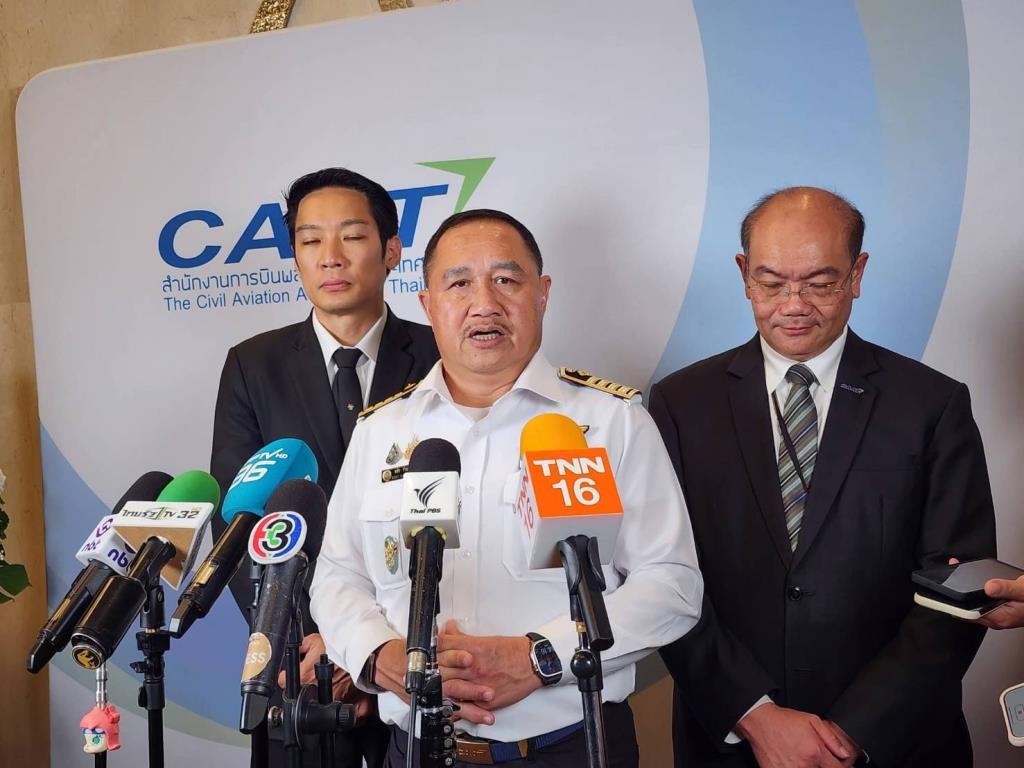
Thailand's Aviation Sector Faces Slow Recovery Due to Oil Prices; MRO Hub and Cargo Streamlining Planned
Business
2026年7月14日
3
MGR Online (Business)

Thailand's Aviation Sector Faces Slow Recovery Due to Oil Prices; MRO Hub and Cargo Streamlining Planned

AI サマリー

The Civil Aviation Authority of Thailand (CAAT) forecasts that rising oil prices will delay the aviation industry's recovery until 2026. The authority plans to develop Suvarnabhumi Airport into an MRO hub and streamline cargo procedures to bolster Thailand's position as an aviation hub.

The Civil Aviation Authority of Thailand (CAAT) has indicated that the surge in oil prices will be a factor delaying the recovery of the country's aviation industry. According to the authority's projections, this impact is expected to persist until 2026. To address this delay, CAAT plans to promote Suvarnabhumi International Airport as a hub for aircraft maintenance, repair, and overhaul (MRO). This initiative aims to strengthen domestic maintenance capabilities and foster the development of related industries. Furthermore, efforts will be made to simplify air cargo procedures. By establishing a swift and efficient cargo transportation system, Thailand aims to enhance its competitiveness as an air cargo hub in Southeast Asia. These measures are part of a strategy to mitigate the impact of oil price volatility on the aviation sector while promoting the sustainable growth and international standing of Thailand's entire aviation industry.

多角的分析

経済的影響

原油価格の高騰は、航空燃料費の直接的な増加を通じて航空会社の収益性を圧迫し、運賃上昇につながる可能性がある。これが旅客需要の低迷を招き、業界全体の回復を遅らせるという悪循環を生み出す。MRO拠点の整備や貨物手続きの簡略化は、コスト削減や新たな収益源の確保に寄与するが、原油価格の変動という根本的な課題への直接的な解決策ではない。タイ経済全体としても、航空産業の回復遅延は観光収入や関連産業への波及効果を限定的にする。

投資家心理

航空業界への投資家は、原油価格の変動リスクと、それが航空会社の収益性に与える影響を注視する必要がある。MRO拠点化や貨物ハブ化といった戦略は、長期的な競争力強化に繋がる可能性があるが、短期的な株価への影響は限定的だろう。航空会社の財務状況、特に燃料ヘッジ戦略の有無や、政府による支援策の動向が投資判断の鍵となる。タイの航空セクターへの投資は、地政学的リスクやグローバル経済の動向も考慮した慎重なアプローチが求められる。

社会的影響

原油価格の高騰による航空運賃の上昇は、タイ国民の海外旅行や帰省の機会を減少させる可能性がある。特に、所得の低い層にとっては、国内移動にも影響が出かねない。また、MRO拠点の整備や貨物手続きの簡略化は、新たな雇用機会を生み出す可能性がある一方、これらの施設へのアクセスや、関連産業で働く人々の生活圏への影響も考慮されるべきである。バンコク近郊のスワンナプーム空港周辺のインフラ整備や交通渋滞の悪化も懸念される。

市民の声

原油価格の上昇は、航空燃料費を通じて間接的にタイ国民の生活費に影響を与える。航空運賃の上昇は、海外旅行を計画する人々にとって大きな負担となり、観光業への依存度が高いタイ経済にとっては、観光客数の減少に繋がる懸念がある。MRO拠点の開発や貨物手続きの簡略化は、長期的に見ればタイ経済の多角化に貢献する可能性を秘めているが、市民生活への直接的な恩恵がいつ、どのように現れるかは不透明である。特に、地方に住む人々にとっては、交通費の上昇が生活を圧迫する要因となりうる。

背景・歴史的文脈

タイの航空産業は、観光立国としての経済成長を支える重要な柱である。しかし、燃料費の変動は常に業界の収益性を左右するリスク要因となってきた。特に、近年の国際情勢の不安定化や地政学的リスクの高まりは、原油価格を押し上げ、航空業界にさらなる逆風となっている。CAATによるMRO拠点化や貨物手続きの簡略化は、過去にも議論されてきたタイの航空ハブ化構想の一環であり、外部環境の変化に対応し、国内産業の競争力を強化するための継続的な取り組みである。

原文ソース

MGR Online (Business)

原文を読む