Laos Charts New Course for Media Development at First National Conference
Politics
2026年7月8日
5
KPL Laos News
Relations
🇱🇦Laos🇻🇳Vietnam🇨🇳China

Laos Charts New Course for Media Development at First National Conference

AI サマリー

The Lao People's Revolutionary Party convened a national conference to chart a new direction for media development, emphasizing its role as the Party's 'voice' in policy dissemination, public opinion shaping, and countering misinformation. The conference aims to modernize the sector and enhance its contribution to the Party, State, and people, replacing the 1993 guiding resolution.

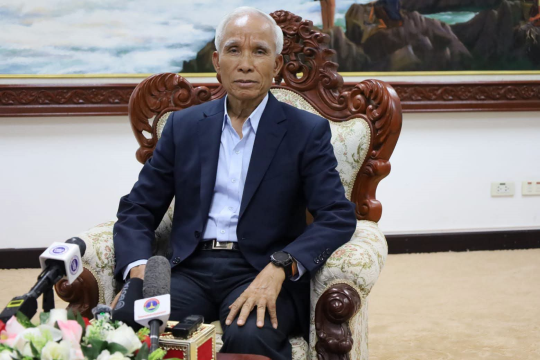
Khamphan Pheuyavong, Head of the Commission for Information and Education of the Central Committee of the Lao People's Revolutionary Party, highlighted the significant role of media ahead of the nation's first-ever National Media Conference. The conference reflects the media's increasingly important function as the Party's voice in disseminating policies and guidelines, shaping public understanding, and resolutely countering misinformation, distorted narratives, and hostile viewpoints. A central organizing committee was established in early 2026 to prepare for the conference, with four subcommittees tasked with content, publicity, security and health services, and logistics, including finance, personnel, and protocol. Preparations commenced shortly after the 11th National Party Congress and are now largely complete, with progress attributed to the close guidance of the Politburo, the Party Central Committee Secretariat, senior Party and State leaders, and the active cooperation of ministries, sectors, and media organizations nationwide. Challenges acknowledged include the absence of prior experience in organizing such a conference, limitations in comparative data for evaluation, and restricted time for documentary and exhibition preparation. The conference aims to comprehensively review media-related legislation, assess media organization performance, strengthen institutional structures and human resource development, improve infrastructure and technology, and enhance financial management to elevate the overall quality of the country's media sector. Professional development sessions will cover Party leadership over media work, media ethics, and legal and regulatory frameworks governing journalism and mass communications. A key outcome will be the drafting of a new Politburo resolution to replace Resolution No. 36, which has guided the media sector since 1993. The new policy framework seeks to modernize the media sector and bolster its capacity to fulfill its four core responsibilities: providing accurate information, educating the public, guiding public opinion, and combating false information and hostile narratives. Khamphan emphasized the Party leadership's guidance that media must "speak with clarity, touch people's hearts, inspire readers, uphold the truth, defend what is right, and overcome challenges." He called upon media organizations and journalists nationwide to uphold professional ethics, strictly observe the law, build on past achievements, and continue developing a modern, professional, and responsible media sector that effectively serves the Party, the State, and the people. In related news, the Ministry of Health will prioritize improving healthcare services, expanding access to clean water and sanitation, and strengthening grassroots health systems as part of the government’s National Agenda on Rural Development and Poverty Eradication. The Ministry of Finance is strengthening oversight of mining concessions and private investment projects to curb revenue leakages, improve transparency, and ensure state revenues are collected in full. The Bank of the Lao PDR (BOL) will implement five priority measures to contain inflation and achieve the National Assembly’s target of keeping average inflation below 7 percent in 2026. The Lao government will also expand the country’s strategic fuel reserves and accelerate the transition to electric vehicles (EVs), targeting EVs to comprise 30 percent of the national vehicle fleet by 2030, with 50 percent of government administrative vehicles to be converted to electric models.

多角的分析

経済的影響

ラオス経済は、インフレ抑制と国家歳入の確保が喫緊の課題となっている。財政省による鉱山利権・民間投資プロジェクトへの監視強化は、歳入漏洩防止と透明性向上を目指すものだが、鉱業セクターは外資依存度が高く、規制強化が投資環境に与える影響は注視が必要である。また、ラオス人民銀行(BOL)によるインフレ率7%未満目標達成のための5つの優先措置は、通貨価値の安定化を意図しているが、その具体策と実効性が問われる。燃料備蓄拡大やEVシフト加速といったエネルギー政策は、長期的な経済安定化と環境負荷低減に資する可能性があるが、インフラ整備や普及促進策が鍵となる。

投資家心理

今回のメディア開発会議は、ラオス国内の政策伝達と情報統制の強化を意図している。投資家にとっては、メディアの独立性や情報開示の透明性が低下するリスクを考慮する必要がある。特に、党の「声」としてのメディアの役割強化は、市場情報や企業活動に関する報道の自由度に影響を与えうる。一方で、財政省による鉱山利権・投資プロジェクトの監視強化は、既存投資家にとっては事業リスクとなりうるが、不正行為の抑制や透明性向上につながれば、長期的な投資環境の改善に寄与する可能性もある。EVシフト加速は、関連インフラやサービス分野への新たな投資機会をもたらすと考えられる。

社会的影響

メディアの役割が党の政策伝達と国民理解の形成、偽情報対策に特化されることは、国民への情報アクセスと多様な意見表明の場に影響を与える可能性がある。新しい政治局決議は、メディアの現代化と責任強化を目指す一方で、党の指導下での情報発信がより一層強化されることを示唆している。これは、市民が政府の政策や社会問題について、より限定的な情報しか得られなくなる可能性を示唆する。また、保健省による農村開発・貧困撲滅国家アジェンダの一環としての医療サービス・水衛生改善の優先は、地方住民の生活の質向上に直接的な影響を与える。しかし、その実施状況と地方への恩恵の公平性が重要となる。

市民の声

今回のメディア会議は、国民が受け取る情報の内容と質に影響を与えるだろう。党の「声」としてのメディアの強化は、政府の政策や社会の出来事に関する情報が、党の意向に沿ったものになる可能性を示唆している。これにより、国民は多様な視点や批判的な情報に触れる機会が減るかもしれない。一方、保健省が掲げる農村開発や水衛生の改善は、地方に住む多くの国民の生活に直接的な恩恵をもたらす可能性がある。しかし、これらの政策が地方の隅々まで公平に届けられるかが、国民の生活実感に大きく関わるだろう。

背景・歴史的文脈

ラオスは、ラオス人民革命党による一党体制の下、社会主義国家としての道を歩んでいる。メディアは伝統的に党の政策伝達と世論形成の重要なツールと位置づけられてきた。1993年の決議第36号は、メディアの役割を党・国家・国民への奉仕と定義していたが、情報技術の発展や国際情勢の変化に対応するため、その刷新が求められていた。特に、中国やベトナムといった周辺社会主義国との関係性を考慮しつつ、国内の安定を維持するために、情報統制と政策伝達の強化は党にとって重要な課題である。今回の全国メディア会議は、こうした背景を踏まえ、メディアの現代化と党の指導下での活動強化を目指すものと言える。

原文ソース

KPL Laos News

原文を読む