General articles are free for 24 hours after publish.
Cambodia Focuses Support on Nearly 500,000 Registered Informal Economy Workers
Cambodia's Ministry of Industry is encouraging registration on the "Digital Train" platform for informal economy workers. With nearly 500,000 registered, the government aims to deliver more targeted support, fostering skill development and economic growth. Sectors like beauty and hairdressing are prioritized.
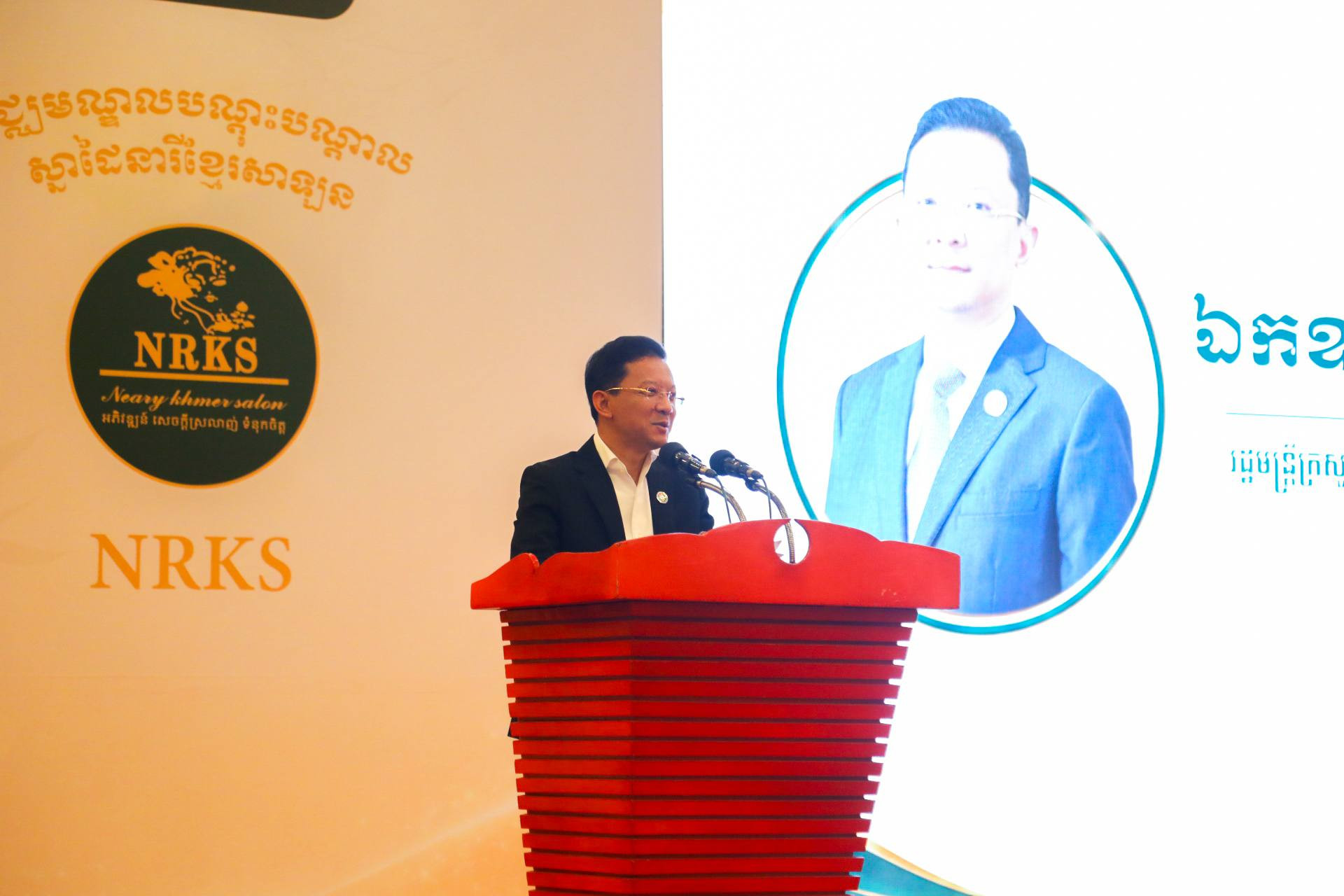
Phnom Penh – H.E. Hem Vanndy, Minister of Industry, Science, Technology and Innovation, and Chairman of the Coordinating Committee for the Development of the Informal Economy, encouraged informal economy workers to register on the "Digital Train" platform. He stated that this registration would facilitate the relevant ministries and institutions in providing better-targeted assistance and resolving difficulties for registered informal economy workers. H.E. Hem Vanndy made these remarks during an interview with journalists following his keynote address at the "Cambodia Salon Business Operators Forum 2026" on September 2, 2026. The forum, organized by the Cambodian Women's Skills Training Center, served not only as an opportunity for gathering, experience exchange, and expanding business networks but also as a meaningful event reflecting the growth, resilience, and collective achievements of business operators in the salon sector in Cambodia. H.E. Hem Vanndy informed that as of August 2026, nearly 500,000 informal economy workers have registered on the national registry. This aligns with the National Strategy for the Development of the Informal Economy 2023-2028, under which the seventh mandate government, led by H.E. Dr. Hun Manet and succeeding H.E. Dr. Hun Sen, has prioritized the development of strategies and plans for informal economy workers. "The organization of free and voluntary registration through the digital platform provides them with an identity, making it easier for ministries and institutions to provide services and facilitate skill development! We are now approaching half a million registered individuals," H.E. Minister of Industry stated. Furthermore, H.E. Hem Vanndy emphasized that informal economy workers are ranked as the fourth priority among the six priorities of the seventh mandate government. Therefore, the Cambodian government, under the leadership of the Cambodian People's Party, must ensure the development of informal economy workers by implementing numerous plans and policies. H.E. Hem Vanndy highlighted that among the many informal economy occupations registered under the National Strategy for the Development of the Informal Economy, beauty care, salon services, and hairdressing are considered priority occupations. This underscores the government's significant attention and consideration for informal economy workers. H.E. Hem Vanndy stated that the registration of informal economy workers is voluntary, with no coercion or fees required. He added that the use of technology in this registration process is crucial, as it significantly saves time for informal economy workers. The "Digital Train" platform offers multiple registration options, including a mobile application (CAM-IE app), a web portal, and through registration agent branches nationwide. These agents currently include Wing Bank, Vattanac Bank, ACLEDA Bank, ABA Bank, SME Bank, and ARDB. The target groups for registration encompass micro-enterprises, employees of micro-enterprises, occasional workers, and self-employed individuals engaged in businesses, occupations, and/or employment within the informal economy. Benefits for voluntary registration during this transitional phase include exemptions from penalties and tax debts for those in micro, small, and medium enterprises, along with various tax incentives. They may also receive financial support and training related to enterprise management. Meanwhile, self-employed individuals, such as small vendors, tuk-tuk drivers, and sugarcane juice sellers, will receive free healthcare. The government is particularly focused on providing scholarships for their children, monthly subsidies, and assistance in finding employment through national employment agencies and other vocational opportunities.
Original source
CPP Cambodia