General articles are free for 24 hours after publish.
Vietnamese PM Attends BRICS Summit, Boosting Global Presence
Vietnamese Prime Minister Le Minh Hung has departed for the 18th BRICS Summit, underscoring Vietnam's commitment to multilateral cooperation under its independent foreign policy. Vietnam's participation as a Partner Country signifies its growing role within the emerging economies bloc.
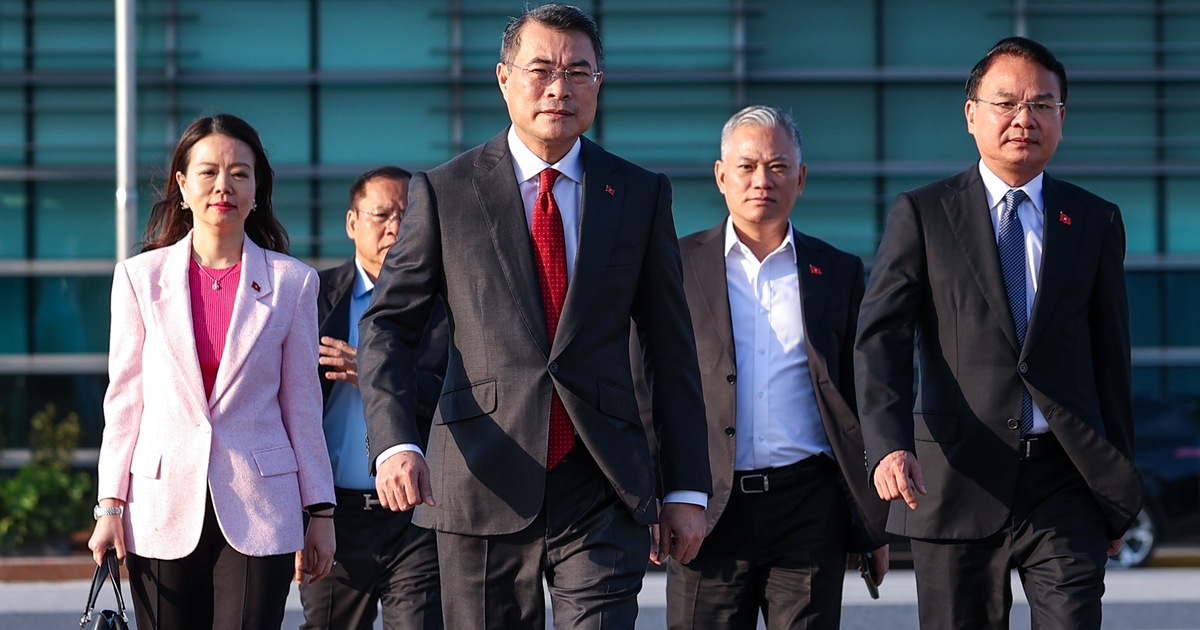
Prime Minister Le Minh Hung has departed from Hanoi for the 18th BRICS Summit in India on September 12, 2026. This trip underscores Vietnam's consistent pursuit of its foreign policy of independence, self-reliance, self-strengthening, peace, friendship, multilateralization and diversification of external relations, and active and proactive international integration, as set forth by the 14th National Party Congress. This marks the first time Prime Minister Le participates in a BRICS Summit, and the second time Vietnam attends as a Partner Country. The Prime Minister is accompanied by a high-level delegation including Foreign Minister Le Hoai Trung, Minister-Chairman of the Government Office Dang Xuan Phong, Deputy Minister of National Defense Nguyen Truong Thang, Deputy Minister of Public Security Nguyen Van Long, Deputy Minister of Finance Nguyen Thi Bich Ngoc, Vice Chairman of the Government Office Don Tuan Phong, Deputy Foreign Minister Nguyen Minh Hang, Assistant to the Prime Minister Tran Anh Tuan, and Vietnamese Ambassador to India Trinh Minh Manh. The 18th BRICS Summit, under India's Chairship, is guided by the theme "Building for Resilience, Innovation, Cooperation and Sustainability." This theme reflects a people-centric and humanity-first approach articulated by the Indian Prime Minister at the 2025 Rio Summit. Building resilience involves strengthening economic, social, and institutional capacities to navigate global uncertainties, supply chain disruptions, health challenges, and climate risks. Innovation focuses on deploying new and emerging technologies such as digital public infrastructure, fintech, and AI to enable effective service delivery and future-ready growth. Cooperation aims to deepen multilateral engagement through enhanced policy coordination, development finance, trade facilitation, reforms in global institutional governance, and people-centric partnerships among BRICS members. Sustainability endeavors to accelerate collective efforts toward climate action, green finance, energy transitions, and sustainable development aligned with national and global priorities. BRIC was formalized at the first meeting of BRIC Foreign Ministers on the sidelines of the United Nations General Assembly (UNGA) in New York in 2006. The inaugural BRIC Summit was convened in Yekaterinburg, Russia, in 2009. South Africa was included in BRIC, expanding it to BRICS, at the BRIC Foreign Ministers' meeting in New York in 2010, and subsequently attended the 3rd BRICS Summit in Sanya in 2011. Egypt, Ethiopia, Iran, Saudi Arabia, and the UAE became full members of BRICS from January 2024, followed by Indonesia in January 2025. In 2025, Belarus, Bolivia, Kazakhstan, Cuba, Malaysia, Nigeria, Thailand, Uganda, Uzbekistan, and Vietnam joined BRICS as Partner Countries. BRICS currently brings together eleven major emerging markets and developing countries: Brazil, China, Egypt, Ethiopia, India, Indonesia, Iran, Russia, Saudi Arabia, South Africa, and the United Arab Emirates. It serves as a valuable platform for consultation and cooperation on contemporary issues of global and regional significance, as well as on issues of global political and economic governance.
Original source
Bao Chinh Phu