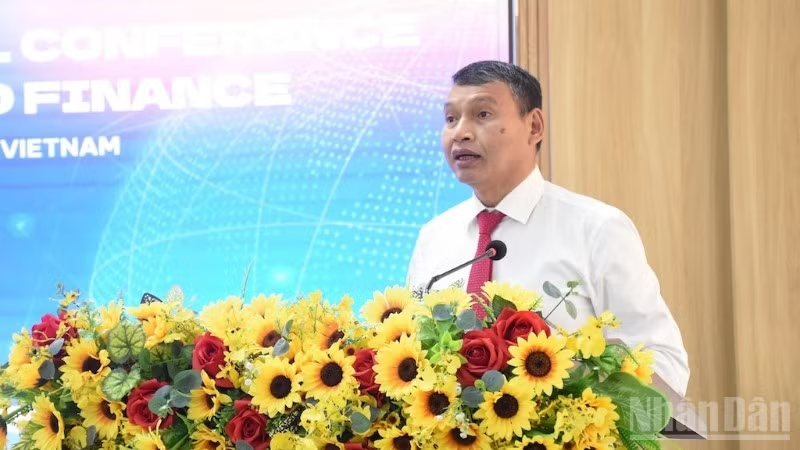
11th International Conference on Accounting and Finance (ICOAF 2026) Opens in Da Nang
The 11th International Conference on Accounting and Finance (ICOAF 2026) has commenced in Da Nang, Vietnam. Focusing on strengthening cooperation between the state, universities, and businesses for sustainable development, the event highlighted shifts in investment attraction and the importance of digital and green transitions.
On July 11, the 11th International Conference on Accounting and Finance (ICOAF 2026) opened in Da Nang City, central Vietnam. The conference is jointly organized by the Faculty of Economics of the University of Da Nang and relevant agencies. A key theme of the conference is 'Strengthening cooperation between the State, Universities, and Enterprises for Sustainable Development.' This reflects the approach of addressing challenges collaboratively among government, businesses, and academia, a strategy promoted under Vietnam's one-party system for economic growth. Furthermore, the opening of the 'Vietnam Finance Forum 2026' and the 'Da Nang Economy, Finance, and Technology Week' signal strategic initiatives to create new spaces for cooperation and attract international investment. Vietnam has been shifting its foreign direct investment (FDI) attraction from labor-intensive industries to higher value-added, technology-intensive sectors, and this conference is seen as part of that effort. Advanced topics such as 'Quantum Technology Strategy to Protect Technological Sovereignty and Integrate into the Global Digital Space' demonstrate Vietnam's ambition to enhance international competitiveness through technological innovation, also linking it to national security. The establishment of new university branches aims to contribute to human resource development and regional growth. 'Digital Transformation' and 'Green Transition' have been identified as crucial 'keywords' for university applicants in 2026, indicating how the next generation of Vietnamese society will engage with these challenges. This can also be interpreted as Vietnam's attempt to respond to global demands for environmental sustainability and contributions to global sustainability.
多角的分析
ベトナム経済は、製造業を中心に堅調な成長を続けているが、持続可能な成長のためには付加価値の向上と技術革新が不可欠である。今回の会議で強調された産官学連携は、イノベーション創出と人材育成を促進し、経済構造の高度化に寄与すると考えられる。特に、デジタル変革とグリーン転換への注力は、EUの炭素国境調整メカニズム(CBAM)導入など、国際的な規制強化に対応し、輸出競争力を維持・向上させるための戦略的な動きと言える。
ベトナムは、地政学的なリスク分散の観点から、中国に代わる製造拠点として注目されている。今回の会議で示された、投資誘致の転換(技術集約型産業へのシフト)や、デジタル・グリーン化への積極的な姿勢は、外国投資家にとって魅力的な要素となる。ただし、一党体制下における政策の安定性や、法制度の透明性、知的財産権の保護といった点は、引き続き投資判断における重要な検討事項となるだろう。
大学入試における「デジタル変革」「グリーン転換」の重要視は、次世代を担う若者たちが、これらのグローバルな課題意識を強く持っていることを示唆している。これは、将来の労働市場におけるスキルセットの変化を予見させると同時に、環境問題や技術革新に対する社会全体の関心の高まりを反映している。ダナン大学経済学部の主催であることから、地域経済の発展と、それに伴う雇用機会の創出、そして地域住民の生活水準向上への期待も込められていると考えられる。
会議で示された「持続可能な発展」や「グリーン転換」といったテーマは、日々の生活において、よりクリーンな環境や、将来世代のための持続可能な社会への関心を高めるだろう。特に、若年層が大学選択でこれらのキーワードを重視する傾向は、将来のキャリア選択にも影響を与え、環境技術やデジタル分野への進路選択を促す可能性がある。一方で、これらの変革が地域経済や雇用にどのような影響を与えるか、具体的な恩恵が市民にどう波及するかが、今後の注視点となる。
背景・歴史的文脈
ベトナムは1986年のドイモイ(刷新)政策以降、市場経済を導入し、目覚ましい経済成長を遂げてきた。特に2000年代以降、中国に代わる製造拠点としての地位を確立し、外国直接投資(FDI)を積極的に誘致してきた。しかし、近年は環境問題への懸念や、グローバルサプライチェーンの再編、米中対立の激化といった外部環境の変化に直面している。そのため、ベトナム政府は、単なる低コストの製造拠点から、より高付加価値で技術集約型の経済への転換を目指しており、教育・研究機関との連携強化や、デジタル・グリーン技術への投資を加速させている。今回の会議は、こうしたベトナムの経済戦略の最新の方向性を示すものと言える。
原文ソース
Nhan Dan