General articles are free for 24 hours after publish.
Vietnam Leads Advancement of ASEAN Community Vision 2045
Vietnam is proactively collaborating with ASEAN member states to advance concrete cooperation initiatives for the ASEAN Community Vision 2045. The nation is taking a leading role in economic growth, digital and green transitions, and addressing regional challenges.
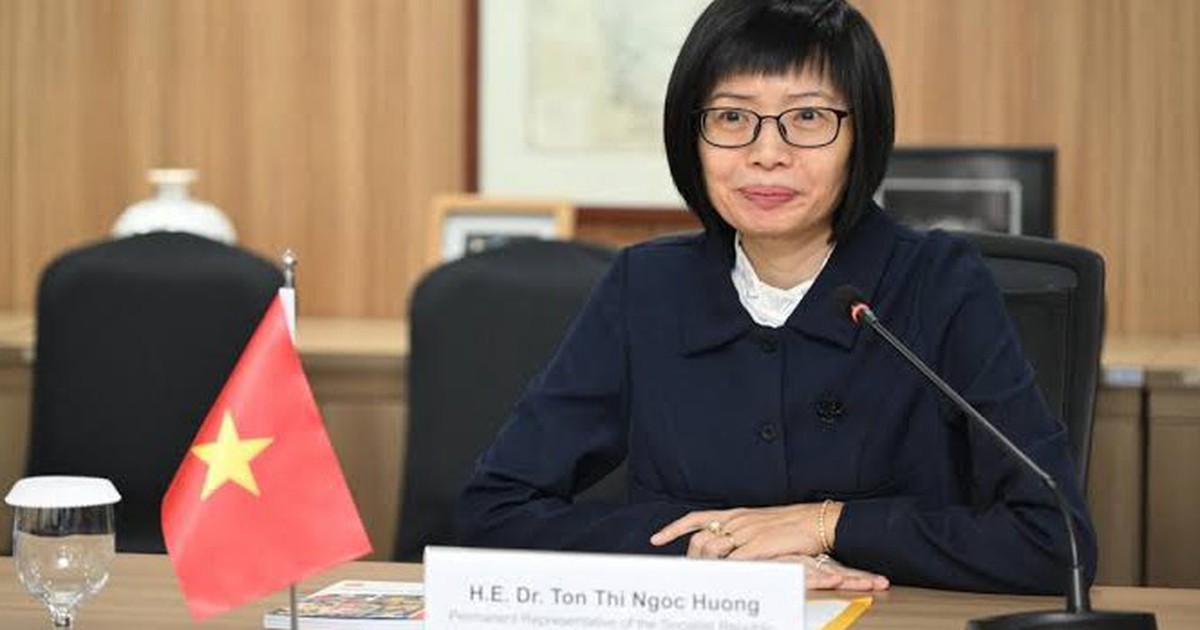
Viet Nam is taking a leading role in strengthening regional cooperation and advancing concrete cooperation initiatives for the implementation of the ASEAN Community Vision 2045. As the Association enters the first year of implementing this vision, coinciding with the 31st anniversary of Viet Nam's accession to ASEAN (July 28, 1995–July 28, 2026), Viet Nam is accelerating its efforts alongside other member states to achieve the vision's goals. Ambassador Ton Thi Ngoc Huong, Permanent Representative of Viet Nam to ASEAN, stated that Vietnamese ministries and agencies are expeditiously developing sectoral implementation plans in line with their respective mandates, contributing to the establishment of monitoring and evaluation mechanisms. She emphasized that Viet Nam has been proactively proposing and promoting initiatives to reinforce ASEAN solidarity, enhance regional resilience, narrow development gaps, accelerate digital and green transitions, address climate change, ensure food and energy security, and strengthen the region's capacity to respond to emerging challenges. At the national level, Viet Nam has proactively integrated the implementation of the ASEAN Community Vision 2045 into its socio-economic development plans, aiming to maximize synergies and deliver tangible outcomes. Notably, Viet Nam is among the first ASEAN members to formulate and implement a National Action Program for 2026–2030 to realize the ASEAN Community Vision 2045 and its Strategic Plans. As the Country Coordinator for ASEAN–New Zealand and ASEAN–United Kingdom relations for the 2024–2027 period, Viet Nam has also been actively mobilizing support and practical assistance from these Dialogue Partners to facilitate the implementation of the Vision. Regarding how Viet Nam can leverage ASEAN cooperation frameworks to achieve its economic development goals and enhance competitiveness, the Ambassador stressed the importance of making full use of the ASEAN Economic Community (AEC) and ASEAN's extensive network of free trade agreements. She noted that with ASEAN's market of nearly 700 million people, the Regional Comprehensive Economic Partnership (RCEP) covering around 2.3 billion consumers, and the ASEAN+1 FTAs, Vietnamese enterprises have greater opportunities to expand into new markets, integrate more deeply into regional and global supply chains, and strengthen their production capacity. ASEAN also serves as an important platform for attracting development resources, particularly investment in high-tech industries, infrastructure, and strategic economic sectors. The Ambassador cited data showing that FDI inflows into ASEAN reached approximately US$244 billion in 2025, with a growing share directed toward high-tech manufacturing. She added that Viet Nam can capitalize on the facilitation mechanisms under the ASEAN Comprehensive Investment Agreement (ACIA) and ASEAN's broad FTA network to move beyond assembly-based investment and become a more technology-intensive, higher value-added link in global supply chains. The Ambassador also highlighted major regional connectivity initiatives led by ASEAN, including the ASEAN Power Grid, which will gradually interconnect regional electricity systems, facilitate cross-border power trade, enhance energy security, and improve the complementarity of energy supplies among ASEAN member states. Meanwhile, the ASEAN Connectivity Strategic Plan 2045, featuring transport and digital infrastructure projects, is expected to support sustainable infrastructure development, strengthen digital connectivity, and promote greater integration in regional trade and investment. Particular attention was given to the ASEAN Digital Economy Framework Agreement (DEFA), which is expected to be signed later this year. According to the Ambassador, DEFA will become the world's first comprehensive regional digital economy agreement, paving the way for a unified ASEAN digital market, promoting e-commerce, trusted cross-border data flows, and digital payments, while enabling businesses—especially micro, small and medium-sized enterprises (MSMEs)—to participate more deeply in the regional digital economy. Beyond traditional areas of cooperation, the Ambassador said ASEAN's collaboration in emerging fields such as artificial intelligence (AI), semiconductors, quantum technology, the green transition, renewable energy, the circular economy, and responses to climate change, natural disasters, and pandemics will help Viet Nam better leverage international resources, advanced technologies, and global expertise to support sustainable development. Regarding the challenges facing ASEAN amid an increasingly complex and uncertain regional and global landscape, the diplomat observed that the Association is adapting to profound changes in the international system, where the foundations of international law, multilateral institutions, and the principles governing international relations are coming under growing pressure. She emphasized that ASEAN's centrality can only be preserved if the Association maintains unity, strengthens its ability to coordinate and respond to emerging challenges, and continues to enhance the effectiveness of ASEAN-led mechanisms. Against the backdrop of intensifying strategic competition among major powers, the Ambassador underscored the importance of reinforcing ASEAN solidarity and consensus through dialogue, consultation, and confidence-building based on mutual respect for each member's legitimate interests, while balancing national priorities with the common interests of the region. She also stressed that ASEAN must maintain its independence and strategic autonomy, ensuring that great-power rivalry does not undermine the Association's unity or common voice. According to the Ambassador, ASEAN-led dialogue and cooperation mechanisms should continue to evolve and become more effective so they can strengthen their role as platforms for engagement, confidence-building, and conflict prevention among partners, including major powers. At the same time, ASEAN should continue expanding and diversifying its partnerships with countries and regions around the world while deepening its existing strategic partnerships. Another major challenge, she noted, lies in implementing ASEAN's commitments and mobilizing adequate resources. The Association's increasingly ambitious goals require substantial resources, while the development levels and financial capacities of member states remain uneven. To address this challenge, the Ambassador said ASEAN should enhance its self-reliance in key areas of cooperation while adopting flexible and inclusive approaches. Information Source: Bao Chinh Phu
Original source
Bao Chinh Phu