Vietnam Clarifies Autonomy Mechanisms for Public and Private Universities
The Vietnamese government is deliberating a draft decree on university autonomy, aiming to clarify distinct financial and operational mechanisms for public and private institutions. This move is part of efforts to enhance educational quality and foster innovation.
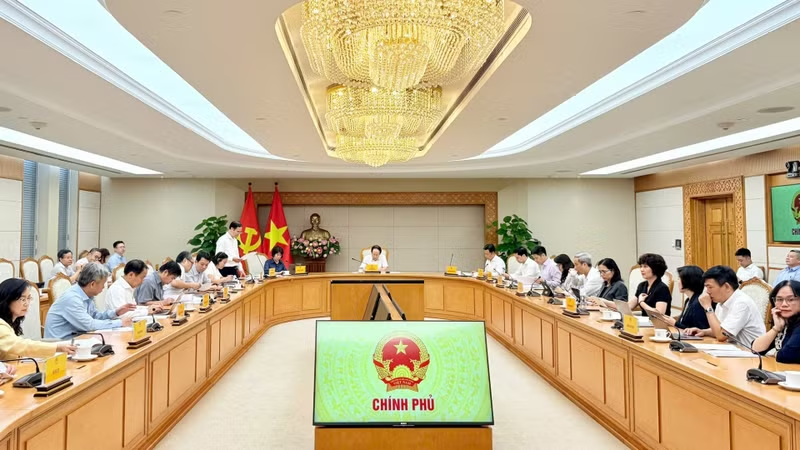
The Vietnamese government is moving to clarify distinct financial and operational mechanisms for public and private universities under a draft decree on institutional autonomy. On July 7, Deputy Prime Minister Le Tien Chau chaired a meeting at the Government Headquarters to discuss the draft decree, which outlines autonomy and financial mechanisms for higher education and vocational training, as well as full-time doctoral programs under national key initiatives. The proposed decree aims to enhance flexibility in university management, thereby improving educational quality and fostering innovation. Specifically, it is expected to introduce tailored scopes of autonomy and financial mechanisms for public and private universities, taking into account their different founding objectives and financial bases. This is anticipated to enable universities to more swiftly and effectively improve educational programs and research and development. This initiative aligns with the strategy promoted by the Communist Party leadership to make science, technology, and innovation the driving force for economic growth. By granting educational institutions greater autonomy, the development of human resources tailored to market needs and the creation of new technologies are expected to accelerate. Furthermore, a conclusion by President To Lam on improving and enforcing legal frameworks was also announced on the same day, indicating the government's overall commitment to institutional reform. Additionally, the National Assembly Standing Committee commenced its fourth session on July 8, with active discussions underway for legislative advancements. These developments suggest that Vietnam is strengthening its foundational systems to enhance its competitiveness in the international arena. Source: Nhan Dan
多角的分析
大学の自己決定権拡大は、教育機関が市場のニーズに即した人材育成を強化し、イノベーションを促進することで、ベトナム経済の質的向上に寄与する可能性がある。特に、研究開発への投資を増やし、新たな産業分野の創出を促すことが期待される。しかし、公立大学の財政的自立が不十分な場合、教育格差の拡大や、国家の教育政策との乖離が生じるリスクも考慮する必要がある。
大学の自己決定権拡大は、教育分野への投資機会を創出する可能性がある。特に、私立大学や、国際的な提携を強化する大学は、新たな教育プログラムや研究開発への投資を呼び込む可能性がある。一方で、公立大学の財政メカニズムの不透明さや、制度変更によるリスクを慎重に見極める必要がある。ベトナムの教育市場の成長性は高いが、投資判断には慎重なデューデリジェンスが求められる。
大学の自己決定権拡大は、学生に多様な学習機会を提供する可能性がある一方で、学費の高騰や教育の質の二極化を招く懸念もある。公立大学と私立大学間での教育リソースの偏りや、地方と都市部での教育機会の格差が拡大しないか注視する必要がある。また、教員の待遇改善や、研究環境の向上といった、教育の質に直結する要素がどのように担保されるかも重要な課題となる。
大学の自己決定権拡大は、学生にとってより多様で質の高い教育を受ける機会が増える可能性がある。しかし、公立大学と私立大学で学費や教育内容に差が生じることで、経済的な理由で希望する教育を受けられない学生が出てくる可能性が懸念される。特に、地方出身の学生や、経済的に恵まれない家庭の学生への配慮が求められる。
背景・歴史的文脈
ベトナムの一党体制下では、教育政策も中央政府の指導のもとで進められてきた。しかし、経済成長に伴い、大学教育の質向上や、国際競争力強化の必要性が高まっている。2018年には、大学の自己決定権に関する政令(Decree 16/2018/ND-CP)が施行されたが、その運用には課題も残っていた。今回の政令案は、公立と私立で異なるメカニズムを明確化することで、より実効性のある自己決定権の付与を目指すものであり、ベトナムが教育分野においても市場経済原理を導入し、イノベーションを加速させようとする意図がうかがえる。
原文ソース
Nhan Dan