General articles are free for 24 hours after publish.
Myanmar Junta Chief Visits Thailand, Seeking International Legitimacy
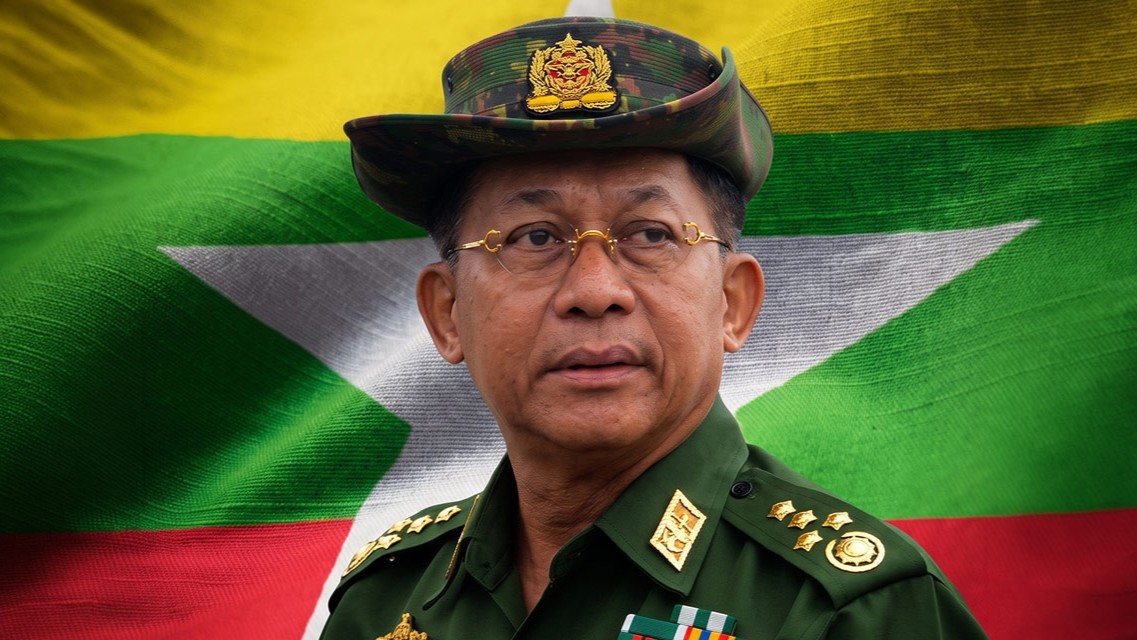
Myanmar's military leader, Min Aung Hlaing, made his first official visit to Thailand since the 2021 coup, a move seen as an effort to break international isolation and gain legitimacy. Thailand's welcoming reception signaled a strategy to re-engage with Myanmar's government within ASEAN.
Myanmar’s military-backed leader Min Aung Hlaing made his first official visit to Thailand since the 2021 coup, marking a significant moment in his efforts to break diplomatic isolation. The visit, extensively covered by international media, represents a calculated push by the junta chief to gain political legitimacy on the international stage. Thailand’s willingness to host him with what several outlets described as a “red-carpet welcome” signals Bangkok’s broader strategy to reopen ASEAN engagement with Myanmar’s controversial government. Bangkok’s decision to warmly receive Min Aung Hlaing reflects Thailand’s calculated approach to regional diplomacy. According to reports, Thai officials view engagement—rather than continued isolation—as the more pragmatic path forward for addressing Myanmar’s ongoing crisis. This aligns with Thailand’s broader foreign policy initiatives. The visit resulted in concrete bilateral agreements. Thailand and Myanmar signed key agreements on labour, water, and space cooperation, according to Thai government sources. Additionally, discussions covered border security matters, particularly relevant given that displacement along the Thailand-Myanmar border has reportedly approached four million people. The two nations also discussed the Dawei project, a significant infrastructure initiative aimed at strengthening connectivity between the two countries. Despite Thailand’s diplomatic overtures, the visit has sparked significant condemnation from human rights organizations and civil society groups. Amnesty International urged Thailand to prioritize human rights considerations in its talks with Myanmar’s leadership, reflecting broader concerns about legitimizing a government that seized power through a military coup. Notably, Myanmar nationals residing in Thailand have publicly criticized their host country’s warm reception of the junta leader, highlighting the deep divisions this diplomatic gesture has created among affected populations. This criticism underscores the complex position Thailand occupies—balancing regional stability interests, economic cooperation, and humanitarian concerns simultaneously. Beyond the political optics, the visit carries substantive economic implications. Myanmar has expressed interest in targeting growth in trade with Thailand, suggesting both nations see economic cooperation as a pathway toward normalization. This economic dimension is particularly significant given Thailand’s role as a regional trade hub and its own economic priorities. The labour cooperation agreement signed during this visit is particularly noteworthy, as Thailand has separately been working on a draft framework for hiring Myanmar workers, indicating the practical economic interdependence between the two nations despite the political controversy surrounding Myanmar’s government. Thailand has also taken steps to grant legal work rights to Myanmar refugees holding “pink cards,” further illustrating the multifaceted nature of the bilateral relationship. Thailand’s engagement with Min Aung Hlaing must be understood within the broader context of ASEAN’s approach to the Myanmar crisis. Thailand has reaffirmed its support for Myanmar’s full participation in ASEAN, positioning itself as an advocate for reintegrating Myanmar into regional diplomatic structures despite the international community’s continued concerns about the junta’s human rights record and democratic legitimacy. This visit occurs against a backdrop of Thailand’s own significant diplomatic calendar, including the Prime Minister’s policy speech at ASEAN Headquarters and Thailand’s preparations to host 191 countries for the 2026 Annual Meetings of the International Monetary Fund and World Bank Group. These parallel diplomatic engagements suggest Thailand is positioning itself as a central node for regional and international diplomacy, with the Myanmar relationship serving as one component of a broader strategic vision. The coverage of this visit reveals the inherent tension in Thailand’s foreign policy approach. On one hand, pragmatic considerations—including border security, trade relationships, migrant labor needs, and regional stability—push Thailand toward engagement with Myanmar’s current government. On the other hand, human rights concerns and international pressure create reputational risks for Thailand in extending legitimacy to a regime that came to power through unconstitutional means. Various news outlets have characterized this dynamic differently: while some frame Thailand’s actions as throwing Myanmar “a diplomatic lifeline,” others describe it more neutrally as part of a broader push to end Myanmar’s isolation. This divergence in framing reflects the genuinely contested nature of the appropriate international response to Myanmar’s post-coup government. Min Aung Hlaing’s visit to Thailand represents a pivotal moment in Myanmar’s post-coup diplomatic trajectory. While the junta leader achieved his apparent goal of securing a high-profile international engagement that lends an air of normalcy to his government, the visit simultaneously exposed the deep controversies surrounding any legitimization efforts. Thailand’s calculated engagement—balancing economic pragmatism, regional stability concerns, and mounting human rights criticism—illustrates the complex diplomatic tightrope that regional powers must walk when dealing with Myanmar’s contested leadership. The concrete agreements signed during this visit, spanning labor, security, and infrastructure cooperation, suggest that practical bilateral relations will likely continue deepening regardless of the ongoing legitimacy debates surrounding Myanmar’s government. Source : Google News – Search
Original source
Thailand Business News