General articles are free for 24 hours after publish.
Firecracker Incident at Khao Yai Elephant Sparks Outrage, Animal Welfare Groups Demand Investigation
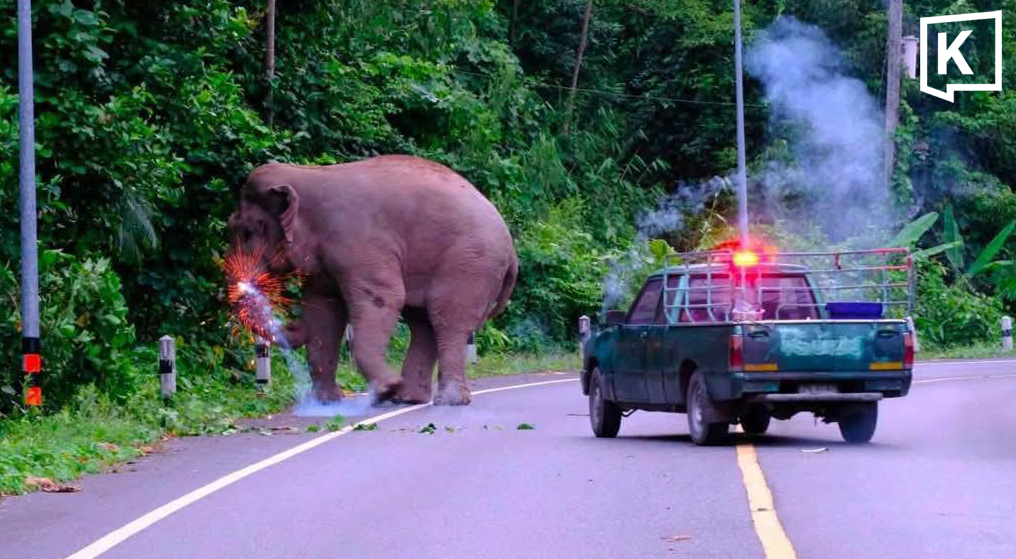
Animal welfare groups in Thailand are demanding an investigation into an incident where a firecracker was allegedly thrown at a wild elephant in Khao Yai National Park. Park officials claim it was a necessary measure to deter the elephant from communities, promising a transparent inquiry and revised procedures.
The Thailand Society for the Prevention of Cruelty to Animals (TSPCA) and the Friends of the Asian Elephant Foundation, alongside partner organizations, are demanding an investigation into an incident where a firecracker was allegedly thrown at Plai Salika, a well-known wild elephant in Khao Yai National Park. The incident, which occurred on July 12, 2026, near the entrance to Sarika Waterfall in Nakhon Nayok province, drew widespread criticism after photos and videos circulated on social media. On July 20, 2026, the groups submitted a letter to the chairman of the Animal Cruelty Prevention and Animal Welfare Committee, who also serves as the Permanent Secretary of the Ministry of Agriculture and Cooperatives, requesting an official inquiry. They urged authorities to establish the facts and enforce relevant laws. The organizations also called for accelerated amendments to Thailand’s Animal Cruelty Prevention and Animal Welfare Act B.E. 2557 (2014) to expand legal protections for wild animals, including those frequently interacting with people, other wildlife, and vulnerable imported species. Responding to the controversy, Chaiya Huaihongthong, chief of Khao Yai National Park, stated that the individual using the pyrotechnic device was part of the park’s rapid-response team tasked with monitoring and deterring wild elephants from communities. He asserted that the camera angle in the video made the distance between officers and the elephant appear closer than it was, and that personnel maintained a safe operating distance. Chaiya thanked the public for their concerns and said the park would use the incident to improve public communication and clarify operational guidelines. He added that a committee has been appointed to conduct a comprehensive fact-finding investigation, with findings to be made public and used to enhance future wildlife management procedures. Sathaporn Theerawat, head of National Park Management Area 6, explained that Plai Salika had been regularly driven away from nearby communities but had entered musth over the past two months, making it more aggressive and less responsive. Gentler methods previously effective were no longer sufficient. According to park officials, Plai Salika had led a herd of over 20 wild elephants into local durian orchards on the day of the incident, damaging crops and posing a risk to residents. Given the urgency to prevent the herd from entering residential areas, officials opted for a handheld pyrotechnic device instead of loud explosive deterrents. They claim the device produced a visual flash without a loud blast, allowing officers to briefly distract the elephant and interrupt its movement without causing harm. The park stated it has instructed operational teams and volunteers to review and improve procedures, increase early monitoring of Plai Salika’s movements, conduct daily risk assessments with wildlife experts, and collaborate more closely with local communities to reduce attractant food sources. Source: Khaosod English
Original source
Khaosod English