Vietnam Seeks to Enhance 'Supporting Industries' for Global Supply Chain Strength
Vietnam aims for sustainable industrial development beyond simple processing and assembly, by mastering components, materials, technology, and supplier ecosystems. Enhancing 'supporting industries' capacity is crucial for global supply chains.
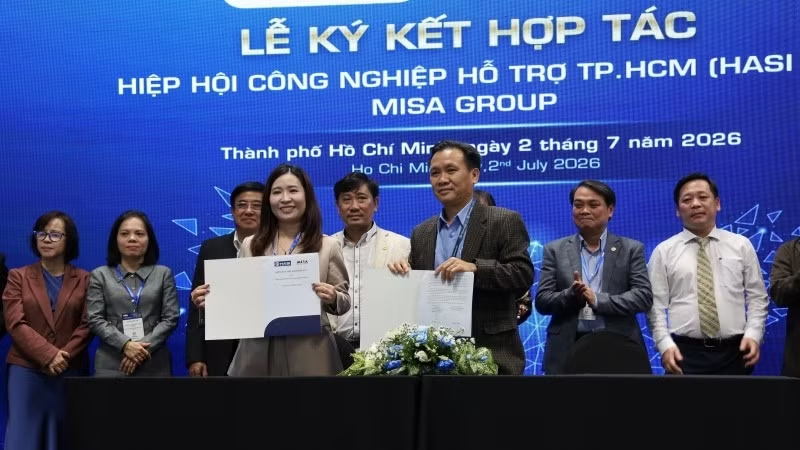
Vietnam is aiming to move beyond its current state of simple processing and assembly to master components, raw materials, technology, and supplier ecosystems, in order to achieve sustainable industrial development. To achieve this goal, enhancing the capacity of 'supporting industries' within global supply chains has become an urgent task. Vietnam is promoting strategies for its domestic industries to transition to higher value-added stages and increase international competitiveness. Specifically, opportunities for developing supporting industrial suppliers by 2026, strengthening cooperation to expand Vietnam's supporting industrial supply chains, and expanding cooperation between Vietnam and South Korea in high-tech fields, supporting industries, and supply chains are being highlighted. Furthermore, efforts to connect technological demand and supply, facilitating businesses' access to and application of advanced technologies, are also being emphasized. This will form the foundation for Vietnam's manufacturing sector to transform from being merely labor-intensive to technology-intensive. The Vietnamese government plans to support technological innovation and the strengthening of supplier networks, enabling domestic enterprises to play a more significant role in global value chains. This aims to diversify the economy and enhance its resilience.
多角的分析
ベトナム経済は、長らく加工組立産業に依存してきたが、グローバルサプライチェーンの再編や地政学的リスクの高まりを受け、より高付加価値な産業への転換が急務となっている。産業支援能力の強化は、部品・素材の内製化を進め、サプライチェーンのボトルネック解消とコスト削減に繋がり、輸出競争力の維持・向上に不可欠である。韓国との協力拡大は、先進技術の導入とサプライヤー育成を加速させる可能性がある。
投資家にとって、ベトナムの産業支援能力の向上は、サプライチェーンの安定化とリスク低減に繋がるため、ポジティブなシグナルとなる。部品供給の国内調達率が上がれば、海外からの部品調達リスクが軽減され、生産計画の安定化が期待できる。特に、ハイテク分野や高度な製造技術を要する産業支援分野への投資は、将来的な成長ポテンシャルが高いと見られる。
産業支援能力の向上は、国内での雇用創ちや、より高度なスキルを持つ人材育成に繋がる可能性がある。これまで単純労働が中心だった製造業において、技術者や研究開発職の需要が増加すれば、若年層のキャリアパスが広がり、地方からの都市部への人口流入抑制にも寄与しうる。一方で、技術格差の拡大や、新たなスキル習得の機会へのアクセスが地域間で均一でない場合、社会的な分断を生むリスクも考慮する必要がある。
ベトナム国民、特に若年層にとっては、産業支援能力の向上は、より高度で安定した雇用機会の創出を意味する。単純な組立工から、技術者、設計者、品質管理者へとキャリアパスが広がることで、所得向上や生活水準の改善が期待できる。また、国内で高品質な製品が生産されるようになれば、消費者としても恩恵を受ける可能性がある。ただし、新たな技術習得の機会が平等に提供されるかが、恩恵の広がりを左右する。
背景・歴史的文脈
ベトナムは、1986年のドイモイ(刷新)政策以降、対外開放を進め、特に製造業における外資誘致に成功してきた。当初は安価な労働力を活かした衣料品や電子機器の組立が中心であったが、近年、グローバルサプライチェーンの再編や地政学的リスクの高まりを受け、より高付加価値な産業、特に部品・素材・技術を自国で開発・生産する「産業支援」能力の強化が経済成長の鍵と見なされている。韓国や日本といった先進国からの技術移転や投資が、この強化プロセスにおいて重要な役割を果たしている。
原文ソース
Nhan Dan