General articles are free for 24 hours after publish.
Integrated Planning Crucial for Vietnam's EV Charging Networks: Experts
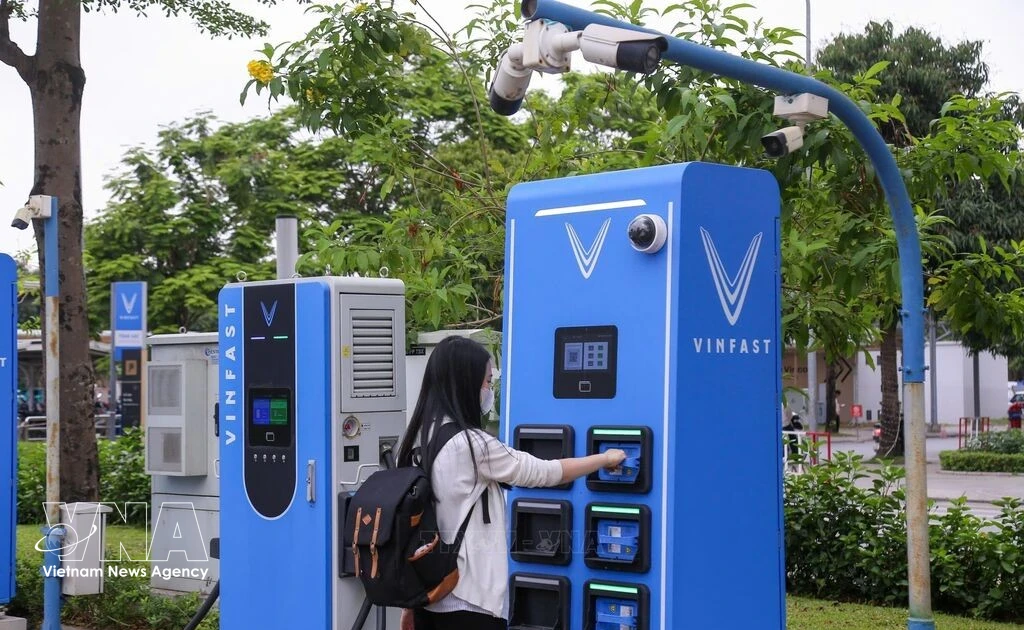
As Vietnam pushes for electric vehicle (EV) adoption, experts emphasize the critical need for integrated planning of charging infrastructure. They highlight the importance of common standards and transparent mechanisms to foster healthy competition, attract investment, and protect consumers.
As Vietnam witnesses an accelerating adoption of electric vehicles (EVs), the development of charging infrastructure has become a pressing issue. Experts emphasize that an open and interoperable system with common standards and transparent usage mechanisms is crucial for building EV charging networks. This approach will foster healthy competition, attract private investment, drive innovation, and protect consumer interests. Notably, plans are underway to install "super charging stations" along major national and provincial highways, spanning 34 cities and provinces, to support long-distance travel. This infrastructure development is a significant step in shaping Vietnam's mobility future. However, experts also point to challenges in data collection and utilization. For instance, in the Mekong Delta region, valuable information collected by government agencies, universities, businesses, projects, and communities is scattered across different locations and formats, making it difficult to access, compare, and use effectively. This inefficiency in information sharing can hinder policy-making and the optimization of infrastructure planning. Vietnam is also focusing on developing its semiconductor industry. Experts state that to meet market demand and enhance its capacity to participate in the global technology value chain, Vietnam needs to step up semiconductor workforce training. Close collaboration between educational institutions and industry, production, and technological research is particularly emphasized. These developments are part of Vietnam's strategy to balance economic growth with technological innovation and enhance its position in the international community. While the decision-making process under a one-party system can generate rapid momentum, concerns over risk management and accountability persist. However, Political Bureau resolutions acknowledge pilot schemes for new practical issues and accept risks and delays in science, technology, and innovation.
Original source
VietnamPlus English