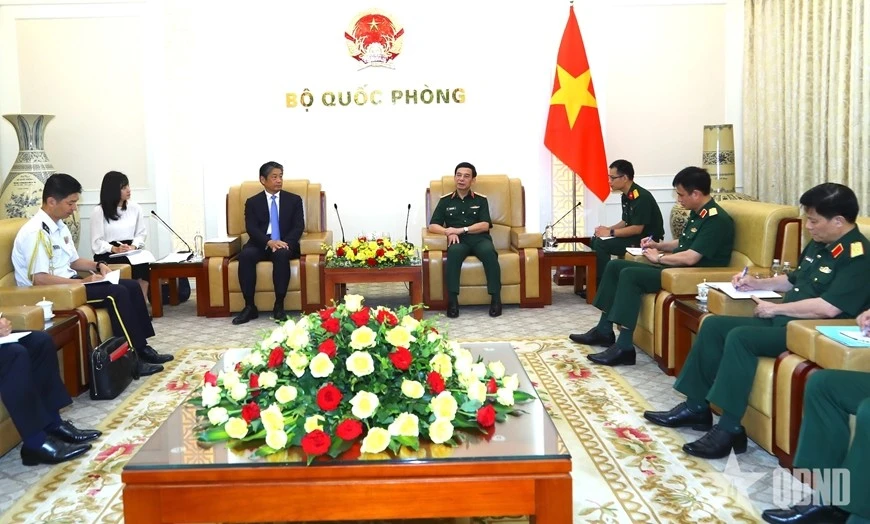
Vietnam, Japan Seek New Strides in Defence Cooperation
Vietnam and Japan are exploring new strides in defense cooperation. Enhanced collaboration across various sectors including education, healthcare, anti-counterfeiting measures, and intellectual property protection has been agreed upon, signaling deeper bilateral ties.
Vietnam and Japan are seeking new strides in defense cooperation, agreeing to strengthen collaboration in areas including education, healthcare, and the fight against counterfeit goods and intellectual property infringements. Under a new arrangement, Aoyama School has authorized the Vietnam-Japan Cultural Exchange Center (VJCE) to act as its representative in Vietnam. VJCE will coordinate educational cooperation activities, connect partners, develop training programs, and promote educational exchange projects between the two countries. In the medical field, Vietnam's 108 Military Central Hospital and Japan's Toho University Graduate School of Medicine will continue to promote faculty and student exchange programs, joint scientific research, academic conferences, scholarly information sharing, and the exchange of advanced medical knowledge and technologies. Both sides also agreed to advance cooperation under signed agreements, strengthen information exchange, enhance enforcement capacity, and develop new initiatives to improve the fight against counterfeit goods and intellectual property infringements in the coming years. Party General Secretary and President To Lam stressed the importance of candidly addressing existing shortcomings, noting that Vietnam's challenge is no longer a shortage of workers but a shortage of workers whose skills meet development requirements. This highlights the critical need for investment in human capital for sustained economic growth. These strengthened cooperative efforts are seen as a crucial step towards realizing Vietnam's vision of "enabling the country's heartbeat to resonate with that of the world, breathe in step with the spirit of the times, contribute to peace shaping, foster prosperity, and build a stronger and higher international standing for the country and nation." Specifically, the deepening defense cooperation with Japan is expected to contribute to regional security and stability.
多角的分析
ベトナムは、労働力不足からスキル不足へと課題が移行していることを認識しており、人的資本への投資を重視している。今回の日越間の教育・医療分野での協力強化は、この課題に対応し、経済成長の持続可能性を高めるための重要な戦略と位置づけられる。特に、先進的な医療技術や専門知識の導入は、医療サービスの質向上を通じて国内の生産性維持・向上に貢献する可能性がある。
日本との防衛協力の深化は、ベトナムの地域における安定性と信頼性を高めるシグナルとなり得る。これは、長期的な視点を持つ投資家にとって、ベトナムの経済成長見通しに対する安心材料となるだろう。特に、偽造品対策や知的財産保護の強化は、外資系企業が安心して事業を展開できる環境整備に繋がり、直接投資の誘致に寄与すると考えられる。
教育分野での日越交流促進は、若年層の国際的な視野を広げ、将来的なキャリア形成にプラスの影響を与える。また、医療分野での協力は、国民の健康増進に寄与し、社会全体のウェルビーイング向上に繋がる。一方で、スキル不足への対応は、労働市場における格差や教育機会の不均等を是正する政策と連動する必要があり、社会全体の包摂的な発展が問われる。
ベトナム市民、特に若年層にとっては、日本との教育交流は、より質の高い教育機会へのアクセスを広げる可能性がある。また、医療分野での協力強化は、より高度な医療サービスを国内で受けられる期待感に繋がる。ただし、スキル不足への対応策が、具体的にどのような教育・職業訓練プログラムとして展開されるか、そしてそれが国民全体に公平に恩恵をもたらすかが、市民生活への真の影響を左右するだろう。
背景・歴史的文脈
ベトナムは、冷戦終結後、経済発展を最優先課題とし、社会主義市場経済体制を推進してきた。その過程で、日本はベトナムの主要な開発援助国(ODA)であり、経済協力のパートナーとして重要な役割を果たしてきた。特に、インフラ整備や人材育成分野での協力は、ベトナムの経済成長を支える基盤となった。近年、ベトナムは地政学的な複雑化に対応するため、外交政策の多角化を進めており、日本との安全保障分野における協力も、こうした文脈で進展している。これは、ベトナムの一党体制下における、国家の安定と発展を両立させるための戦略的な選択と言える。
原文ソース
VietnamPlus English