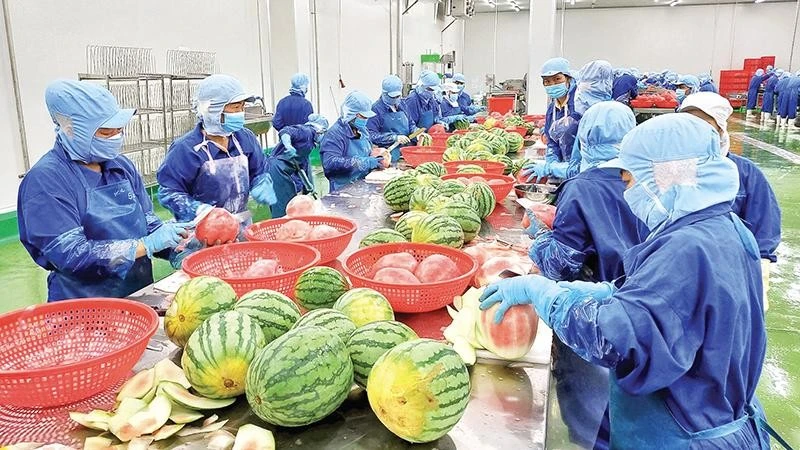
Dong Thap Province Focuses on Strengthening Fruit Value Chains
Dong Thap Province in southern Vietnam is working to strengthen its value chains in the production of key fruits like mangoes and durians, moving away from small-scale, fragmented farming. Improving quality and meeting export market standards are identified challenges.
Dong Thap Province in southern Vietnam is accelerating efforts to strengthen its value chains and increase added value in the production of key fruits such as mangoes, durians, and pineapples. The province produces approximately 2.5 million tons of fruit annually from over 135,000 hectares of orchards, much of which holds export potential. However, a long-standing challenge has been the small-scale and fragmented nature of production, with insufficient cooperation among farmers. This often leads to phenomena like "bumper harvest, low prices" or "good prices, poor harvest." Currently, the province has nearly 1,200 fruit-growing areas with over 2,700 production codes, covering 51,200 hectares. To address this, farmers are beginning to cooperate voluntarily. For instance, Mr. Nguyen Thanh Thao, a farmer in My Thanh commune, is preparing to establish the "My Thanh Durian Production Cooperative" with other farmers following the slowdown and price decline in durian exports. This cooperative aims to produce products under a unified process, free from cadmium contamination and meeting export standards, having already gathered 28 members and 25 hectares. Across Dong Thap, over 130 fruit production and consumption cooperatives are linked with businesses both within and outside the province. Ngo Van Be Em, Director of My Loi A Agricultural Services Cooperative, reports nearly 300 members and over 270 hectares of fruit cultivation. Since early 2023, the cooperative has signed annual contracts with businesses to consume 25-30 tons per month of fruits like mangoes, star apples, durians, and jackfruits. The province is promoting the adoption of science, technology, and high-tech applications, including automated irrigation, mechanization, staggered flowering, fruit bagging, safe and organic cultivation practices, use of microbial and biological products, emission reduction, circular agriculture, and climate change adaptation. However, challenges in value chain development persist. These include uneven quality of raw materials and market standards, unsustainable chain linkages, a lack of leading enterprises, and limitations in post-harvest processing, storage, and cold chain logistics. The transition to organic farming and high-tech applications also remains slow. Nguyen Van Muoi, Deputy Secretary-General of the Vietnam Fruit and Vegetable Association (Vinafruit), suggests that to optimize benefits, businesses should set fixed floor prices to protect farmers during market slumps. Small-scale farmers should proactively link up, while businesses should invest in pre-processing, packaging centers, and cold storage facilities in raw material areas to reduce transportation costs. The government should implement policies encouraging investment in processing, preservation, and production mechanization technologies. Tran Quoc Toan, Deputy Director of the Import-Export Department under the Ministry of Industry and Trade, stated that Dong Thap needs to proactively develop production, processing, and export plans aligned with its advantages and reorganize production based on market signals. For commodities with significant export potential, the province must focus on standardizing growing areas, controlling quality, enhancing compliance with international standards, and strengthening trade promotion to expand export markets. The Dong Thap Department of Industry and Trade plans to build concentrated, high-quality raw material areas, improve the management of production codes and packaging facilities, promote high-tech applications and organic agriculture, foster chain linkages, develop lead enterprises, and advance processing, logistics, and product commercialization to develop the fruit industry in a modern and sustainable manner. Source: Nhan Dan
多角的分析
ドンタップ省の果樹産業は、小規模農家の連携不足とバリューチェーンの未発達が、価格変動の激しさと収益性の不安定さを招いている。輸出市場で要求される品質基準への対応遅れは、国際競争力の低下に直結する。政府による加工・貯蔵インフラへの投資奨励や、企業による最低価格設定の提案は、これらの経済的課題を克服するための重要な一手となるだろう。循環型農業や気候変動適応への取り組みは、持続可能な生産基盤の構築に不可欠だが、その導入コストと効果のバランスが今後の経済的課題となる。
ベトナムの果樹産業、特にドンタップ省のような主要生産地は、国内外の投資家にとって潜在的な成長市場である。しかし、現状では小規模農家への直接投資はリスクが高く、バリューチェーン全体への投資が鍵となる。加工・貯蔵施設、コールドチェーン物流、ブランド開発への投資は、収益性を高め、安定した供給を確保するために不可欠である。政府の政策支援や、Vinafruitのような業界団体の提言は、投資環境の改善に寄与する可能性がある。有機栽培や高付加価値製品へのシフトは、新たな投資機会を生み出すだろう。
ドンタップ省の果樹農家は、長年「豊作貧乏」に苦しんできた。この状況は、農家の生活基盤を不安定にし、後継者不足や地域経済の停滞を招く可能性がある。農家が自発的に協同組合を設立する動きは、連帯感を高め、交渉力を強化する上で重要である。しかし、組合運営の経験不足や、企業との力関係の不均衡は、依然として課題として残る。また、輸出市場の要求に応えるための栽培技術の習得や、有機栽培への転換は、農家の負担増につながる可能性があり、政府や企業の支援が不可欠である。地域経済の活性化と農家の生活安定が、社会的な安定に繋がる。
ドンタップ省の果樹農家は、自分たちの生産した果物が正当な価格で評価されない現状に不満を抱いている。特に、豊作時に価格が暴落する経験は、労働に見合った収入を得られないという不安を日々募らせる。共同で組合を設立する動きは、自分たちの声を行政や企業に届け、より良い条件で販売したいという切実な願いの表れである。しかし、組合設立や運営には行政手続きや専門知識が必要であり、そのハードルは依然として高い。また、輸出基準を満たすための栽培方法の変更は、追加のコストや労力を要するため、支援なしには難しい状況にある。地域全体で果樹産業を盛り上げ、安定した収入を得られるようになりたいという願いが、彼らの日常を支えている。
背景・歴史的文脈
ベトナムの農業は、長らく小規模農家による分散生産が中心であった。特にメコンデルタ地域は、その肥沃な土地を活かして果樹栽培が盛んだが、生産者間の連携不足や、集荷・加工・流通システムの未整備が、農家の収入を不安定にする要因となってきた。1986年のドイモイ政策以降、市場経済化が進む中で、農産物の輸出は増加したが、依然として品質や規格のばらつき、国際市場の要求への対応遅れが課題となっている。ドンタップ省における果樹のバリューチェーン強化は、こうした構造的課題を克服し、ベトナム農業の近代化と国際競争力向上を目指す、国家的な取り組みの一環と位置づけられる。
原文ソース
Nhan Dan