General articles are free for 24 hours after publish.
Thai Spirit Houses: Honoring Protective Spirits and Community Bonds
Ubiquitous outside Thai homes and businesses, spirit houses are shrines honoring protective spirits and seeking their goodwill. Designs and customs vary by region and family, reflecting the diverse spiritual culture of Thai society.
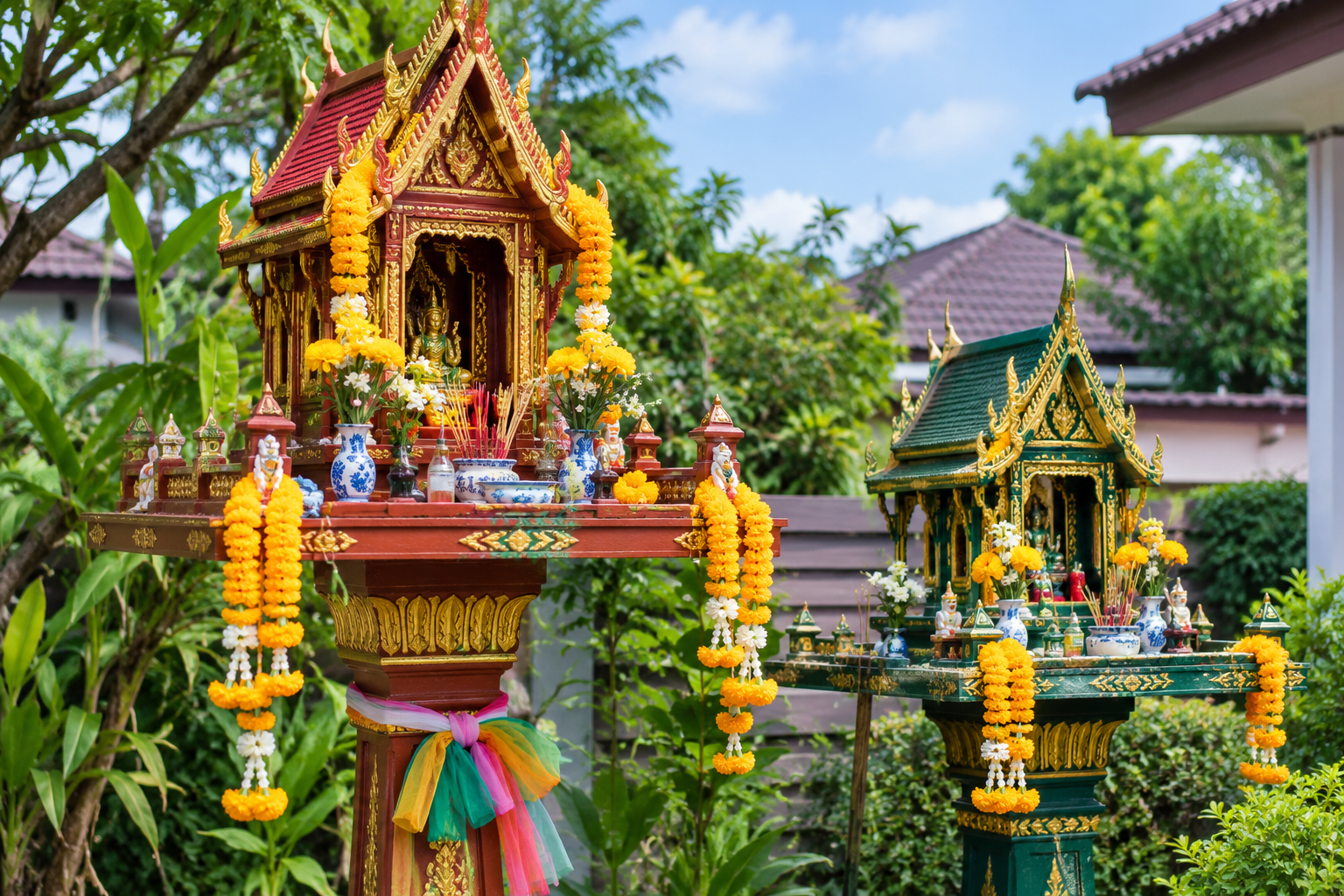
Home - Lifestyles - Spirit Houses in Thailand: Meaning, Types, and Customs Last Updated on September 23, 2026 by Jeff Tomas Outside Thai homes, shops, hotels, and office buildings, you may spot small, colorful shrines raised on pillars or tucked into a courtyard. These are often spirit houses, built to honor protective spirits associated with a place and ask for their goodwill. Their designs and customs vary between families and regions, so the meaning of one shrine may not tell the whole story. As you learn about the common types, offerings, and respectful visitor etiquette, you’ll also see how these practices connect to Thai household and family spirits. A Thai spirit house is a small outdoor shrine set apart for spirits believed to be connected with a particular place. Two common types are the san phra phum, associated with a property’s guardian spirit, and the san chao thi, often linked to the land’s spirits or earlier inhabitants. For many families, these shrines offer a way to respect the unseen presence of a place and maintain a good relationship with it. Many people understand the land as having guardians, or as carrying the presence of those who lived there before. A spirit house gives these beings a designated home or honored place. It is intended for spirits, rather than as a miniature temple where people gather to worship. The san phra phum often stands on one pillar and may have a small shrine-like shape. A san chao thi commonly resembles a little house raised on four supports. Some properties have both, though customs and explanations vary between households. People who follow these traditions may leave flowers, incense, water, or food as offerings. They do so to show respect and ask for protection, good fortune, and peace for the people who live or work on the property. Others may make offerings to express thanks. These practices aren’t shared by every Thai person, and families decide for themselves whether and how to observe them. Spirit-house customs sit within a flexible mix of local spirit traditions and Buddhist, Brahmanical, and Chinese influences. The blend differs by family and community, much as naga guardian beliefs in Thailand vary across local stories and places. Spirit houses appear in residential yards, but they also stand outside neighborhood shops, hotels, office buildings, and other commercial properties. A shop owner might place one near the entrance, while a hotel may set a shrine in a garden or courtyard. Their location reflects the belief that the site has its own spiritual guardians, whether the building is a family home or a busy business. Making room for a shrine acknowledges those spirits and offers them a proper place on the property. People who observe the custom may tend the shrine and bring offerings as part of maintaining a respectful relationship with the site. The details differ, and no single design or ritual applies everywhere. For a closer look at how the two common shrine types differ, see this guide to Thai spirit houses and their traditions. The san phra phum and san chao thi are two common Thai spirit house types. People often distinguish them by the spirit honored, the shrine’s shape, and how high it stands. These are familiar patterns, though local beliefs and family customs can change the details. A san phra phum is commonly built like a small pavilion, temple, or palace on one pillar. The pillar raises it above the ground, often making it the taller shrine when two types stand together. Decorative details vary, but the single support is a useful visual clue. This shrine is associated with Phra Phum, a guardian spirit believed to protect the land or property. People who follow the custom may provide the spirit with a dedicated place and make offerings to ask for protection and well-being. The shrine honors a guardian connected with the site, rather than serving as a general place of worship. A san chao thi usually resembles a small Thai house on four pillars. Its house-like design and lower position often distinguish it from the taller, single-pillar san phra phum. The name san ta yai, meaning the shrine of grandfather and grandmother, is also used in some communities. The shrine may be associated with local land spirits, ancestors, or people who lived on the property before its current occupants. However, the names and meanings aren’t identical everywhere. In some families, ta yai refers to protective grandfather and grandmother figures; elsewhere, people describe the shrine more broadly as a home for the spirits of the place. Descriptions of common Thai spirit house forms offer one account of the usual structural differences. Some homes and businesses keep both shrines nearby because people regard them as having different roles. The san phra phum honors the property’s guardian, while the san chao thi may acknowledge local spirits or earlier residents. When they stand together, the san phra phum is often placed higher than the san chao thi. That arrangement is common, but it isn’t a requirement for every site. A household may have one shrine, both, or follow another local practice. So, use the number of pillars and relative height as helpful clues, not fixed rules. The meaning depends on the family and community that maintain the shrine. Setting up a spirit house involves more than choosing a design. Property owners consider the site, local custom, and the kind of care they can maintain. Practices differ, so advice that fits one household may not apply to another. The homeowner or business owner typically arranges the shrine and takes responsibility for its upkeep. Some people also consult a Brahman ritual specialist, monk, astrologer, or another trusted practitioner. Depending on local practice, that person may advise on the shrine’s form, choose an auspicious date, and lead a blessing or installation rite. Accounts of Thai spirit house customs describe how timing and ritual guidance can factor into installation. Owners may weigh practical needs alongside spiritual advice. A shop, for example, needs a spot where the shrine won’t obstruct customers or daily work. Families may consider the yard, the building’s entrance, and how easy it will be to keep the area clean. The choice of practitioner and ceremony varies, and not every owner follows the same process. A spirit house usually sits outdoors in a visible, cared-for place, often on a raised platform or pillar. Owners may consider the building’s layout, nearby walls or structures, and the flow of everyday activity around the site. They also want a position where offerings can be placed and the shrine can be maintained without disturbance. Advice about direction, height, shadows, and distance from a building is common, but it isn’t followed identically across Thailand. One practitioner may recommend a particular orientation or auspicious date, while another household may rely on a different local custom. Treat these recommendations as trad
Original source
Chiang Rai Times