Vietnam Seeks Sustainable Development by Leveraging Muong Culture in Contemporary Life
Culture
2026年8月7日
6
Nhan Dan

General articles are free for 24 hours after publish.

Vietnam Seeks Sustainable Development by Leveraging Muong Culture in Contemporary Life

Share
AI Summary

A scientific seminar in Vietnam discussed leveraging the Muong ethnic group's cultural heritage for contemporary societal development. The strategy emphasizes balancing cultural preservation with development, respecting community agency, and applying it to tourism, cultural industries, and creative economies.

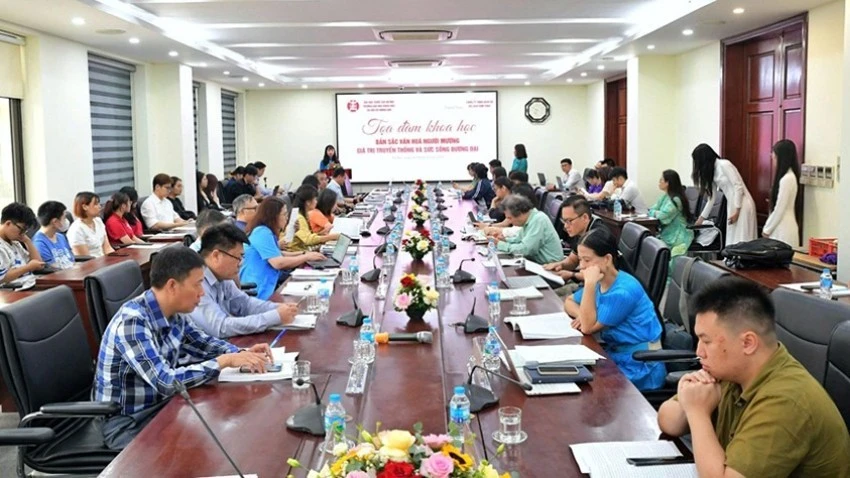
A scientific seminar on "Muong Ethnic Culture: Traditional Values and Contemporary Vitality" was held on August 6, co-organized by the Faculty of Social Sciences and Humanities at Vietnam National University, Hanoi, and Tam Chuc Tourism Services Co., Ltd. The event gathered numerous scientists, experts, managers, lecturers, students, and representatives from regions with Muong ethnic communities. Participants unanimously agreed that Muong culture should not only be preserved as a heritage of the past but also leveraged as a resource for sustainable development. Preservation efforts need to be integrated with education, cultural tourism, cultural industries, creative economies, and digital transformation. Emphasis was placed on respecting the agency of communities, strengthening intergenerational transmission, and fostering collaboration between research institutions, management agencies, local authorities, and businesses. According to Associate Professor, Dr. Dang Thi Thu Huong, Vice Rector of the Faculty of Social Sciences and Humanities, the Party and State are paying special attention to cultural development, viewing culture as both the spiritual foundation of society and a crucial internal resource and driving force for rapid and sustainable development. The mindset has shifted from "preserving to keep" to "preserving to develop," with communities recognized as the subjects of heritage, and culture seen as a resource for sustainable development, tourism, cultural industries, and creative economies. Within this context, the study of Muong culture holds particular significance. As one of Vietnam's ancient resident communities, the Muong people possess a rich cultural heritage, including their language, Muong Mo (epic poems and myths), gongs, indigenous knowledge, stilt house architecture, life cycle rituals, community institutions, and various valuable forms of folk culture. These elements not only define the identity of the Muong community but also contribute to the diversity of Vietnam's unified national culture. Mr. Nguyen Xuan Trung, Director of Tam Chuc Tourism Services Co., Ltd., representing the organizing committee, stated, "Beyond understanding Muong ethnic culture, the research results affirm a greater value: cultural diversity is the strength of the nation. Vietnam, with its 54 ethnic groups, is one of the countries with outstanding cultural diversity in the region. Researching and preserving the cultures of Vietnam's ethnic groups is not just about heritage conservation but also about strengthening the foundation of national unity, sovereignty, and strength for future generations." Meanwhile, Associate Professor, Dr. Nguyen Truong Giang from the Faculty of Social Sciences and Humanities, shared insights on the Muong presence in Ninh Binh province. "Local and heritage management data for Ninh Binh indicate that the Muong people are primarily concentrated in Nho Quan district and parts of Tam Diep city. The space for heritage practice is concentrated in Nho Quan, where a large Muong population resides and preserves many traditional cultural features. This allows Ninh Binh to be positioned as a sub-region of Muong culture, holding its own place within the broader inter-regional Muong space." Experts asserted the need to develop Muong cultural tourism based on community principles. By placing the community at the center, the Muong people should not merely be subjects of research, performance, or promotion but should actively participate in deciding how their ethnic heritage is preserved, transmitted, and developed.

0

Original source

Nhan Dan

原文を読む