General articles are free for 24 hours after publish.
Vietnam Revises Customs Law to Streamline Procedures and Enhance Compliance
Vietnam's National Assembly has discussed a draft amendment to the Customs Law, aiming to simplify procedures, strengthen compliance based on risk management, and enhance measures against counterfeit goods. The revision is expected to facilitate trade and promote legal adherence.
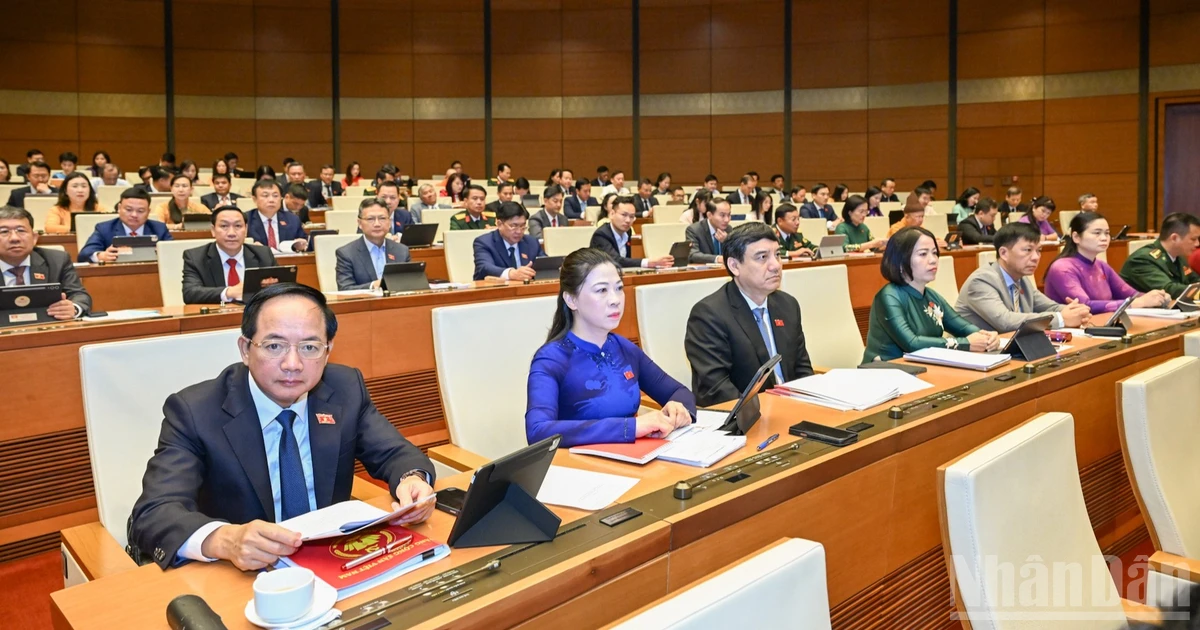
Vietnam's National Assembly, during its first extraordinary session, has deliberated on a draft amendment to the Customs Law. The proposed revisions aim to fundamentally reform customs procedures, promote voluntary compliance based on the legal compliance level and risk assessment of taxpayers and customs declarants, and enhance scrutiny against smuggling and trade fraud. Minister of Finance Ngo Van Tuan, in his summary presentation of the draft law, emphasized the importance of strengthening controls against smuggling and trade fraud to improve customs law adherence. The draft law introduces responsibilities for agencies, organizations, and individuals involved in planning, designing, and constructing areas related to free trade zones. It also clarifies the deadline for supplementary customs declarations to be before the goods are cleared from the supervision area, with penalties for late or requested supplementary declarations. Furthermore, the government proposes amending Article 58 to stipulate that businesses operating warehouses and ports will be responsible for the destruction of environmentally polluting goods when the owner, operator, or authorized representative of the transport means cannot be identified. Customs authorities will oversee the destruction process. Customs agencies will have the proactive authority to suspend customs clearance if clear grounds suggest that transit goods are counterfeit regarding intellectual property rights during inspection, supervision, and control. Regarding post-clearance audits, the draft law incorporates principles of risk management, compliance management, and digital technology application. It aims to merge post-clearance audits conducted at the declarant's office and at the enterprise's premises. The audit period is adjusted from "10 working days" to "a maximum of 20 days," with provisions for extending this period. The government will detail these regulations. Phan Chi Hieu, Chairman of the Law and Justice Committee, stated that the committee agrees with the necessity and scope of the amendments, which aim to institutionalize Party resolutions and conclusions, resolve practical difficulties, and meet the demands for innovation in customs operations. Notably, a majority of the Law and Justice Committee members support the provision requiring organizations and individuals in Vietnam conducting transactions with foreign countries via e-commerce platforms to perform electronic identity verification. They also suggest that this electronic identity verification should be performed only once per account and be used uniformly for all transactions generated from that account. Concerning risk management and compliance management, the committee endorses the addition of provisions to refine the legal basis for modern customs management and encourage voluntary compliance. However, they point out overlaps between risk management and compliance management regulations and recommend further review to clarify the distinct characteristics of each operational activity. Additionally, they propose supplementing provisions on the customs authority's responsibility for verifying assessment results and establishing mechanisms for declarants to provide explanations and file complaints if they believe the assessment results are inaccurate. Regarding customs clearance agents, the review committee noted that the provision empowering the Minister of Finance to stipulate standards and manage the operations of customs clearance agents and their personnel does not clearly reflect a management approach based on system connectivity, supervision, and post-clearance checks. Therefore, they suggest considering regulations where, based on standards and technical regulations issued by the Minister of Finance, competent authorities develop processes and procedures for management to enhance the quality and effectiveness of post-clearance audits.
Original source
Nhan Dan