General articles are free for 24 hours after publish.
Vietnam Seeks Balance: Institutional Reform and Economic Growth Debated at Party Central Committee Meeting
Vietnam's Communist Party, at the 3rd Plenum of the 14th Central Committee, debated institutional reforms to achieve economic growth targets. Unlocking resources and reforming systems are key to aiming for over 10% growth. Challenges in social infrastructure and markets were also highlighted.
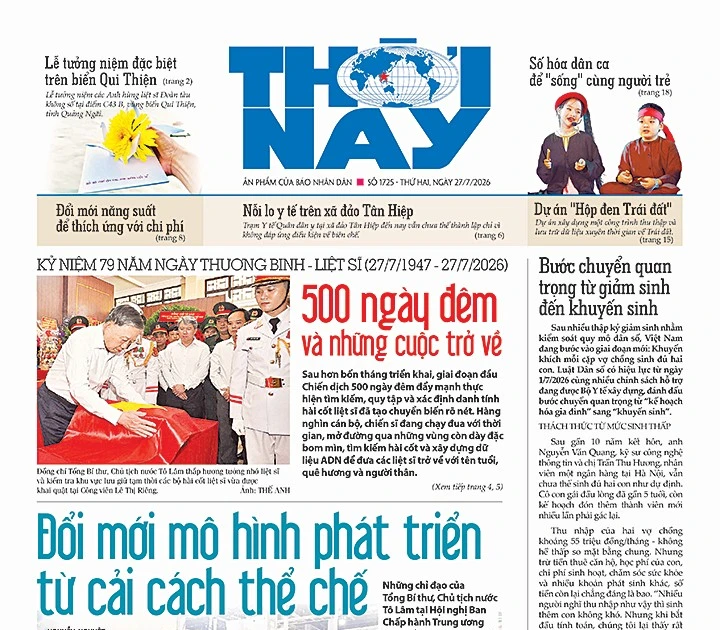
Vietnam's Communist Party engaged in lively discussions at the 3rd Plenum of the 14th Central Committee regarding the necessity of institutional reforms to accelerate the nation's economic growth. Under the guidance of General Secretary and President To Lam, the Central Committee confirmed its policy to promote the unlocking of various resources and institutional reforms to achieve the ambitious target of over 10% economic growth. These discussions focus on the fundamental challenges Vietnam faces in achieving sustained economic development while maintaining its socialist-oriented market economy. The need to harmonize efficient policy implementation within a one-party system with the dynamism of a market economy is paramount. Beyond economic growth, social issues were also addressed. For instance, on Tan Hiep island in Da Nang city, the transfer of healthcare facilities to local authorities has been hampered by the inability to meet staffing quotas, delaying the establishment of medical stations. This highlights the difficulties in administrative reform for special regions like islands. Furthermore, at 19 ports along the Hong and Lo rivers in Vinh Thanh xã, Phu Tho province, despite active vessel traffic, long-standing issues related to legal procedures, land, dikes, and urban planning remain unresolved, hindering management and operations. Delays in addressing violations at riverside ports were noted. Additionally, in the financial and monetary markets, an analysis titled "Major Surgery on the Gold Market" was presented. Recent waves of gold sales have exposed long-standing weaknesses in liquidity, commodity sourcing, and pricing mechanisms. Significant challenges remain before achieving a truly transparent, interconnected, and less distorted market. These issues underscore the necessity of developing institutional and social infrastructure as Vietnam pursues economic growth. Balancing institutional reform with economic growth will be key to Vietnam's future development. Source: Nhan Dan
Original source
Nhan Dan