Magat Dam Water Levels Drop, Farmers in Isabela Trained in Water-Saving Irrigation
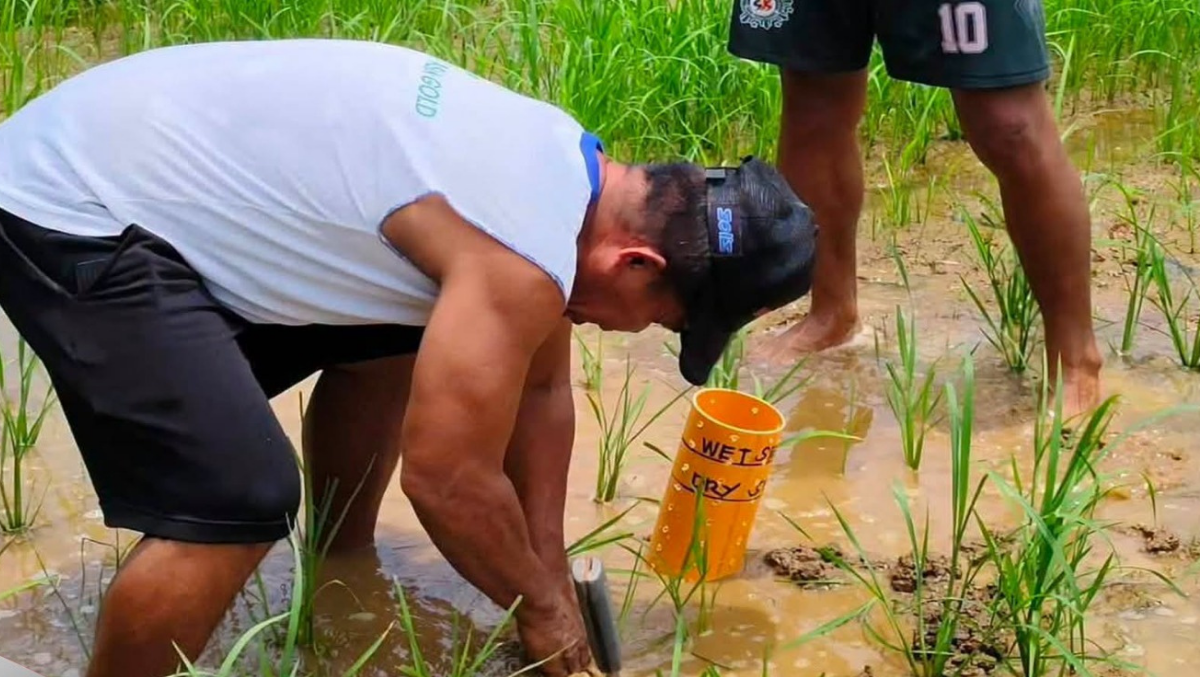
As water levels at Magat Dam approach critical points, the NIA-MARIIS has trained farmers in Isabela province on Alternate Wetting and Drying (AWD), a technique to reduce water consumption while maintaining rice yields, amid intensifying El Niño-induced dry conditions.
MANILA, Philippines — As the water level at Magat Dam nears its critical elevation, Division II of the National Irrigation Administration-Magat River Integrated Irrigation System (NIA-MARIIS) has conducted a seminar on Alternate Wetting and Drying (AWD) for farmers in Isabela province. The seminar aimed to enhance farmers' knowledge of the proper implementation of AWD in San Mateo, Alicia, Angadanan, and Cabatuan, as they grapple with the intensifying effects of El Niño and prolonged dry conditions. The province has not received significant rainfall from Typhoon Inday. The seminars were held from June 25 to 26 and July 7 to 10. NIA-MARIIS said it is “committed to providing farmers with innovative knowledge and technologies that will help sustain rice production despite the challenges brought about by El Niño, which is expected to worsen between November this year and February next year.” AWD is an innovative water management practice designed to reduce water consumption in rice fields without compromising crop yield. Under the practice, rice fields are allowed to dry temporarily before being irrigated again, resulting in more efficient use of limited water resources. “Amid the continuing decline in water levels, the seminar was conducted at a critical time, equipping farmers with strategies to adapt to the current conditions,” NIA-MARIIS said. The agency also emphasized the importance of responsible water use, compliance with the Water Delivery Rotation Schedule and cooperation among irrigators’ associations. It said the remaining water supply must benefit as many farms as possible. Last week, NIA-MARIIS announced the continuing decline in the water level of the Magat Reservoir, saying there had been little to no rainfall in the watershed. “Even when it does rain, it is not enough to raise the water level in the dam,” the agency said. “As a result, irrigation water for farms is limited, and some agricultural lands will no longer be irrigated. Our pumping stations are also affected, especially if there is little or no water left in the rivers from which they draw their supply,” it said in Filipino. /dm
多角的分析
エルニーニョ現象による長期乾燥化は、フィリピンの主要な米生産地域における農業生産に直接的な打撃を与えている。マニラ首都圏を含む全国的な食料供給への影響は避けられず、米価の上昇を通じてインフレ圧力をさらに高める可能性がある。AWDのような節水技術の導入は、生産コストの抑制と収穫量の安定化に寄与するが、その普及と農家への支援が不可欠である。また、水資源の枯渇は、農業だけでなく、電力供給(水力発電)、工業用水、さらには飲料水供給にも影響を及ぼし、経済活動全体のリスク要因となる。
農業セクターへの投資家は、エルニーニョ現象による収穫量減少リスクを注視する必要がある。特に、米の生産・流通に関わる企業は、サプライチェーンの寸断や価格変動への対応が求められる。一方で、節水技術や灌漑インフラ関連の企業にとっては、需要拡大の機会となり得る。政府のインフラ投資計画や、気候変動適応策への支援策が、投資判断の重要な要素となるだろう。海外からの直接投資(FDI)においては、農業関連のサプライチェーンの安定性が、投資リスク評価においてより重視されるようになる可能性がある。
イサベラ州の農民は、エルニーニョ現象による水不足と干ばつに直面し、生計を維持するための直接的な脅威にさらされている。AWD研修への参加は、彼らにとって新たな技術を習得し、困難な状況に適応するための希望となるが、技術の習得度や実践への移行には課題も伴う。研修に参加できなかった農家や、小規模農家への支援が十分に行き届くかどうかが、社会的な格差の拡大を防ぐ上で重要となる。また、水不足は農村部だけでなく、都市部への食料供給にも影響を及ぼし、食料価格の上昇は低所得層の生活を圧迫する。これは、社会的な不満や不安の温床となり得る。
イサベラ州の農民は、マニラ首都圏のような都市部では実感しにくい、干ばつと水不足の深刻な影響を直接受けている。彼らの生活は、降雨量とダムの水位に直接左右される。AWDは、限られた水でより多くの作物を育てるための希望の光だが、この技術を習得し、実際に適用するには、農具や追加の労働力が必要になる場合もある。政府の支援が、これらの農民に実際に届くかどうかが、彼らの生活の質を左右する。また、米価の上昇は、マニラ首都圏の一般市民の家計を圧迫し、食料へのアクセスを困難にする可能性がある。
背景・歴史的文脈
フィリピンは、太平洋の「火の輪」に位置し、台風や地震といった自然災害のリスクが高い国である。特にエルニーニョ現象は、数年周期で発生し、国内の広範な地域で深刻な干ばつを引き起こす。マガットダムは、ルソン島北部における主要な灌漑施設であり、農業用水の供給源として極めて重要である。過去にも、エルニーニョによる水不足で、農業生産や電力供給に大きな影響が出た事例は数多く報告されている。今回のAWD研修は、こうした気候変動への適応策の一環として実施されている。
原文ソース
Inquirer NewsInfo