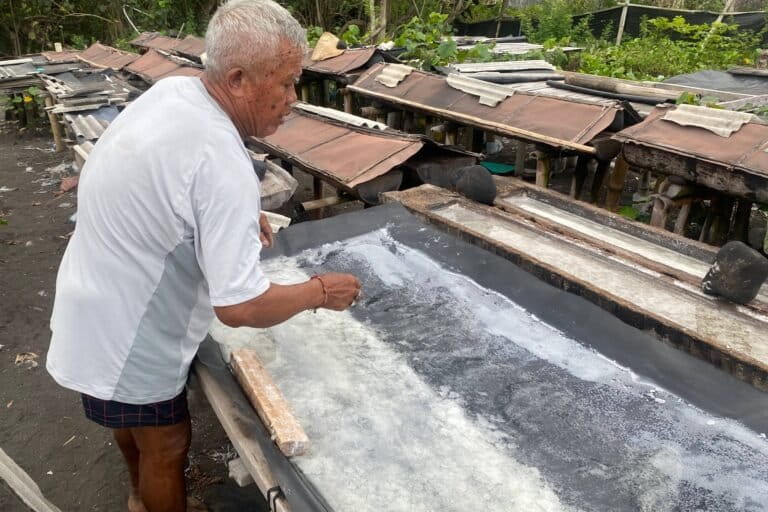
Kusamba Traditional Salt Production in Bali Faces Existential Threat
Traditional salt production in Kusamba Village, Klungkung Regency, Bali, is facing an existential threat due to coastal erosion, environmental changes, and a lack of successors. Once an industry employing hundreds, it now grapples with modern challenges.
In Kusamba Village, Klungkung Regency, Bali, Indonesia, the age-old tradition of salt production is facing a severe crisis. Areas of the salt fields along the coastline are now covered with black plastic sheets, losing their former appearance. Nengah Bantat, a 71-year-old, is one of the last custodians of this traditional industry. He began salt making in 1979 and recalls that in the 1990s, hundreds of people were involved in salt production from Kusamba to Pesinggahan. However, finding successors is now a significant challenge. His children only assist occasionally, not pursuing it as a full-time occupation. The salt production sites must also contend with the forces of nature. While coastal dikes have been built to protect against waves, high tides can still flood the salt fields and huts. Places that once offered a clear view of the sea are now obstructed by these dikes. Kusamba's salt production employs a traditional method of storing seawater in wooden vats, using sunlight and wind to evaporate moisture and crystallize salt. This process is known for producing high-quality, mineral-rich salt, but its efficiency is lower compared to industrialized salt production. Environmental changes, particularly coastal erosion, make maintaining the salt fields difficult. Furthermore, the younger generation is increasingly drawn to more stable income opportunities in urban areas or other industries like tourism, leading to a decline in those engaged in traditional salt making. This is a major factor threatening the industry. If current trends continue, Kusamba's traditional salt production may become a relic of history. The local community is compelled to seek measures to protect this valuable cultural heritage. Information Source: Mongabay Indonesia
多角的分析
クスンバの伝統塩生産は、現代の工業塩生産に比べて生産性が低く、価格競争力で劣る。そのため、生産者は不安定な収入に直面しており、これが後継者不足の一因となっている。また、塩田の維持には一定の投資が必要であり、零細な生産者にとっては経済的負担が大きい。環境変化による生産量の変動も、経済的なリスクを高めている。
伝統塩生産は、そのユニークな製法や地域文化との結びつきから、ニッチな市場での高付加価値商品としての可能性を秘めている。しかし、生産規模の小ささ、品質のばらつき、そして環境リスクへの脆弱性から、大規模な商業的投資には不向きである。持続可能な観光資源や、地域ブランドとしての活用が、小規模な社会投資や助成金プログラムと連携することで、新たな道が開ける可能性がある。
クスンバの塩作りは、単なる産業ではなく、地域住民の生活様式、文化、そしてアイデンティティと深く結びついている。後継者不足は、この伝統的な生業の消滅だけでなく、地域社会の文化的な連続性をも脅かす。海岸浸食や環境変化は、住民の生活基盤を揺るがし、移住を余儀なくされる可能性も示唆している。この問題は、伝統文化の継承と地域住民の生活保障という、二重の課題を提起している。
クスンバの住民、特に塩作りに関わる人々は、海岸浸食による塩田の喪失や、塩作りの不安定な収入に直面している。彼らは、生活の基盤を守るために、環境の変化に適応し、新たな収入源を見つける必要に迫られている。若い世代は、より安定した収入や生活を求めて都市部へ流出する傾向にあり、伝統的な生業の維持は困難を極めている。彼らの不安は、地域経済の衰退と文化の喪失という、より広範な問題へと繋がっている。
背景・歴史的文脈
バリ島のクスンバ村における伝統的な塩作りは、少なくとも19世紀から行われてきた歴史を持つ。この地域は、その独特の製法とミネラル豊富な塩で知られ、かつては地域経済の重要な柱であった。しかし、20世紀後半以降、工業化の波や観光開発の進展により、伝統的な一次産業は経済的な優先順位を下げてきた。さらに、地球温暖化に伴う海面上昇や異常気象の増加は、海岸線に立地する塩田に直接的な被害をもたらし、生産基盤を脅かしている。これらの複合的な要因が、伝統塩産業の衰退と存続の危機を招いている。
原文ソース
Mongabay Indonesia