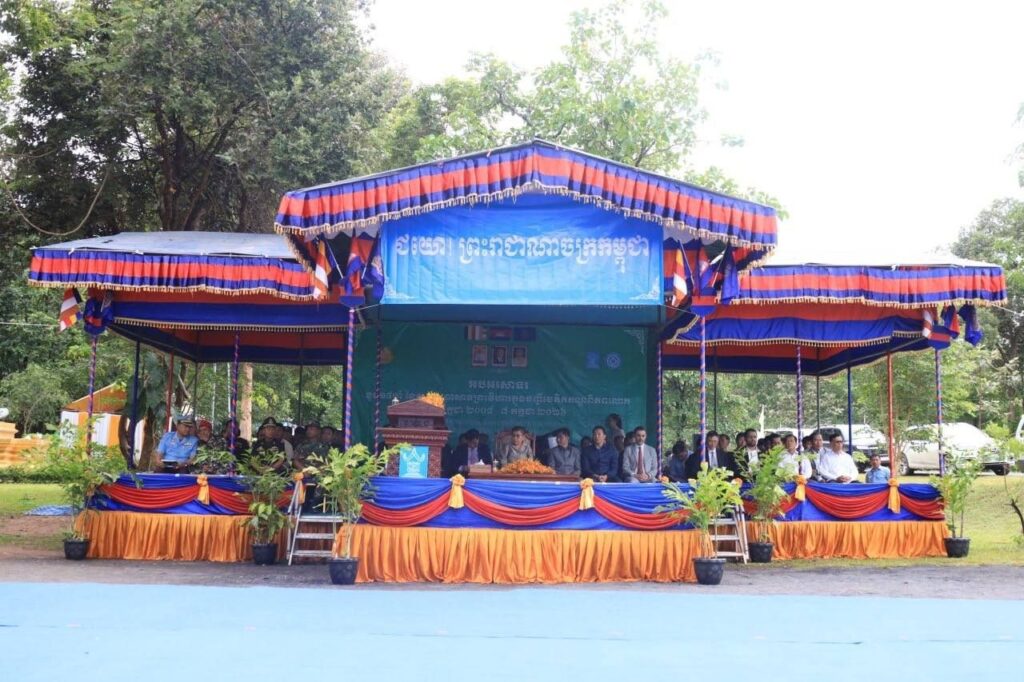
Preah Vihear Temple Marks 18 Years as UNESCO World Heritage Site, Focus on 'Conservation, Destruction, and Restoration'
Culture
2026年7月6日
5
Kampuchea Thmey Local
Relations
🇰🇭Cambodia🇹🇭Thailand

Preah Vihear Temple Marks 18 Years as UNESCO World Heritage Site, Focus on 'Conservation, Destruction, and Restoration'

AI サマリー

The National Authority of Preah Vihear organized a ceremony commemorating the 18th anniversary of Preah Vihear Temple's inscription as a UNESCO World Heritage Site. The event highlighted conservation achievements, the severe destruction experienced last year, and the ongoing restoration efforts.

On the morning of July 5, 2026, the National Authority of Preah Vihear organized a ceremony to celebrate the 18th anniversary of Preah Vihear Temple's inscription on the UNESCO World Heritage List (July 7, 2008 – July 7, 2026), under the theme "Conservation, Destruction, and Restoration." The ceremony took place at the Samdech Techo Hun Sen Preah Vihear National Park Museum, located in Nature Village, Sra'em Commune, Choam Ksan District, Preah Vihear Province. The event was presided over by Dr. Phoeurng Sackona, Minister of Culture and Fine Arts, alongside Mr. Flavio BONETTI, Head of the UNESCO Cambodia Office, and representatives from the member countries of the ICC-Preah Vihear Committee. Approximately 500 participants attended, including leaders and officials from relevant departments around Preah Vihear Province, the National Authority of Preah Vihear, military and police commanders, teachers, students, and local community members. The 18th-anniversary celebration highlighted the outstanding universal value of Preah Vihear Temple and the achievements in conservation and development that the National Authority of Preah Vihear and all international partners have strived to accomplish over the past 18 years. These efforts have significantly contributed to preserving this invaluable heritage. Concurrently, the ceremony recalled the severe destruction that occurred in 2025, which completely destroyed previous work and caused extensive damage to 562 locations within Preah Vihear Temple. Furthermore, this destruction forced approximately 16,000 people to flee their homes within the World Heritage area, damaging houses, schools, health centers, pagodas, and numerous other public infrastructures, severely impacting the livelihoods of the residents and the overall development of the region. Dr. Phoeurng Sackona spoke about the Royal Government of Cambodia's commitment to protecting territorial integrity and cultural assets in accordance with international law, specifically pledging to continue the conservation and restoration of Preah Vihear Temple for future generations. She also advised the National Authority of Preah Vihear to collaborate closely with national and international partners to continue the mission of preserving, conserving, and restoring the temple, rehabilitating forests and ecosystems within the heritage area, revitalizing the tourism sector, and improving the livelihoods of the communities. The Minister expressed her profound gratitude to the relevant authorities for ensuring the safety of the people, and especially to UNESCO and various international partners for their assistance in emergency rescue and restoration efforts for Preah Vihear Temple. She also appealed to all national and international partners to continue their collaboration with the Royal Government to achieve this mission successfully. Mr. Kong Puthikar, Director-General of the National Authority of Preah Vihear, elaborated on the implementation of the emergency rescue plan for Preah Vihear Temple, in accordance with the recommendations of UNESCO and ICC-Preah Vihear experts. This plan includes the removal of unexploded ordnance and cluster bombs as a first step to ensure safety. Subsequently, it involves setting up shoring to support the temple's structures against collapse, collecting stone fragments and sculptures for conservation and restoration, documenting the entire temple in 3D for crucial data for reconstruction work, and restoring the ancient water drainage system, which is a vital part of the temple's architecture. These tasks have received financial support from the Royal Government of Cambodia, UNESCO, ALIPH, and the Permanent Delegation of France to UNESCO, demonstrating robust national and international cooperation. In parallel, the Director-General outlined the immediate priority tasks, which include continuing temple restoration, rehabilitating forests and ecosystems within the heritage area, revitalizing the tourism sector, and improving the livelihoods of local communities. He also urged all government officials, armed forces, and citizens to unite in spirit to continue protecting and preserving the ancestral heritage for future generations. Article by: Chun Kosal

多角的分析

経済的影響

昨年発生したとされる破壊行為は、観光収入の減少、地域経済への打撃、そして復興のための追加的な財政負担という形で、プレアビヒア地域経済に深刻な影響を与えたと考えられます。世界遺産としての価値が損なわれることは、長期的な観光客誘致能力を低下させ、地域住民の生計に直接的な影響を及ぼします。復興には多額の資金と時間を要し、カンボジア政府および国際社会からの継続的な支援が不可欠となります。これは、インフラ開発や地域振興策の優先順位にも影響を与える可能性があります。

投資家心理

プレアビヒア寺院周辺での昨年の破壊行為は、投資家にとってリスク要因となります。文化遺産の安全性への懸念は、直接的な投資意欲を減退させる可能性があります。特に、観光関連産業への投資を検討している場合、治安状況や遺産の保全体制の不確実性は、投資判断を慎重にさせるでしょう。しかし、復興への国際的な協力や政府の強いコミットメントは、長期的な安定性への信頼を回復させる可能性も秘めています。投資家は、復興計画の進捗と治安状況の改善を注視する必要があります。

社会的影響

昨年の破壊行為により、約16,000人の住民が住居を追われ、学校や保健センターなどの公共施設も損壊したという事実は、地域住民の生活に甚大な影響を与えたことを示しています。家屋の損壊は直接的な住居問題を引き起こし、学校や保健センターの機能停止は教育機会の喪失や医療アクセスの低下に繋がります。これらの被害からの復旧と、住民の生活再建は喫緊の課題です。また、寺院の破壊は、地域住民の精神的な支柱である文化遺産への敬意や誇りを傷つける可能性があり、コミュニティの結束やアイデンティティにも影響を与えかねません。

市民の声

昨年の破壊行為で16,000人もの人々が避難を余儀なくされ、家屋や学校、保健センターまでが被害を受けたという事実は、地域住民の生活基盤を根底から揺るがしたことを示しています。住民たちは、安全な住居を失い、子供たちは学校に通えず、病気になっても適切な医療を受けられない状況に置かれた可能性があります。復興への道のりは長く、財政的な支援だけでなく、住民一人ひとりの生活再建に向けた具体的な支援が求められています。また、文化遺産が破壊されたことは、地域住民の誇りやアイデンティティにも影響を与え、精神的なケアも必要となるでしょう。

背景・歴史的文脈

プレアビヒア寺院は、11世紀から12世紀にかけてクメール帝国が建設したヒンドゥー教寺院で、その壮大な建築と彫刻は世界的に有名です。2008年7月7日、ユネスコ世界遺産委員会は、その「顕著な普遍的価値」を認め、カンボジアで2番目の世界遺産として登録しました。しかし、登録後もカンボジアとタイとの間で寺院周辺の領有権を巡る対立が続き、2011年には武力衝突も発生しました。こうした緊張関係は、寺院の安全保障上の懸念を高めてきました。今回言及されている2025年の「破壊行為」は、これらの歴史的背景と無関係ではないと考えられ、国際社会による平和的解決と遺産保護への継続的な関与の重要性を示唆しています。

原文ソース

Kampuchea Thmey Local

原文を読む