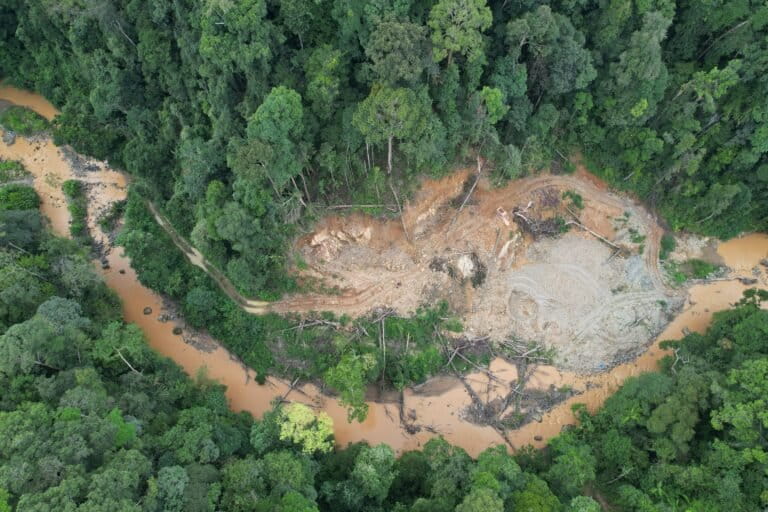
Illegal Gold Mining Ravages World Heritage National Park in Jambi
Illegal gold mining operations are escalating deforestation within the Kerinci Seblat National Park (TNKS) in Jambi. For weeks, heavy machinery and chainsaws have been active, felling ancient forests. Local residents are involved, raising concerns about environmental impact.
Deep within the Kerinci Seblat National Park (TNKS) in Jambi, Indonesia, illegal gold mining operations are rapidly accelerating deforestation. TNKS, a precious natural area also registered as a UNESCO World Heritage site, is witnessing dozens of heavy excavators operating and ancient forests being felled in its core. Mongabay Indonesia's reporting team, along with local residents, reached this illegal mining site on August 16, 2025, after a strenuous five-day journey. They headed towards the mining area in the Sungai Penetai watershed, located approximately 20 kilometers inside the national park, after ascending Bukit Punggung Parang in the Tamiai area. There, several excavators, spaced about 100 meters apart, were digging up soil and conducting ore processing. A scene unfolded where brown water gushed out, turning soil clumps into mud, separating gold particles and sand. Nearby, the roar of chainsaws echoed, felling trees hundreds of years old in a short time. Dozens of fuel drums were lined up near the mining site, keeping the heavy machinery running day and night. One miner stated he had traveled from Merangin Regency and had been in this location for several weeks, while another group of miners mentioned they had been staying for over a month. They are continuously moving upstream along the Sungai Penetai, in search of gold veins hidden within the earth. Despite occurring within the protected area of TNKS, these illegal mining activities are extensive and raise serious concerns about their environmental impact. Urgent measures are required to protect the site's World Heritage value. Source: Mongabay Indonesia
多角的分析
違法金鉱業は、公式な経済活動から外れるため、国家経済への直接的な貢献は限定的である。むしろ、土地の劣化や水質汚染は、農業や漁業といった地域経済の基盤を長期的に損なう可能性がある。また、採掘に必要な燃料や機材の購入は、非公式なサプライチェーンを生み出し、一部の経済活動を活性化させる側面もあるが、その収益は地域社会全体に還元されにくい構造となっている。
違法採掘は、公式な投資対象とはなり得ない。しかし、金という商品そのものへの投資は、国際市場の動向に左右される。違法採掘が供給量に影響を与える可能性はあるが、その不確実性から正規の投資家が直接的な利益を見出すことは困難である。むしろ、違法採掘による環境破壊は、持続可能性を重視するESG投資の観点から、関連企業や地域への投資リスクを高める要因となり得る。
違法採掘は、地域住民の生活基盤を脅かす。森林破壊は生物多様性の喪失を招き、生態系サービスを低下させる。また、採掘現場周辺の河川の汚染は、飲料水や生活用水の確保を困難にし、健康被害のリスクを高める。採掘に関わる人々の中には、経済的困窮からこの仕事を選ばざるを得ない者もおり、社会的な格差や貧困の問題とも密接に関連している。採掘現場の Sungai Penetai(ペネタ川)流域では、水源の汚染により、近隣の村の農業用水供給に影響が出ているという報告も上がっている。また、採掘現場で働く労働者の安全管理体制が不明確であることも、労働災害のリスクを高めている。
違法採掘は、TNKS周辺に住む地元住民の生活に直接的な影響を与えている。森林資源へのアクセスが制限されたり、水源が汚染されたりすることで、伝統的な生活様式が維持できなくなる恐れがある。また、国立公園の自然環境が破壊されることは、将来世代が享受できるはずの恩恵を奪うことになる。採掘活動によって発生する騒音や交通量の増加も、静穏な生活環境を損なう要因となっている。
背景・歴史的文脈
ケリンチ・セブラット国立公園(TNKS)は、スマトラ島に広がる広大な熱帯雨林であり、2004年にユネスコ世界遺産に登録された。生物多様性の宝庫として知られる一方、近年、違法な金鉱業による森林破壊の脅威に晒されている。特に、2010年代以降、金価格の上昇を背景に、国立公園内の奥地での違法採掘が拡大する傾向にある。政府は取り締まりを強化しているものの、広大な敷地とアクセス困難な地形、そして地域住民の経済的困窮といった要因が、問題解決を難しくしている。過去にも同様の違法採掘による環境破壊事例は報告されており、根本的な解決策が模索されている。
原文ソース
Mongabay Indonesia