General articles are free for 24 hours after publish.
Orangutans' Dreams Explored: The Ecology Hidden in 20-Meter High Nests
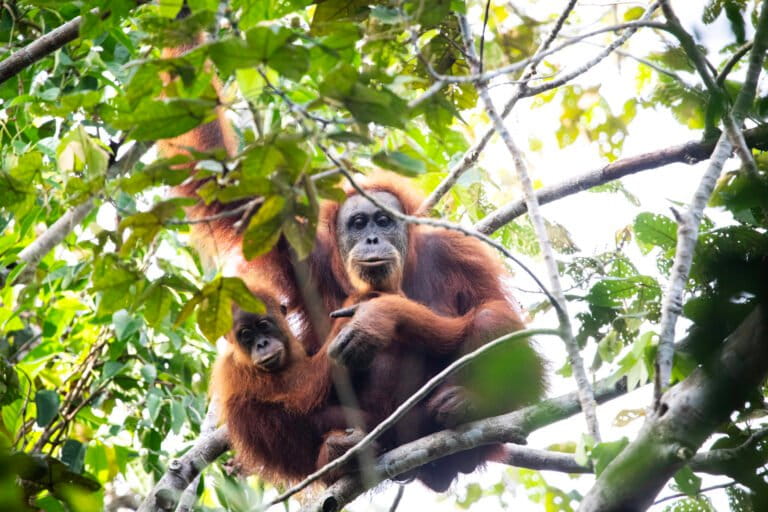
Orangutans meticulously construct comfortable nests by weaving branches at heights of 11-20 meters. This behavior highlights the importance of sleep and is linked to their high cognitive abilities and developed brains. However, whether they dream like humans remains unproven.
In the rainforests of Indonesia, orangutans do more than just rest on branches; they meticulously construct their own "beds" at heights of 11-20 meters. This remarkable behavior not only showcases their advanced survival strategies but also highlights the profound importance of sleep in their lives. Orangutans begin by finding a sturdy branch, then bend or break other branches around it to create a foundation. Smaller branches are added on top to form a comfortable base. This structure is designed to evenly distribute body weight, ensuring stability and preventing damage. Some orangutans even exhibit luxurious touches, using large-leafed branches as "blankets," gathering leaves for "pillows," weaving branches overhead for "roofs," or building additional sleeping platforms above their main nests. These actions demonstrate that orangutans understand material properties and possess the ability to design safe and comfortable resting places. This comfort directly impacts sleep quality. Compared to other primates like macaques, orangutans are known to sleep longer, more soundly, and wake up less frequently. Their arboreal nests also protect them from predators, insects, and humidity. This habit of building nests is estimated to have emerged in the ancestors of great apes around 14 to 18 million years ago. It is believed that long, quality sleep has supported the development of larger brains and higher cognitive abilities in great apes. However, the biggest question remains: do orangutans dream like humans? To date, no research has directly proven that orangutans experience dreams. This mystery awaits further investigation. Source: Mongabay Indonesia
Original source
Mongabay Indonesia