General articles are free for 24 hours after publish.
Climate Crisis Stretches Nepali Military Beyond Its Limits in Disaster Response
Nepal's security forces, including the military, are being stretched beyond their limits by increasingly frequent and severe climate-induced disasters. A recent flood left many personnel unaccounted for, highlighting a critical lack of expertise and equipment. This situation underscores the evolving role of the military and the need for international assistance.
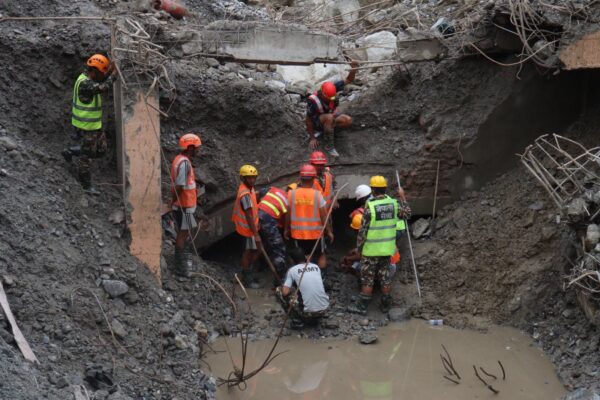
A devastating flood in Nepal has highlighted the impact of climate change on military operations and capabilities. The massive landslide on August 26th wiped out infrastructure, settlements, and businesses along the Bhotekoshi and Trishuli rivers near the China-Nepal border. In response, the Nepali government deployed over 20,000 security personnel, including the Nepal Army, Nepal Police, and Armed Police Force, marking one of the largest mobilizations since the 2015 earthquake. The collapse of local governance and the inaccessibility of affected areas forced the government to rely heavily on security forces. While Nepal's constitution mandates military involvement in disaster response and its national security policy recognizes climate change as a national interest, the recent flood exposed the vulnerabilities and capacity limitations of the security forces themselves. A total of 85 security personnel, including 45 from the Nepal Army, remain unaccounted for. They were on duty in border areas, customs zones, river corridors, national parks, and hydropower projects when the disaster struck. The absence of an early warning system and the lack of cross-border disaster communication further complicated the situation. Rescue operations are ongoing, particularly for hundreds of workers trapped in hydropower tunnels and for personnel lost in the line of duty. However, a critical shortage of specialized expertise and equipment is hindering progress. The Nepali government has sought international assistance from countries like India, China, and South Korea. This flood underscores the changing environmental security landscape in the Himalayan region. The International Centre for Integrated Mountain Development (ICIMOD) has identified numerous dangerous glacial lakes, suggesting this event may be a warning of future disasters. Climate change is fundamentally altering the strategy, function, and operating environment of militaries, making adaptation and transformation an urgent task, especially for institutions like the Nepali Army deeply embedded in disaster response.
Original source
The Diplomat Indonesia